
The Decay of a Dream: Recognizing the Signs of a Dying Lawn
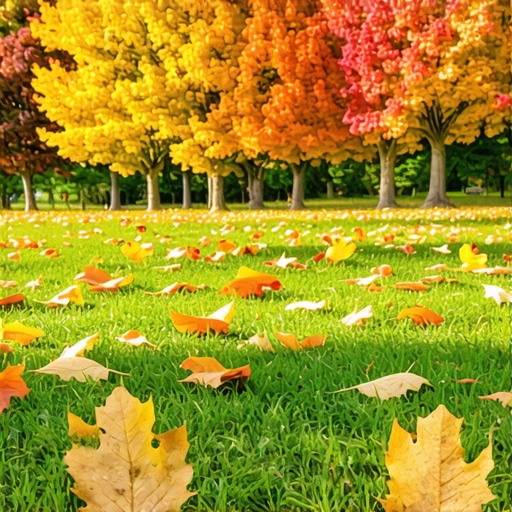
The first sign of trouble is usually the smell: a sour, fermented odor that clings to the bottom of your boots when you walk across a lawn covered in heavy, wet maple leaves. Leaving your leaves on the lawn this fall is only beneficial if you understand the biological mechanics of decomposition; otherwise, you are just creating a tomb for your turf. I have seen hundreds of homeowners mistake a thick mat of sodden leaves for ‘natural mulch,’ only to find a graveyard of yellowed, crown-rotted fescue beneath it come March. It is not just about the leaves; it is about the gas exchange between your soil and the atmosphere. [image]
The Chemical Nightmare: A Cautionary Tale of Soil Burn
I remember a homeowner in late October who thought they could bypass the yard cleanup process by dumping ten pounds of high-nitrogen starter fertilizer directly onto a three inch layer of un-mulched oak leaves. They thought the fertilizer would speed up the breakdown. Instead, they created a high-heat chemical reaction. The nitrogen fueled a massive, uncontrolled bacterial bloom that sucked every ounce of oxygen out of the upper soil profile. By the time I arrived, the lawn was not just dead; it was literally cooked. The soil was a blackened, anaerobic mess that smelled like a swamp. We had to excavate four inches of topsoil and perform a complete sod install just to get the pH back to a level where grass could even survive. This is why I tell my crew: never treat soil like a trash can; treat it like a laboratory.
“Soil organic matter is not just a component; it is the biological engine of the turf system, providing the fundamental structural stability required for root respiration.” – Penn State Agricultural Extension
The Nitrogen Theft: Why Whole Leaves Starve Your Soil
Whole leaves act as a physical barrier that prevents sunlight from reaching the grass blades and traps moisture that fosters fungal pathogens like snow mold and Rhizoctonia. When you leave a solid sheet of leaves on the lawn, you are essentially placing a piece of plywood over your grass. This creates a dark, moist environment where the turf’s photosynthetic process stops completely. Furthermore, the decomposition of whole leaves requires nitrogen. If the leaves are not shredded, the microbes on the surface will actually ‘steal’ nitrogen from the grass roots to fuel the breakdown of the leaf’s carbon structure. This is known as nitrogen immobilization, and it will leave your grass stunted and yellowed during its most critical fall root-growing phase.
How much mulch is too much for my lawn?
As long as the grass blades are still visible through the shredded leaf bits, you have not reached the limit. Generally, a layer of up to one inch of mulched leaf material is the maximum your soil can process in a single season without professional irrigation adjustments. If you cannot see the green of the grass, you need to bag the excess or keep mowing until the particle size is reduced further.
The Engineering of Mulching: Turning Waste into Organic Gold
Mulching leaves with a high-lift mower blade turns a waste product into a slow-release fertilizer that feeds the soil microbiology through the winter. This is not just ‘mowing’; it is mechanical processing. You are aiming for a particle size about the size of a dime. These small fragments fall into the thatch layer, where earthworms and soil microbes can easily reach them. This process increases the cation exchange capacity (CEC) of your soil, which means your dirt becomes better at holding onto nutrients instead of letting them leach away during winter rains. For homeowners with heavy clay, this organic matter is the only way to break up compaction without mechanical aeration every six months. It is the cheapest landscaping upgrade you can perform.
Can I mulch leaves with a regular lawn mower?
Yes, but you must use a dedicated mulching blade and a deck plug to ensure the leaves are trapped under the mower long enough to be shredded into fine dust. If you see large chunks flying out the side discharge, you are doing it wrong and risk smothering the turf.
| Method | Nitrogen Return | Microbial Activity | Risk of Turf Disease |
|---|---|---|---|
| Bagging/Removal | 0% | Stagnant | Low |
| Whole Leaf Cover | Low (Slow) | Anaerobic (Bad) | High |
| Mulching/Shredding | High (Fast) | Aerobic (Good) | Low |
The Anaerobic Trap: Avoiding the Rotting Mat
Anaerobic decomposition occurs when leaves are too wet and too thick for oxygen to penetrate, leading to the production of organic acids that can plummet your soil pH. I have tested soil under leaf mats that hit a pH of 4.5. Most turfgrasses, especially Kentucky Bluegrass and Tall Fescue, need a pH between 6.0 and 7.0. At a pH of 4.5, your grass can no longer absorb phosphorus or magnesium, no matter how much you fertilize. You are effectively starving the plant in a sea of plenty. This is why timing is everything. You cannot mulch leaves when they are soaking wet from a week of rain. You need to wait for a dry window, set your mower deck to about 3.5 inches, and pulverize them while they are brittle. If you miss that window, you have to rake. There is no middle ground.
“The conversion of leaf litter to humus requires specific carbon-to-nitrogen ratios to prevent nutrient tie-up and maintain soil structure integrity.” – Agronomy Manual of Standards
The Fall Maintenance Checklist
- Test soil pH in October before the first heavy frost to ensure a baseline of 6.5.
- Sharpen mower blades; dull blades tear the leaves and the grass, inviting fungus.
- Mow every 4 to 5 days during heavy leaf drop to keep the volume manageable.
- Ensure your irrigation system is blown out and winterized after the final mulch pass.
- Apply a light dose of potassium (0-0-10) to help the turf cell walls handle the freeze.
The Maintenance Schedule: Keeping the Dirt Alive
Consistency is the only path to a healthy spring lawn and requires a disciplined approach to leaf management throughout the transition months. Don’t wait until the trees are bare. Start mulching the moment the first leaves hit the ground. By the time the heavy drop happens in November, you should have already processed three or four ‘crops’ of leaves into the soil. This prevents the volume from becoming overwhelming. If you follow this protocol, by the time the ground freezes, the microbes will have already begun the heavy lifting. In the spring, you won’t be raking up gray, slimy piles. You will be looking at a lawn that is ready to jump out of the ground the moment the soil hits 55 degrees. It takes work. It takes precision. But the results are in the biology. Don’t skip the science.