
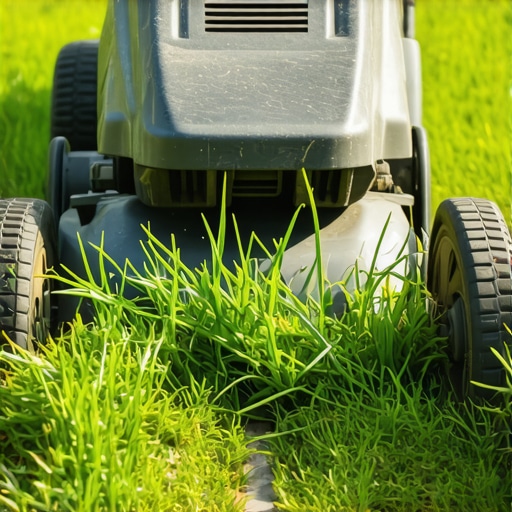
The Bleached Lawn Autopsy: Identifying Turf Trauma
Mower tearing occurs when blunt mower blades smash through the grass blade rather than slicing the vascular tissue, leaving ragged, white tips. This trauma increases transpiration rates, invites fungal pathogens like Pythium, and forces the turf into a state of chronic stress that hinders photosynthesis. Look closely at your grass. If the tips look like they have been shredded by a weed whacker instead of sliced by a scalpel, you are looking at a dying lawn. The white, frayed ends are not just an aesthetic issue; they are open wounds. Every single tear is a gateway for disease and a massive leak for moisture. When you see that tan or white haze over your yard 24 hours after mowing, that is the color of necrotic tissue. It is the result of mechanical failure, not biological disease. I always drill into my new crew members: if you do not fix the soil grading first, every plant you put in the ground is just expensive compost. But even with a perfect grade, showing up to a job with a dull blade makes you a butcher, not a landscaper. I have seen entire sod install projects worth $15,000 fail within three months because the homeowner used a dull, low-lift blade on fresh, tender Kentucky Bluegrass. The blunt force literally yanked the shallow roots of the new sod right out of the soil. It is a preventable tragedy.
“Properly maintained turf systems rely on clean abscission to minimize energy expenditure for wound sealing and to maintain stomatal conductance.” – Agronomy Manual 4th Ed.
The Biological Cost of Blunt Force Trauma
A clean cut allows the grass to seal the wound within hours, whereas a tear remains open for days, depleting the plant’s carbohydrate reserves and water levels. Grass is a living organism with a complex internal plumbing system. When a sharp blade passes through at 18,000 feet per minute, it creates a clean break in the cell walls. When a dull blade hits, it crushes the cells. This crushing action releases intracellular fluids that attract insects and provide a perfect breeding ground for spores. You might think your landscaping looks fine from the curb, but at the microscopic level, your lawn is bleeding. This is particularly dangerous in high-humidity environments where irrigation systems are running. The combination of open wounds and high moisture is the primary cause of Brown Patch and Dollar Spot. You are essentially paying for a yard cleanup only to create a mess that requires expensive fungicides to fix.
| Blade Condition | Cutting Action | Turf Impact | Recovery Time |
|---|---|---|---|
| Factory Sharp | Surgical Shear | Minimal Cell Damage | 12-24 Hours |
| Moderate Wear | Tearing/Ripping | Exposed Vascular Bundles | 48-72 Hours |
| Severely Dull | Smashing/Crushing | Necrotic Tip Dieback | 5-7 Days |
How often should I sharpen my lawn mower blades?
For a standard residential lawn, you must sharpen your blades every 20 to 25 hours of use. If you are performing a heavy yard cleanup or mowing over sandy soil, this interval drops to 10 hours due to the abrasive nature of the debris. Most homeowners wait until the end of the season. That is a mistake. You should have two sets of blades; one on the machine and one ready to go. A sharp blade should be able to slice a piece of paper, but it does not need a razor edge. A razor edge will fold over the moment it hits a twig or a pebble. You want a consistent, 30-degree bevel with enough mass behind the edge to maintain momentum.
Why does my grass look white after mowing?
The white or tan haze is caused by shredded cellulose fibers at the tip of the grass blade that have dried out and died. When the blade is dull, it pulls the long fibers of the grass leaf apart rather than cutting across them. These dead fibers reflect light differently than the green, healthy tissue below, creating a bleached appearance. If you see this, stop mowing immediately. Your machine is failing you. This is common in sod install scenarios where the grass is more succulent and has higher water content. The softer the plant tissue, the cleaner the blade needs to be to avoid crushing the crown.
The Physics of the Mower Deck and Lift
Mower decks function as vacuum chambers that use centrifugal force and air displacement to stand the grass upright before the cutting edge makes contact. If your deck is clogged with old clippings or the irrigation has made the grass too heavy and wet, the vacuum effect fails. This results in an uneven cut and increased tearing. You need to maintain the underside of your mower just as much as the engine. Dried mud and grass buildup disrupt the laminar flow of air, causing the grass to flatten out. When the blade finally hits the flattened grass, it slices at an angle, increasing the surface area of the wound. This is why we never mow wet grass. The weight of the water overcomes the lift of the blade.
- Check blade balance after every sharpening to prevent spindle bearing failure.
- Scrape the mower deck clean of all debris to maintain airflow.
- Set the cutting height to at least 3 inches to encourage deep root growth.
- Never remove more than one-third of the grass blade height in a single pass.
- Inspect the blade for nicks after hitting any hard objects during yard cleanup.
“A dull blade doesn’t just look bad; it creates a 50 percent increase in water loss through the wounded leaf tip, leading to rapid drought stress.” – Penn State Extension
Remediation: Restoring a Mauled Lawn
To fix a lawn that has been torn, you must first suspend mowing until the blades are sharpened or replaced, then apply a light application of nitrogen-rich fertilizer to stimulate new growth. Do not over-water during this period. Excessive irrigation on a torn lawn just feeds the fungus. You want to force the plant to grow past the damaged area so you can cut off the necrotic tips with a sharp blade next time. This is a forensic approach to lawn care. You diagnose the mechanical failure, fix the tool, and then provide the nutrients the plant needs to repair its cellular structure. If you have recently invested in a sod install, be extremely careful. New sod is already under stress from being harvested and moved. Tearing it with a dull blade can be the final blow that leads to total patch death. Check your tools. It takes ten minutes to sharpen a blade but ten weeks to fix a ruined lawn.