
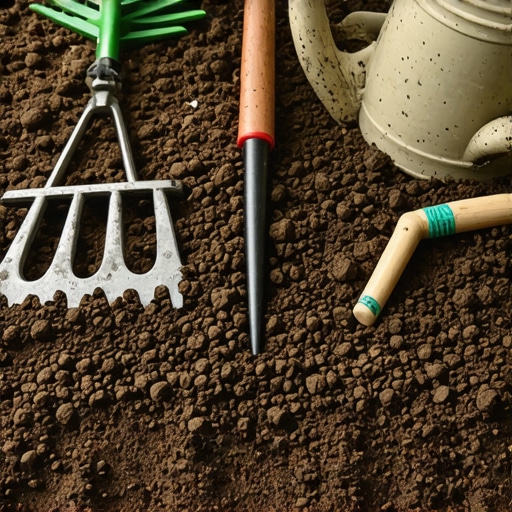
The Autopsy of a $10,000 Dead Yard
I have seen it a thousand times. A homeowner spends five figures on a premium sod install, and two weeks later, they are calling me because the grass looks like a discarded shag carpet. It is yellow, it is crunchy, and when you grab a handful, the whole piece lifts right off the dirt. No roots. No knitting. Just expensive compost. I recently got called out to tear up a $30,000 patio and lawn project that was sinking and dying because the previous contractor thought they could just lay sod over sun-baked, compacted red clay. They did not even use a rake. That is not landscaping. That is professional negligence. When new sod fails to knit, it is rarely the fault of the grass. It is the fault of the human who ignored the biology of the rhizosphere. If you do not create a capillary bridge between that sod roll and the native earth, you are just waiting for a funeral.
Why Your New Sod Fails to Take Root
Sod knitting fails when hydrophobic soil, high bulk density, or improper pH prevents adventitious roots from penetrating the native soil. Without a proper capillary bridge between the sod peat or soil base and the ground, the grass dehydrates and dies within fourteen days of installation.
“The physical properties of the soil, particularly its density and pore space, dictate the success of root elongation in newly installed turfgrass.” – Penn State Center for Turfgrass Science
The science of the yard is simple: roots need oxygen, water, and a path of least resistance. If your soil has the PSI of a concrete sidewalk, those tender root tips will simply coil up and rot. This is often called the shelf effect. It happens when the soil in the sod roll is a different texture than the soil on the ground. Water will not move between the two layers. It just sits there until the roots drown or the sun bakes them into hay.
Fix 1: Breaking the Hardpan and Mechanical Decompaction
Mechanical decompaction requires a power tiller or a heavy-duty aerator to fracture the subsurface hardpan to a depth of at least six inches. This process increases macropores in the soil, allowing oxygen exchange and water infiltration to reach the root zone. You cannot skip the grading phase. If your soil is compacted, your roots are suffocating. I tell my crew: if you cannot push a screwdriver six inches into the ground with one hand, do not even think about laying a single piece of sod. We use a 400-pound hydraulic tiller to chew up the top six inches. This breaks the surface tension. We then add organic matter to keep those pores open. If you just lay sod on top of hard ground, you are essentially planting it on a parking lot. It will fail. Every time.
How much modified gravel do I need for a patio base?
While this article focuses on sod, many homeowners install turf adjacent to new patios. For a standard paver patio, you need a six-inch base of modified gravel (21A or CR-6) compacted in two-inch lifts. This ensures hydrostatic pressure does not shift your pavers or wash out the adjacent newly installed sod. Poor drainage from a patio is the number one killer of nearby grass. If that water has nowhere to go, it sits under the sod and creates a fungal swamp. Check your pitch. You need at least a 2 percent slope away from any structures.
Fix 2: The Chemistry of the Rhizosphere and Cation Exchange
Soil chemistry optimization involves adjusting the Cation Exchange Capacity (CEC) and pH levels to a range of 6.0 to 7.0 using pelletized lime or elemental sulfur. This ensures that essential nutrients like phosphorus and nitrogen are bioavailable to the primary root system during the first 48 hours. Most people think fertilizer is just food. It is not. It is a chemical reaction. If your pH is 5.0, you could dump a truckload of nitrogen on that lawn and the grass would still starve because the roots cannot physically absorb it. This is where the “mow-and-blow” hacks get it wrong. They just throw down a bag of cheap 10-10-10 and walk away. We use a professional soil probe to test three different spots. We look for the 1-2-2 NPK ratio for starter fertilizer. High phosphorus is key for root development. Nitrogen is for the green top, but phosphorus is for the foundation. Don’t buy the cheap stuff from the big-box store. It is full of fillers that increase salt index and burn the roots.
Can you lay sod over existing grass?
Absolutely not. Laying new sod over existing grass or unmanaged weeds creates a decomposition layer that generates excessive heat and methane gas, which will scald the new roots and prevent any meaningful soil contact. You must perform a total yard cleanup. This means using a sod cutter to remove the old vegetation. If you leave that old grass there, it will rot. That rot consumes oxygen. Roots need oxygen. You are essentially strangling your new investment before it even starts. Do the work. Strip the old turf down to the bare dirt.
Fix 3: Hydraulic Pressure and Field Capacity Logic
Irrigation management for new sod must focus on maintaining field capacity in the top four inches of the soil profile without reaching saturation. This requires deep, infrequent watering cycles that force the auxin-driven roots to grow downward in search of moisture.
“A successful turfgrass stand requires at least 4 to 6 inches of non-compacted soil to facilitate gas exchange and drainage.” – University of California Agriculture and Natural Resources
Stop misting your lawn. Misting is for produce aisles. You need to put down one inch of water per day for the first week. But you do not do it all at once. You split it into three sessions. This keeps the sod-to-soil interface moist. After day seven, you back off. This is the part that scares people. You have to let the surface dry out a little so the roots feel the need to go down. If you keep the surface a swamp, the roots will stay in the top half-inch. Then, when the first heat wave hits in July, the whole lawn fries because the roots are too shallow.
| Soil Component | Role in Sod Knitting | Recommended Target |
|---|---|---|
| Sand Content | Drainage and gas exchange | 60-70 percent for high traffic |
| Organic Matter | Nutrient retention and CEC | 5-8 percent by volume |
| Clay Content | Moisture retention | Less than 20 percent to avoid compaction |
| Bulk Density | Physical resistance for roots | Less than 1.4 g/cm3 |
The 48-Hour Prep Checklist
- Call 811 to mark all underground utility lines before tilling.
- Remove all stones larger than two inches in diameter to prevent air pockets.
- Apply a starter fertilizer with a high phosphorus (P) middle number.
- Incorporate 2 cubic yards of compost per 1,000 square feet into the top 4 inches of soil.
- Roll the bare soil with a water-filled roller to ensure it is firm but not hard.
- Install sod within 24 hours of its delivery from the farm.
Landscaping is a game of inches and engineering. If you treat your soil like a trash can, your lawn will look like a landfill. Take the time to decompact, fix the chemistry, and water like a professional. The roots do not care about your schedule. They care about the environment you provide. Build the foundation first. The green will follow. Don’t be the homeowner who has to pay me twice because they wanted to save $500 on soil prep the first time. Do it right. Or don’t do it at all.