
The Gravity of a Failing Structure
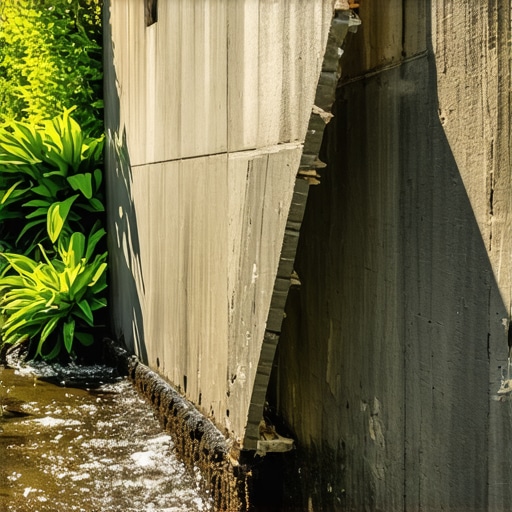
A leaning retaining wall is rarely a failure of the stone itself but rather a failure of the invisible forces acting against it. Hydrostatic pressure, the relentless weight of water trapped in the soil, is the primary driver of wall movement, forcing blocks out of alignment and eventually causing structural collapse. Proper drainage systems and soil grading are the only ways to prevent this mechanical failure. I recently got called out to tear up a $30,000 patio that was sinking because the previous contractor skipped the drainage pipe and backfilled with native clay instead of clean stone. Within two years, the freeze-thaw cycles and hydrostatic pressure had pushed the four-foot wall out by six inches. It was a total loss. I had to tell the homeowner that the entire structure was essentially a pile of expensive trash. It is a hard conversation to have, but physics does not care about your budget. If you do not manage the water, the water will manage your wall. Every hour I spend training my crew focuses on the base and the backfill. We do not even think about the aesthetic finish until the engineering is bulletproof.
The Physics of Wall Failure: It’s Not the Stone, It’s the Hydrostatic Pressure
Retaining walls fail when the pressure behind them exceeds the friction and weight of the wall units themselves. Hydrostatic pressure builds when water saturates the soil behind the wall, significantly increasing the weight the wall must hold back. Without a clear drainage path through #57 clean stone and a perforated pipe, this pressure becomes a hydraulic ram. This is particularly dangerous in regions with heavy clay soils that hold water like a sponge. When winter hits, that water expands as it freezes, exerting thousands of pounds of pressure.
“A retaining wall doesn’t fail because of the stone; it fails because of the water trapped behind it.” – Hardscape Engineering Axiom
The Forensic Autopsy: Why Your Hardscape Is Moving
When we excavate a failed wall, the crime scene is always the same: poor materials. Often, I see “mow and blow” crews who think they can do landscaping and hardscape without understanding modified gravel compaction or soil mechanics. They use native soil as backfill. This is a death sentence for the wall. Native soil expands and contracts. Clean, angular stone does not. Furthermore, many contractors fail to install a French drain at the base of the wall. This pipe must be sloped to daylight, or it just collects water like a bathtub. If you see water weeping through the cracks of your wall after a storm, that is actually a good sign: it means the pressure is escaping. If the wall is dry but leaning, the pressure is trapped inside, ready to burst. We also look at the irrigation system. A broken sprinkler head or a zone that runs too long can saturate the backfill and liquify the base. It is a chain reaction of failure.
How much modified gravel do I need for a patio base?
For most residential hardscape projects, you need a minimum of 6 inches of compacted 2A modified gravel for the base, plus another 12 inches of clean stone behind the wall for drainage. This ensures a stable foundation that resists settling and heaving throughout the seasons.
Why is my retaining wall bowing in the middle?
A wall bowing in the middle indicates a lack of geogrid reinforcement or insufficient deadmen anchors. When the surcharge load from the hill above exceeds the wall’s strength, the center point—the weakest area—will deflect outward, necessitating immediate yard cleanup and structural remediation.
Material Comparison for Wall Stability
| Material | Drainage Efficiency | Compaction Stability | Primary Use Case |
|---|---|---|---|
| 2A Modified Gravel | Low | Very High | Sub-base foundation |
| #57 Clean Stone | Very High | Medium | Drainage column/backfill |
| Native Clay Soil | Zero | Low | Never use for backfill |
| Non-Woven Geotextile | High | N/A | Separating soil from stone |
The Blueprint for a Wall That Lasts 50 Years
Building a wall correctly requires a disciplined sequence of engineering steps. First, you must call 811 to mark utilities. Then, the trench must be dug deep enough to bury at least one full course of block. This provides toe stability.
“Standard drainage design requires 12 inches of clean-washed stone behind the unit to alleviate hydrostatic pressure.” – ICPI Tech Spec No. 1
Next comes the sod install. Homeowners often forget that the grading above the wall is just as important. The ground should slope away from the wall to minimize the amount of water entering the backfill zone. If you have a flat yard, we install a catch basin system to move surface water away before it can infiltrate the structure. Every layer of gravel must be compacted with a plate tamper until it literally bounces off the surface. If the tamper sinks, you are not done. This is the difference between a professional and a hack.
The Critical Hardscape Quality Checklist
- Base trench is excavated to the proper depth below the frost line.
- Perforated drainage pipe is installed with holes facing down.
- Drainage pipe is wrapped in a silt sock or separated by geotextile fabric.
- A minimum of 12 inches of #57 clean stone is used for the vertical drainage column.
- Wall blocks are installed with a slight “batter” (leaning back into the hill).
- All blocks are swept clean before the next course is glued with high-strength adhesive.
- Final grading redirects surface water away from the wall’s backfill zone.
Maintaining the Integrity of Your Landscape
Once the wall is up, the work is not over. You need to perform regular yard cleanup to ensure that debris does not clog the drainage outlets. Inspect the pipe “daylight” areas twice a year. If you see grass or weeds growing out of the wall face, it means sediment has entered your drainage stone. This will eventually lead to failure. Keep irrigation heads at least three feet away from the back of the wall. Over-saturation is the enemy of stability. If you notice even a quarter-inch of movement, call a professional. Catching a lean early means we can often pin the wall or improve the drainage without a total tear-down. Ignore it, and you will eventually be paying me to haul your expensive stone to the landfill. Construction is permanent. Do it right the first time.