
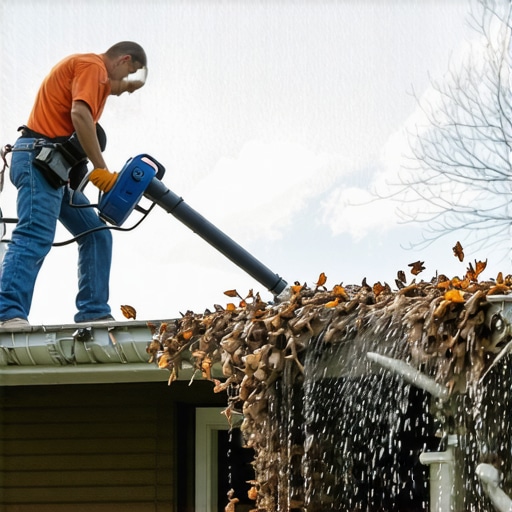
The Forensic Autopsy of a Failed Foundation
The first sign of a landscaping disaster isn’t always a dead tree; it is the rhythmic, heavy squish of water-logged turf right against the concrete footer of a million-dollar home. I recently walked a property where the homeowner was complaining that their brand-new sod install was turning into a swampy, anaerobic mess despite their high-end irrigation system being dialed in perfectly. Upon inspection, the culprit wasn’t the sprinklers or the soil composition. It was a single, five-foot section of gutter downspout packed tight with decomposed oak tassels and asphalt shingle grit. The resulting overflow had carved a mini-canyon through the mulch beds, bypassed the grading, and was now exerting massive hydrostatic pressure against the basement walls. This is why drainage is the undisputed king of site engineering. If you cannot move water, you cannot maintain a landscape. Period.
The Apprentice Lesson: Why Grading and Drainage Rule the Site
I always drill into my new crew members: if you don’t fix the soil grading first, every plant you put in the ground is just expensive compost. I remember a kid I hired years ago who thought yard cleanup meant just blowing leaves into the woods. I took him to a site where a retaining wall had bowed out by four inches. I made him dig out the backfill by hand. He found the problem: a clogged gutter spout had been dumping a hundred gallons of water per hour directly into the 57-stone base during every storm. That water had nowhere to go, so it turned the soil into heavy sludge that pushed the wall over. He never forgot that lesson. Every landscaping project we touch starts with an audit of where the roof water is going. If those pipes aren’t clear, the project is a ticking time bomb.
“A retaining wall doesn’t fail because of the stone; it fails because of the water trapped behind it.” – Hardscape Engineering Axiom
The Mechanics of Gutter Failure and Landscape Erosion
Properly functioning gutters prevent hydrostatic pressure from building against your foundation, protecting your landscaping and sod install investments from erosion and nutrient leaching. When gutters fail, the concentrated volume of water destroys soil structure, exposes root systems, and creates breeding grounds for fungal pathogens in your turf. Most homeowners wait for the overflow to act, but by then, the damage to the yard cleanup and plant health is already done.
How much force does a leaf blower need for gutters?
To effectively clear a vertical downspout using the back-pressure method, you need a leaf blower capable of at least 450 CFM (Cubic Feet per Minute) and an airspeed of 150 MPH. This volume of air creates a localized pressure spike that can dislodge compressed organic plugs without the need for disassembly. Most residential battery-powered blowers will struggle with wet debris; professional-grade gas units or high-output brushless electrics are preferred for this specific task. The goal is to create a seal at the bottom of the spout to force the air upward.
The Physics of the Leaf Blower Hack
Most people try to blow gutters out from the top down. This is a tactical error. You are fighting gravity and the natural wedge-shape of debris plugs. The professional ‘hack’ involves working from the ground up. By inserting a blower nozzle into the bottom of the downspout or the clean-out port of your underground drainage pipe, you utilize the ‘pop’ effect. You are essentially turning the downspout into a pneumatic cannon. This method is faster, safer than climbing ladders, and significantly more effective at clearing the elbow joints where 90% of clogs occur.
Comparative Maintenance Analysis
Understanding the efficiency of different cleaning methods is vital for long-term site management. The following table breaks down the metrics of professional gutter maintenance.
| Method | Efficiency (Time) | Risk Factor | Required Equipment | Landscape Impact |
|---|---|---|---|---|
| Manual Scooping | High (1-2 Hours) | High (Ladders) | Trowel, Ladder | High (Debris on Turf) |
| Pressure Washing | Medium (1 Hour) | Medium (Splashback) | Power Washer | Very High (Silt runoff) |
| Leaf Blower Hack | Very Low (10 Mins) | Low (Ground-based) | High-CFM Blower | Low (Controlled exit) |
Don’t skip the inspection phase. A clear gutter that drains into a crushed corrugated pipe six inches underground is still a failure. You must ensure the entire path of the water is unobstructed from the shingle to the daylight exit point.
Step-by-Step Gutter Spout Remediation
Follow this protocol to clear your downspouts and protect your irrigation zones from flooding. Do this twice a year: once after the spring pollen drop and once after the final autumn leaf fall.
- Step 1: Secure the Exit: Ensure no one is standing near the top of the gutter. The debris will exit at high velocity.
- Step 2: Check the Extension: Disconnect any flexible accordion-style extensions at the base. These are trash; they trap sediment and should be replaced with rigid PVC.
- Step 3: The Seal: Wrap a heavy rag around your leaf blower nozzle and insert it into the bottom of the downspout. Create as tight a seal as possible.
- Step 4: The Pulse: Do not just hold the trigger. Pulse the blower. This creates a hammering effect with the air that breaks the surface tension of wet leaf mats.
- Step 5: The Flush: Once the ‘pop’ occurs and air flows freely, run a garden hose down the gutter from the top to ensure all fine particulates are cleared.
Why is water pooling near my sod?
Water pooling near new sod install areas is usually a symptom of ‘point-source flooding’ from a clogged or improperly directed downspout. Even a perfectly graded yard cannot handle the localized volume of five hundred square feet of roof runoff dumping into a single two-foot area. This leads to soil saturation, which starves the grass roots of oxygen and causes the sod to ‘float’ and lose contact with the amended topsoil. Correcting the gutter output is the only way to save the lawn.
“Soil saturation levels exceeding field capacity for more than 24 hours will begin to induce root hair decay in most temperate turfgrass species.” – Penn State Department of Plant Science
The Long-Term Impact on Irrigation and Soil Health
Inconsistent water distribution from failed gutters messes with your irrigation logic. If one zone is constantly flooded by roof runoff, the rain sensors may shut off the entire system, leaving the rest of your landscaping to wilt. It creates a localized micro-climate of rot. When we perform a yard cleanup, we look for the ‘telltale splash’: the pitted soil or mulch directly under a gutter line. If you see this, your gutters are overflowing. The leaf blower hack is the fastest way to remediate this before you have to call me out for a $5,000 drainage repair job. It will rot if you don’t fix it. Do not wait for the next heavy rain to test your system.