
The Forensic Autopsy of a Shattered Irrigation Mainline
Every April, I see the same carnage: polyethylene pipes split like overcooked sausages and PVC manifold fittings turned into plastic shrapnel. I recently walked a property where the homeowner had tried to save $150 by ‘blowing out’ his own lines with a small pancake compressor. He cranked the regulator to 120 PSI, thinking higher pressure meant better results. Instead of clearing the lines, the high-velocity air hit a pocket of water at a 90-degree elbow, creating a water hammer effect that blew the fitting right through the sod install. It wasn’t just a leak; it was a structural failure of the entire irrigation backbone.
I always drill into my new crew members: if you don’t fix the soil grading first, every plant you put in the ground is just expensive compost. This applies to winterizing too. If you don’t understand the physics of hydrostatic shock and air-to-water ratios, you are not a landscaper; you are a liability. Irrigation pipes are designed to hold static water pressure, not high-velocity compressed air. When you introduce 100+ PSI into a dry pipe, you generate friction heat that can actually melt the internal walls of poly pipe, leading to pinhole leaks that won’t show up until the heat of July. Fix it right or don’t touch the valve.
What is the Proper PSI for Sprinkler Blowouts?
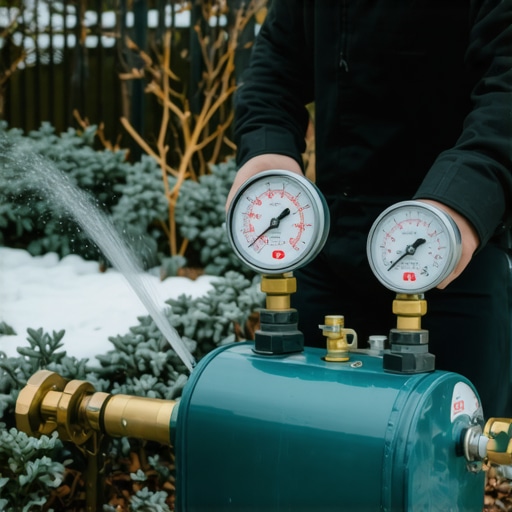
The proper PSI for sprinkler winterization is strictly between 50 and 80 PSI, depending on whether you are working with PVC or polyethylene piping. Maintaining a high CFM (Cubic Feet per Minute) of at least 80 to 100 is far more critical than high pressure for effectively evacuating water from irrigation zones.
“Air pressure should be controlled by a pressure regulator to prevent the pipe from exceeding its pressure rating or the air from reaching too high a velocity. High-velocity air can cause significant heat due to friction, damaging plastic components.” – Irrigation Association Standards
How much air volume do I need for a 2026 blowout?
Air volume, measured in CFM, is the real hero of a successful yard cleanup and winterization. A standard home compressor might produce 4-6 CFM, which is barely enough to pop a single sprinkler head. To clear a full zone, you need a high-volume compressor. Without enough volume, the air simply bubbles over the water sitting in the low spots of your pipes. This leaves water behind to freeze, expand, and crack the pipe wall. You need enough ‘push’ to move the entire column of water at once. This is why we use tow-behind diesel compressors for professional landscaping accounts.
The Risks of Over-Pressurization
When you exceed 80 PSI, you risk ‘dry firing’ the sprinkler heads. The gears inside a rotary head are lubricated by water. Running them on high-pressure air for more than a minute is like redlining an engine with no oil. It will melt. You’ll know you’ve messed up when the head stops rotating next spring or just leaks from the wiper seal. We keep the pressure low and the volume high. It is non-negotiable. Don’t gamble with your sod install by blowing plastic shards into the root zone.
Technical Specifications: Pipe Material vs. Pressure Limits
Understanding the material limits of your irrigation system is the difference between a routine winterizing and a $2,000 repair bill. Below is the engineering breakdown for common residential materials.
| Material Type | Max Blowout PSI | Failure Point (Air) | Recommended CFM |
|---|---|---|---|
| Schedule 40 PVC | 80 PSI | 120+ PSI | 80-125 CFM |
| Class 200 PVC | 60 PSI | 90 PSI | 80-100 CFM |
| Black Poly (HDPE) | 50 PSI | 70 PSI | 100+ CFM |
The Step-by-Step Professional Blowout Protocol
Properly winterizing 2026 sprinklers requires a systematic approach that respects the mechanical limits of the backflow preventer and the zone valves. Follow this sequence to ensure the system survives the first hard freeze.
- Isolate the Supply: Shut off the main water valve, usually located in the basement or a heated crawlspace.
- Attach the Compressor: Connect to the blow-out port on the backflow preventer or the downstream riser. Never blow air through the backflow device itself; the internal rubber check valves will tear.
- Activate Zone One: Always start with the highest or furthest zone to bleed off initial line pressure.
- Regulate Pressure: Set the compressor to 50 PSI for poly or 70 PSI for PVC.
- The ‘Mist’ Check: Run each zone until you see a fine mist, then move to the next. Do not run dry air for more than 60 seconds per zone.
- Drain the Pump: If you have a centrifugal pump for well water, pull the drain plugs. One cup of water in a pump housing will crack the iron casing in a freeze.
“The University of Nebraska-Lincoln Extension notes: Air volume is more important than air pressure. Large volumes of air at low pressure will move water more effectively than high pressure at low volume.” – UNL Agronomy Archives
How do I know if I need a professional for yard cleanup?
If your system has more than 6 zones or uses 1-inch mainlines, your home compressor will fail. You cannot ‘pulse’ the air and expect the water to leave the low spots. In heavy clay soils, which are common in many regions, poorly drained pipes will heave, ruining your landscaping contours. Hiring a pro with a 185 CFM compressor ensures that every drop is evacuated. It is cheap insurance for your sod install. We see the 811 markings everywhere for a reason; don’t let a burst pipe force you to dig up your yard.
The 2026 Winter Maintenance Roadmap
Winterization is only one part of a total yard cleanup. Once the lines are clear, we focus on the biology. For those with new sod install projects, remember that the roots are still active until the ground truly freezes. Deep, infrequent watering right up until the blowout date is vital. Once the air hits the lines, the system is dead for the season. Don’t forget to disconnect your garden hoses. A single hose left on a frost-free bib can cause the pipe to burst three feet inside your warm house. It happens every year. Stay sharp. Watch the gauges. Don’t be the guy with the shattered manifold.