
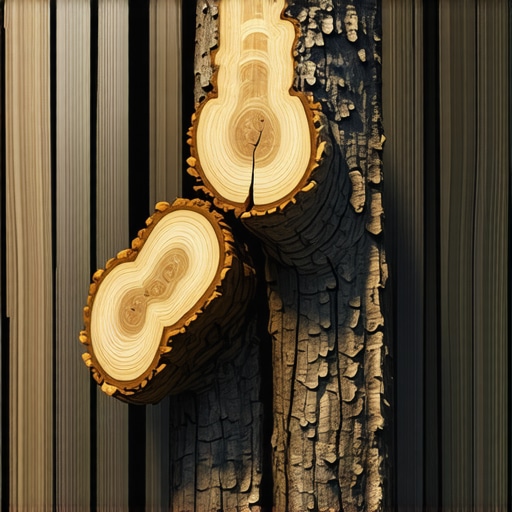
The Forensic Reality of Internal Tree Decay
I always drill into my new crew members: if you don’t fix the soil grading first, every plant you put in the ground is just expensive compost. Most homeowners see a tree as a static object, but as a veteran horticulturist, I see a complex hydraulic system under constant biological siege. When a tree starts rotting from the inside, it’s not a sudden event; it’s a failure of the tree’s natural defense mechanism, known as CODIT (Compartmentalization of Decay in Trees). If the tree loses the battle to seal off pathogens, the structural lignin begins to dissolve. This is a civil engineering crisis disguised as a gardening problem.
How to Identify Internal Tree Rot Early
To identify internal tree rot, look for fungal fruiting bodies at the base, cavities in the trunk, and deadwood in the upper canopy. These symptoms indicate that the vascular system or structural heartwood has been compromised by pathogenic fungi, necessitating an immediate arboricultural assessment to mitigate risk.
“Wood decay is a biological process where fungi decompose the lignin and cellulose that provide the structural strength of the tree’s trunk and branches.” – International Society of Arboriculture (ISA) Manual
1. Fungal Conks and Mushrooms at the Root Flare
If you see shelf-like mushrooms, or conks, growing out of the trunk or the root flare, the game is already half-over. These are the reproductive organs of fungi that have been eating the tree’s insides for years. They don’t just appear; they emerge once the mycelium has thoroughly colonized the heartwood. In my years of landscaping, I’ve seen Ganoderma and Armillaria species turn a 50-year-old oak into a hollow shell while the leaves stayed green. Don’t be fooled by a full canopy. If the roots are mush, that tree is a 20-ton liability waiting for a high-wind event to exert 500 PSI of lateral force on a failing base. Often, improper irrigation placement—sprinklers hitting the trunk daily—creates the humid micro-climate these fungi crave.
2. Deep Cavities and Bark Sloughing
Bark is the tree’s armor. When it starts falling off in large sheets, or ‘sloughing,’ it means the cambium layer—the living tissue just beneath the bark—is dead. A hollow trunk isn’t always a death sentence, but if the ‘shell thickness’ of the remaining healthy wood is less than 30% of the total radius, the structural integrity is gone. I’ve seen hacks try to fill these holes with concrete. Never do that. It traps moisture and accelerates the rot. During a yard cleanup, if you find soft, punky wood inside a hole, you’re looking at a site where the tree failed to compartmentalize. You need to measure the thickness of the sound wood. If you can push a screwdriver six inches into the trunk with your bare hands, the tree is a hazard.
3. Epicormic Sprouting and Dieback
When a tree is stressed or dying from the inside, it often throws out ‘water sprouts’ or epicormic shoots. These are small, weak branches growing straight up from the trunk or main limbs. It’s a desperate attempt to create more leaf surface area because the main vascular system is failing. Couple this with ‘dieback’—where the tips of the highest branches lose leaves and turn brittle—and you have a clear sign of root or internal trunk failure. This often happens after a botched sod install where the contractor buried the root flare under six inches of heavy soil, suffocating the roots and inviting anaerobic rot.
| Symptom | Biological Cause | Structural Risk Level |
|---|---|---|
| Conks/Mushrooms | Sapwood/Heartwood Decay | Critical – High Fall Risk |
| Sloughing Bark | Cambium Death | Moderate to High |
| Hollow Cavity | Failed Compartmentalization | Variable – Needs Probe |
| Deadwood in Canopy | Vascular Dysfunction | High – Falling Limbs |
How much can a tree rot before it falls?
The standard industry threshold is the 30 percent rule. If more than 30 to 35 percent of the trunk’s cross-sectional area is compromised by hollows or rot, the risk of failure increases exponentially under wind load. Landscaping professionals must use a Resistograph or sonic tomography to see what’s happening inside without further damaging the tree. Every inch of rot decreases the wood’s ability to resist tension and compression. It’s basic physics. If the tree is leaning toward your house and has a 40% hollow core, you aren’t looking at a tree anymore; you’re looking at a countdown.
“A tree can appear healthy on the outside while being structurally hollow and prone to failure during environmental stress events.” – Penn State Extension
Is it possible to save a rotting tree?
Saving a tree depends on the location of the rot. If the decay is localized to a single limb, you can perform a clean cut to the branch collar, allowing the tree to seal the wound. However, if the rot is in the main trunk or the root flare, there is no ‘cure.’ You can manage the stress by improving the soil pH, ensuring proper irrigation (deep, infrequent watering—1 inch per week), and avoiding yard cleanup mistakes like nicking the flare with a weed whacker. But once the structural cells are gone, they don’t come back. Don’t trust anyone who says they can ‘seal’ the rot out. They’re lying to take your money.
Tree Health Inspection Checklist
- Check for mushrooms or conks at the base and on the trunk.
- Inspect the root flare; it should be visible, not buried under soil or mulch.
- Look for ‘V-shaped’ crotches in branches, which are prone to internal rot.
- Check for sawdust-like ‘frass’ which indicates borers attacking weakened wood.
- Observe the canopy for premature fall color or early leaf drop.
- Identify any cracks that extend deep into the wood.
- Scan for any new lean that has developed in the last 6 months.
- Examine the trunk for ‘cankers’ or sunken areas of bark.
- Evaluate the soil for heaving, which suggests root failure.
- Verify if any construction or sod install occurred near the drip line recently.
[IMAGE_PLACEHOLDER]