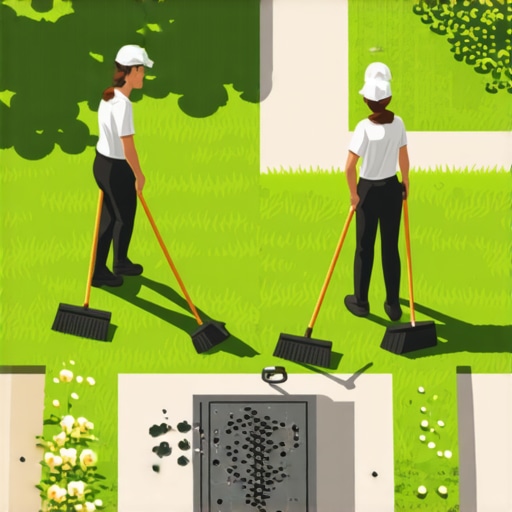
I remember the moment vividly—a sudden downpour turned my backyard into a mini lake, with water pooling where it never used to. It was a lightbulb moment that something was seriously wrong. Like many homeowners, I’d pushed yard cleanup and drainage concerns aside, thinking a little dirt and debris couldn’t cause big problems. But that storm proved me wrong. The truth is, if you ignore drainage issues now, they only get worse, leading to costly repairs or even harming your lawn’s health.
Why Addressing Drainage Now Matters More Than Ever
Procrastinating on yard cleanup and drainage solutions can lead to bigger headaches down the line. Excess water pooling can drown your grass, promote weed growth, and even cause soil erosion. According to experts at the University of California, poor drainage can significantly reduce your lawn’s resilience and lifespan if not addressed early (source).
So, what should we do? Luckily, I’ve discovered some effective yard cleanup hacks that can prevent 2026 drainage problems from spiraling out of control. These aren’t just quick fixes—these are strategic moves to ensure your yard stays healthy, vibrant, and flood-free in the future. Trust me, taking action now can save you a ton of money and headaches later on.
Does the Thought of Fixing Drainage Feel Overwhelming or Too Technical?
Early in my journey, I made the mistake of underestimating how simple some drainage fixes could be. Instead of rushing to hire expensive help, I started with basic yard cleanup strategies that made a tangible difference. For instance, clearing debris and leveling soil can dramatically improve water runoff. Want to learn how to correctly prepare your yard for those next heavy rains? Check out these soil leveling tips.
In the sections ahead, I’ll guide you through four proven hacks that I personally tested and proven effective. From strategic debris removal to improving soil grading and drainage pathways, these hacks will set your yard up for success in 2026 and beyond. Ready to get started? Let’s dive into the first step to a flood-proof yard.
Start with a Quick Assessment
Begin by walking around your yard after a rainstorm or watering session. Take note of persistent pooling spots, areas where water drains slowly, and soil that feels compacted or uneven. Use a garden fork to test soil porosity—stick it into the ground; if it resists or feels hard, your soil may need aeration. I once spent a Saturday mapping out these trouble spots, which helped me prioritize drainage fixes effectively.
Clear Debris and Obstructions
Remove leaves, sticks, and accumulated yard waste, especially from drainage channels and low spots, to ensure water flow isn’t blocked. Use a rake or leaf blower to expedite this process. It’s like unclogging arteries—if you leave debris, water piles up instead of flowing smoothly. In my case, clearing out clogged gutters and surface debris cut down water pooling significantly within hours.
Level Your Soil Strategically
Use a shovel and rake to reshape the soil, encouraging slopes away from structures and toward drainage points. Aim for a minimum of 2% slope—meaning 2 feet of horizontal run for every 100 feet. For small patches, a simple level and string line will do. I once reshaped a backyard corner that had a 1% slope, and after regrading, water moved away within minutes. Never walk on damp soil—you’ll compact it, reducing permeability, so do this when the ground is dry.
Create or Improve Drainage Pathways
Install French drains, gravel-filled trenches, or surface channels in pooling zones. A French drain involves digging a trench, filling it with gravel, and laying perforated pipe—think of it as a highway for water to escape quickly. For a DIY project, use perforated pipe wrapped in landscape fabric, laid downhill, and covered with gravel. Once buried, water will be directed toward natural outlets or drainage systems, preventing surface pooling. I added a French drain along my garden’s edge, which drastically improved runoff—see these drainage installation tips.
Enhance Soil Drainage with Amendments
If your soil feels clay-heavy or retains water too long, incorporate organic matter like compost or coarse sand to increase permeability. Mix these into the top 6-12 inches of soil with a spade or garden fork. This process loosens compacted soil, facilitating faster water absorption. For stubborn soil, consider replacing critical patches with well-draining soil mixes or even fresh sod—check expert sod installation strategies for guidance. I used compost and coarse sand in one problematic corner, and water no longer lingered for days.
Integrate a Regular Maintenance Routine
Establish a schedule for yard cleanup, debris removal, and soil checks before heavy rainfall seasons. Regularly inspect drainage paths, clear debris, and re-grade as necessary. Add check valves or clean-out points to existing drainage systems to prevent blockages. During a rainy spell last year, a quick inspection and minor clearing saved me from dealing with flooded patches. Remember, proactive maintenance ensures your drainage stays effective into 2026 and beyond.
Many homeowners believe they understand how to keep their yards thriving, but several misconceptions can hinder progress. One prevalent myth is that all soil is created equal; in reality, different soil types demand tailored approaches. For example, clay-heavy soil retains water and requires specific amendments like coarse sand or organic matter, which can be customized for optimal drainage and root growth. Misjudging soil type often leads to poor sod rooting and longevity, a mistake many make when they skip professional soil testing (see expert advice). Another widespread assumption is that watering less suffices during drought, but inadequate irrigation can cause drought stress, weaken grass roots, and increase susceptibility to pests. Proper zone-based irrigation tuning, which considers sun exposure and soil moisture, dramatically improves uniform coverage and plant health. Advanced techniques involve calibrating sprinkler zones to avoid over- or under-watering, crucial for lush lawns in 2025. A sneaky trap in landscaping is neglecting core aeration and overseeding, believing good soil alone guarantees healthy turf. However, compacted soil impedes nutrient uptake, and overseeding fills bare patches, enhancing lawn density and disease resistance. Incorporating these practices can elevate a yard from average to award-winning. Curious about more nuanced yard strategies? Check out the comprehensive guides on soil leveling and irrigation design to avoid common pitfalls.
Why do some lawns remain patchy despite regular watering and fertilizing?
Often, the culprit is subpar soil preparation or uneven compaction, which hinders root expansion. Specialized soil amendments and proper aeration can unlock your lawn’s full potential. Remember, successful landscaping at this level requires understanding these hidden nuances—skipping them can undo your efforts in weeks. Have you ever fallen into this trap? Let me know in the comments.
Keeping your yard vibrant and resilient over time requires more than just initial effort—it hinges on the right tools and ongoing maintenance. I’ve found that investing in specific equipment and adopting proven methods keeps my lawn in top shape, reduces long-term costs, and simplifies seasonal transitions.
Invest in a Quality Lawn Aerator
Authorized aeration significantly improves soil permeability, especially for clay-heavy soils. I personally swear by a gas-powered core aerator because it efficiently punctures compacted ground, allowing water, nutrients, and oxygen to reach grass roots deeply. Regular aeration—biannually or seasonally—prevents soil compaction and encourages vigorous growth. For meticulous lawns, a mechanized aerator with adjustable tines ensures consistent results and saves hours over manual alternatives.
Use a Tensiometer for Precise Irrigation
To keep irrigation effective without waste, I rely on a soil moisture tension meter. It tells me exactly when to irrigate, preventing overwatering that leads to root rot or underwater stress. Unlike standard timers, a tensiometer provides real-time data, helping me adapt my watering schedule based on actual field conditions. Implementing this precision watering drastically reduces water bills and improves turf resilience, aligning with future trends toward sustainable landscaping.
Adopt a Robust Soil Testing Kit
Knowing your soil’s exact needs prevents costly mistakes like over-fertilizing or incorrect amendments. I use a comprehensive soil testing kit to analyze pH, nutrient levels, and organic matter content before making adjustments. This proactive approach ensures optimum sod rooting, enhances nutrient absorption, and prolongs the life of newly installed grass. According to horticultural experts, regular testing guides tailored fertilization strategies and improves long-term turf health (source).
Leveraging Smart Technology for Future-Ready Yards
Emerging landscape irrigation controllers integrate weather data and soil moisture inputs, automating watering schedules for maximum efficiency. I recommend installing a smart irrigation system that can be calibrated and monitored remotely. This ensures your yard is watered optimally, conserving water and guaranteeing healthy growth through unpredictable weather patterns, a skill likely to become essential in 2026.
How do I maintain these tools over time?
Maintaining your equipment is key to longevity. Regularly clean aerators and irrigation controllers after use, check for mechanical wear, and store tools properly. For electronic components, follow manufacturer instructions for calibration and firmware upgrades. Keeping a maintenance schedule—such as quarterly checks—prevents breakdowns and ensures your tools work effectively when you need them most.
Don’t forget, integrating these specialized tools into your regular yard care routine simplifies complex tasks and enhances results. For instance, combining soil testing with smart irrigation adjustments ensures water efficiency while promoting vigorous sod rooting—consider trying these techniques this season to see tangible improvements. Staying ahead means investing in quality equipment, staying informed about new technology, and dedicating time for regular upkeep. Your future self will thank you for the effort.
What I Didn’t Expect About Yard Cleanup Challenges
One of my biggest surprises was realizing how much neglect had already set in before I even noticed. It wasn’t just about clearing debris but understanding how small issues compound, leading to significant drainage problems. Recognizing these subtle signs early became my advantage, saving time and money down the road.
The Unspoken Wisdom from Seasoned Landscapers
Talking to experienced landscapers revealed that routine maintenance isn’t just maintenance—it’s a preventative shield. Their secret? Consistent soil testing and proactive aeration. Embedding these practices into my yearly schedule drastically reduced issues like soil compaction and poor drainage, making my yard more resilient.
The Moment I Realized DIY Could Save Me Thousands
Initially, I thought only professionals could handle drainage fixes. But after tackling soil leveling and installing simple French drains myself, I discovered I was capable of effective solutions. This empowered me to take control, and the financial savings were a game-changer, letting me invest more in aesthetic upgrades.
My Top Resource for Future-Proofing My Yard
The most valuable tool I rely on is a comprehensive soil testing kit. It provided insights into nutrient deficiencies and pH imbalances I would’ve never guessed. Armed with this info, I tailored amendments precisely, ensuring healthier sod rooting and long-term robustness. For anyone serious about yard health, I strongly recommend integrating soil testing into your routine.
Why Staying Inspired Sparks Consistent Progress
Every time I look out at my thriving lawn, I’m reminded that investing in knowledge and regular care pays dividends. No matter how small the task—whether clearing debris or adjusting sprinkler zones—taking consistent action builds momentum. Remember, a resilient yard isn’t built overnight, but every effort counts. Ready to start your own journey? Share your biggest yard challenge below and let’s grow together!
I completely relate to the importance of addressing drainage issues early. Last year, I ignored my yard’s poor water runoff and it resulted in a muddy mess that killed some of my lawn. Since then, I’ve learned that small steps like debris removal and soil aeration can make a huge difference, especially combined with installing a French drain. What I find most helpful is conducting a quick post-rain inspection, much like the article suggests, to identify trouble spots early. It’s a simple habit that saves a lot of headaches later. Has anyone here experimented with using landscape fabric under gravel trenches? I’ve read it helps prevent weeds and keeps the drainage pathways clear longer. Would love to hear if that has worked well for others or if there are better materials to consider. Ensuring proper drainage isn’t just about fixing existing problems but about proactive maintenance for the future.