
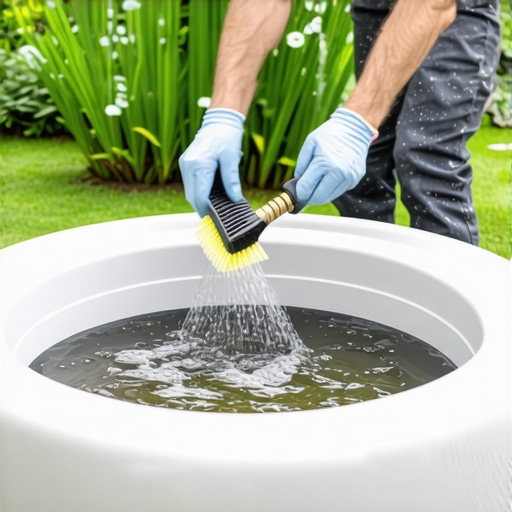
The Forensic Autopsy of a Failing Pond Filter
Cleaning a pond filter without getting covered in muck requires a closed-circuit cleaning methodology, utilizing bypass valves, submersible trash pumps, and dechlorinated water rinses to remove detritus while preserving the beneficial nitrifying bacteria colonies. By isolating the filtration canister from the main water body and using a venturi-driven backwash system, you can evacuate concentrated sludge directly into garden beds or irrigation zones without manual handling. This process prevents the aerosolization of hydrogen sulfide and pathogenic bacteria commonly found in anaerobic pond waste.
You can smell a neglected pond filter from twenty feet away. It is a sharp, sulfurous stench that signals the transition from an aerobic ecosystem to an anaerobic nightmare. When you open a clogged pressurized filter, you are looking at the concentrated failure of the nitrogen cycle. I always drill into my new crew members: if you don’t fix the soil grading first, every plant you put in the ground is just expensive compost. Water features are no different. If you don’t manage the mechanical debris before it reaches the biological media, you are just building a very expensive septic tank. Most homeowners make the mistake of waiting until the water flow drops to a trickle before acting. By then, the viscosity of the muck has increased to a point where simple backwashing is useless. You are no longer dealing with water; you are dealing with a thick, bacterial mat that resists movement.
“A pond’s biological filter is a living organism that requires a consistent supply of oxygenated water to convert toxic ammonia into nitrites and then nitrates.” – Penn State Agricultural Extension
The Physics of Muck: Why it Sticks to You
Muck is not just mud. It is a complex mixture of fecal matter, decaying leaf litter, and biofilm. This biofilm is secreted by bacteria to glue themselves to the filter media (like Matala mats or bio-balls). This adhesive quality is why a simple garden hose often fails. However, using high-pressure sprayers is a rookie mistake. A pressure washer will strip the Nitrosomonas bacteria right off the plastic media, effectively “sterilizing” your filter and causing an ammonia spike that can kill your koi in 48 hours. Proper landscaping maintenance includes understanding this delicate balance between cleanliness and biological viability. During a yard cleanup, people often dump grass clippings near the pond edge, which leach nitrogen and overwhelm the filter. This leads to a faster buildup of the very muck you are trying to avoid.
How much modified gravel do I need for a pond filter pad?
A stable filter requires a 4 to 6 inch base of compacted modified gravel (2A or 2B stone) to prevent the canister from settling. If the filter tilts even 2 degrees, the internal O-rings and diverter valves may experience uneven wear, leading to leaks that can drain your pond overnight. Always use a plate compactor to reach a 95 percent standard proctor density before setting your equipment. This is the same engineering standard we use for a sod install or a high-end paver patio. Without a solid base, the weight of the water inside the filter (approx 8.34 lbs per gallon) will cause the soil to heave during freeze-thaw cycles.
| Media Type | Surface Area (sq ft/cu ft) | Cleaning Frequency | Best Cleaning Method |
|---|---|---|---|
| Bio-Balls | 160-250 | Quarterly | Gentle Rinse in Pond Water |
| Matala Mats | 300-400 | Monthly | Manual Shake / Low Pressure Rinse |
| Kaldnes K1 | 250-300 | Self-Cleaning | Fluidized Air Bed |
| Bead Media | 400-500 | Weekly | Backwash Valve / Blower |
The Professional Step-by-Step: The No-Muck Protocol
To keep the sludge off your boots, you must follow the negative pressure principle. First, shut off the main pump. Close the intake and return valves to isolate the filter. If your filter has a sludge drain at the bottom, attach a 1.5 inch collapsible discharge hose and run it to your irrigation lines or a nearby flower bed. This muck is high in organic nitrogen and acts as an elite fertilizer. Next, open the air bleed valve to break the vacuum. Use a submersible pump in a bucket of pond water to create a portable rinse station. Never use tap water. The chlorine in municipal water is designed to kill bacteria; it does not distinguish between the bad stuff and the bacteria you need. Rinse the mats by dunking them repeatedly in the bucket. The muck stays in the bucket, and you stay dry.
- Wear 6-mil nitrile or PVC gauntlet-style gloves to prevent skin contact with bacterial pathogens.
- Use a wet-dry vac with a dedicated pond attachment for removing heavy sludge from the bottom of the filter canister.
- Check all EPDM gaskets and lubricate them with 100 percent silicone grease (not petroleum-based) to ensure a watertight seal.
- Inspect the UV clarifier sleeve for calcium buildup; clean with white vinegar if it is clouded.
- Re-prime the system slowly to avoid water hammer in the PVC lines.
“Proper drainage and the management of hydrostatic pressure are as critical to water feature longevity as they are to retaining wall stability.” – Hardscape Engineering Axiom
How do I know if my pond filter is actually clean?
A clean filter is not a sterile filter. You are looking for the removal of suspended solids while retaining a thin, brownish film on the media. This film is the active bacterial colony. If the water returning to the pond has a turbidity level higher than the pond itself, your mechanical stages are failing. You might need to adjust your irrigation runoff patterns; if fertilizers from your lawn are washing into the pond during rain, no amount of filter cleaning will keep the water clear. We often see this after a fresh sod install where the homeowner over-waters, causing nutrient-rich runoff to flood the pond. Landscaping is an integrated system. You cannot fix the water if the land around it is working against you. During your next yard cleanup, ensure there is a clear buffer zone of native plants or river rock between the turf and the water edge to catch these nutrients.
The Apprentice Lesson: Root Cause Analysis
I once saw a crew spend six hours cleaning a filter only for it to clog again in three days. They were frustrated. They thought the filter was broken. I walked over, looked at the pond, and saw they had ignored a massive string algae bloom caused by a dead raccoon stuck in the skimmer. The filter was just doing its job. You have to look at the whole system. If you’re cleaning your filter more than once a week, your bio-load is too high for your filtration capacity. Either get a bigger filter or get fewer fish. There are no shortcuts in biology. High-end landscaping requires respect for these physical limits. If you skip the maintenance, the muck will eventually find you, whether it is on your hands or in the smell of your backyard.
Comments are closed.