
Diagnosing the Mechanical Resonance in Your Water Feature
To quiet a 2026 pond pump, you must address mechanical vibration and hydraulic turbulence by isolating the pump from the pond shell using EPDM rubber mats or silicone dampeners while ensuring the impeller is free of debris to prevent cavitation and rattling sounds.
I recently got called out to tear up a $30,000 patio that was sinking because the previous contractor failed to properly secure a high-flow external pump vault. The constant, high-frequency vibration had actually liquefied the poorly compacted sub-base over three years, causing the pavers to migrate toward the pond edge. It wasn’t just a noise issue; it was a structural failure caused by kinetic energy. If your pump is rattling, it’s not just an annoyance. It is a machine slowly vibrating itself to death. A pond pump is a precision instrument, not a blender. When you hear a rattle, you are hearing the sound of friction, imbalance, and eventually, total motor failure. We don’t do ‘good enough’ in this trade. We do it right or we do it over.
The Physics of the Rattle: Cavitation and Friction
Most homeowners assume a loud pump is just ‘old.’ Usually, it’s suffering from cavitation. This happens when the pump is starved for water, creating low-pressure bubbles that implode against the impeller. It sounds like someone threw a handful of gravel into the motor. If you’ve been neglecting your yard cleanup, leaves and organic sludge are likely clogging the intake screens, forcing the motor to work at 110% capacity. This increases heat and vibration. You also have to look at the ‘head pressure.’ If your pipe diameter is too small for the GPH (gallons per hour) rating of your pump, the backpressure will cause the motor to whine. We see this constantly when hacks try to save five dollars by using 1-inch pipe on a 3,000 GPH pump. It’s physics. You can’t fight it. You’ll lose every time.
“A water pump’s efficiency is inversely proportional to the amount of air entrained in the system; vibration is the visual and auditory manifestation of energy loss.” – Principles of Hydraulic Engineering
How to quiet a submersible pump?
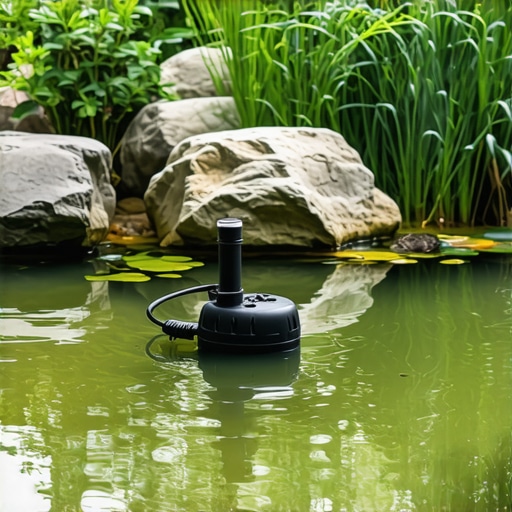
To quiet a submersible pump, you must break the physical connection between the pump housing and the pond floor. Use a 2-inch thick piece of closed-cell EPDM foam or a dedicated silicone pump mat. Never let the pump sit directly on the pond liner or a plastic pond skimmer box, as these act like a speaker cabinet, amplifying the motor’s natural 60Hz hum into a roar. Check the impeller for hair, fishing line, or bits of sod install debris that might have washed in during recent landscaping. A single pebble caught in the volute will create an imbalanced centrifugal force that can snap a ceramic shaft in weeks. Don’t skip the cleaning. Do it monthly.
| Material | Vibration Dampening Rating | Lifespan in Water | Best Use Case |
|---|---|---|---|
| EPDM Rubber | High | 15+ Years | Submersible pump bases |
| Silicone Pads | Very High | 10 Years | External pump feet |
| Crushed Stone | Low | Infinite | Drainage only (Avoid for pumps) |
| Polyurethane Foam | Medium | 2-3 Years | Temporary fixes (Will degrade) |
What is the best soundproofing for a pond pump?
The best soundproofing is a combination of mass-loaded vinyl inside the pump cover and flexible PVC couplings on the intake and discharge lines. Rigid PVC pipe acts as a conduit for sound; it carries the vibration from the motor all the way to the waterfall spillway. By installing a 12-inch section of flexible ‘spa hose’ or a rubberized Fernco coupling immediately after the pump, you decouple the motor from the plumbing. This stops the ‘drumming’ effect. Also, ensure your pump vault is backfilled with 3/4-inch washed gravel, not dirt. Dirt settles and leaves air gaps that echo. Gravel stays tight. If you’re doing a landscaping overhaul, ensure your irrigation lines aren’t crossing the pond plumbing, as they can knock together underground.
“Cavitation in centrifugal pumps occurs when the NPSH available is less than the NPSH required, leading to vapor bubble collapse and mechanical damage.” – National Agronomy Manual
The Forensic Autopsy of a Noisy Pump System
When I walk onto a job site where a customer is complaining about noise, I follow a strict diagnostic protocol. First, I check the intake. Is it clear? Second, I check the mounting. Is it bolted to a hollow plastic box? Third, I check the plumbing. Are there 90-degree elbows right at the discharge? You want sweeping 45-degree turns to maintain laminar flow. Turbulence equals noise. If you have a sod install happening nearby, the runoff can clog your filters in hours. Keep the site clean. It’s not just about aesthetics; it’s about mechanical longevity. A pump running in clean water with proper backpressure should be almost silent from five feet away.
- Inspect the Impeller: Look for chips or cracks in the blades.
- Verify Voltage: A pump running on a low-voltage drop from a long extension cord will vibrate and run hot.
- Level the Base: Use a torpedo level. An unlevel pump wears out bearings unevenly.
- De-air the Line: Air pockets trapped in the high points of your irrigation or pond lines cause ‘water hammer.’
- Check the Bearings: If you hear a high-pitched squeal, the bearings are shot. Replace the pump.
Step-by-Step Remediation for Vibration Fixes
If your pump is rattling, follow this sequence. 1. Disconnect the power. Never work on a pump in the water while it’s plugged in. 2. Pull the pump and open the volute cover. 3. Scrub the impeller with a stiff brush. 4. Wrap the pump in a ‘pump sock’ or mesh bag to prevent future debris entry. 5. Place a rubber dampening mat under the pump. 6. Reconnect using a flexible hose coupling. 7. Prime the system fully before restarting. If you skip the priming, you’ll trap air and be right back where you started with a noisy, cavitating mess. While you’re at it, do a full yard cleanup around the pond to ensure no new debris enters the system during the next rain. Precision is the difference between a master and a hack. Fix the soil grading around your pump vault to ensure water doesn’t pool and freeze around the housing, which can crack the casing in the winter. Real pros look at the whole environment, not just the wire.