
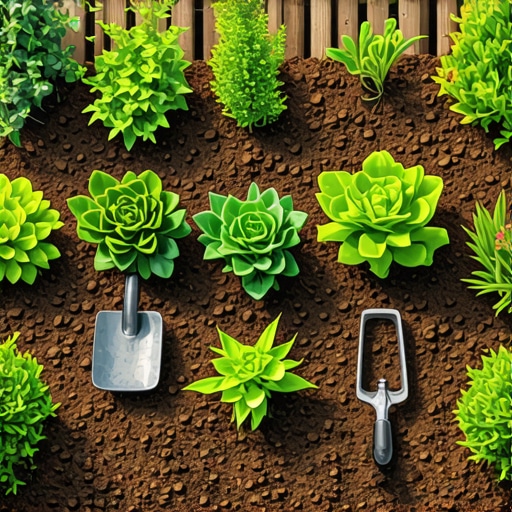
Why No-Till Soil Preparation Beats Traditional Plowing
No-till soil preparation preserves soil structure, protects mycorrhizal fungi, and prevents the germination of dormant weed seeds by avoiding mechanical disturbance. This tactic relies on building organic layers upward, allowing earthworms and microbes to aerate the soil naturally without destroying the delicate subsurface ecosystem that supports long-term plant health.
I always drill into my new crew members: if you don’t fix the soil grading first, every plant you put in the ground is just expensive compost. It is a hard lesson I learned 15 years ago on a job site in the heat of July. We were rushing to get three dozen 15-gallon oaks in the ground. The client wanted a fast screen. My foreman at the time told me to skip the soil assessment and just start digging. We didn’t account for the heavy clay compaction from the construction equipment. Two months later, every single tree was dead. They didn’t die of thirst; they drowned. The holes we dug became literal bathtubs because the surrounding soil was as hard as concrete. That is why I am obsessive about soil physics. If you are planning a garden for 2026, you start the biology now. You do not wait for the spring of the planting year. You let the biology do the heavy lifting while you sleep.
“Maintaining soil structure through no-till practices increases water infiltration and reduces erosion significantly compared to tilled systems.” – Penn State Extension Agronomy Guide
The Engineering of the Soil Profile
When you take a rototiller to your yard, you are basically putting your soil through a biological blender. You shatter the fungal hyphae that act as the internet of the garden, transporting nutrients between root systems. You also introduce a massive burst of oxygen that causes a microbial feeding frenzy. This sounds good until you realize those microbes are eating your organic matter at an unsustainable rate, leading to a collapse in soil structure a few months later. No-till gardening, or sheet mulching, mimics the forest floor. We are building the “O” horizon—the organic layer—from the top down. This is not just throwing mulch on grass. It is a calculated layering of carbon and nitrogen sources that must reach a specific C:N ratio to decompose effectively. If you get it wrong, you end up with a slimy, anaerobic mess. Get it right, and by 2026, you will have 8 inches of black gold that you can plant into with your bare hands.
| Material Layer | Function | Recommended Depth | Decomposition Rate |
|---|---|---|---|
| Recycled Cardboard | Weed Suppressant/Carbon | 1-2 Layers | 6-9 Months |
| Aged Compost | Nitrogen/Microbial Inoculant | 3-4 Inches | Ongoing |
| Arborist Wood Chips | Moisture Retention/Fungal Food | 4-6 Inches | 12-18 Months |
| Leaf Mold | Mineral Density | 2 Inches | 4-5 Months |
How to Build a Smother Layer That Actually Works
To successfully transition a patch of turf or a weed-choked lot into a 2026 garden bed, you must follow a strict installation protocol. First, address your irrigation needs. If you are installing a drip system, lay your main lines before you start layering. Use 811 to mark any underground utilities before you drive a single stake. Next, scalp the existing vegetation. This is the only time I will ever tell you to set your mower to the lowest possible setting. You want the grass to be stressed. Once scalped, apply a high-nitrogen organic amendment like blood meal or poultry litter. This acts as a fire-starter for the decomposition process. Lay your cardboard down, overlapping the edges by at least 6 inches. If you leave a gap, the Bermuda grass or nutsedge will find it. It is relentless.
- Scalp existing turf to 1 inch or less.
- Flag all irrigation heads and valves.
- Saturate the ground until it is moist to a depth of 4 inches.
- Lay heavy-duty, non-glossy cardboard with zero gaps.
- Apply 4 inches of high-quality, weed-seed-free compost.
- Top with 6 inches of coarse arborist wood chips.
How much modified gravel do I need for a patio base?
While this guide focuses on soil, many homeowners ask this when integrating garden beds with hardscapes. For a stable base, you need a minimum of 4 to 6 inches of compacted 21A or 3/4-inch minus modified gravel. Calculate your square footage, multiply by the depth in feet, and divide by 27 to get cubic yards. Do not skimp. A thin base leads to heaving. The same logic applies to soil: depth is your best friend. In a no-till system, the “base” is the undisturbed native soil, which must remain uncompacted. If you have been driving trucks over your future garden site, you will need to use a broadfork to crack the soil sub-surface without turning it over. This allows air and water to penetrate the compaction layer without destroying the soil horizons.
Can I start a no-till garden over existing grass?
Yes, and it is actually the preferred method for yard cleanup and preparation. By leaving the grass in place and smothering it, you are composting that organic matter directly into the soil. The nitrogen in the grass blades and the carbon in the root systems stay right where the future plants need them. If you strip the sod install-style, you are removing the most fertile layer of your soil. It is a waste of energy and nutrients. The key is the cardboard barrier. It must be thick enough to block all light for at least four months. This kills the chlorophyll-producing plants while providing a feast for the earthworms who will eventually pull that cardboard into the soil as they create tunnels.
“A retaining wall doesn’t fail because of the stone; it fails because of the water trapped behind it.” – Hardscape Engineering Axiom
The same principle applies to your garden beds. Hydrostatic pressure in the soil can lead to anaerobic conditions. No-till beds improve infiltration because the natural macropores stay intact. When we do a yard cleanup for a client, we often find that their soil is functionally dead because they have used synthetic fertilizers that killed the soil biology and then tilled it until it had the consistency of flour. Flour does not drain; it turns to paste. By 2026, your no-till bed will have the structure of a sponge. It will hold water during a drought and drain it during a monsoon. That is the goal. Stop fighting the dirt. Start building the soil.