
The accumulation of pine needles, often referred to as ‘duff,’ creates a persistent challenge for any high-end landscape. I always drill into my new crew members: if you don’t fix the soil grading and clear the organic debris first, every plant you put in the ground is just expensive compost. You can buy the most expensive nursery stock in the tri-state area, but if you plant it into a bed choked by three inches of acidic pine needles, the root flare will suffocate, and the nitrogen cycle will be hijacked. We aren’t just cleaning up a mess; we are performing a structural intervention to ensure the survival of the turf and the surrounding flora. Pine needles are not like deciduous leaves; they are waxy, resinous, and structurally designed to resist decomposition while forming an anaerobic mat that chokes the soil life. If you want a yard that survives through 2026, you need a removal strategy that doesn’t just push the problem into the neighbor’s fence line.
The Mechanical Science of Needle Removal
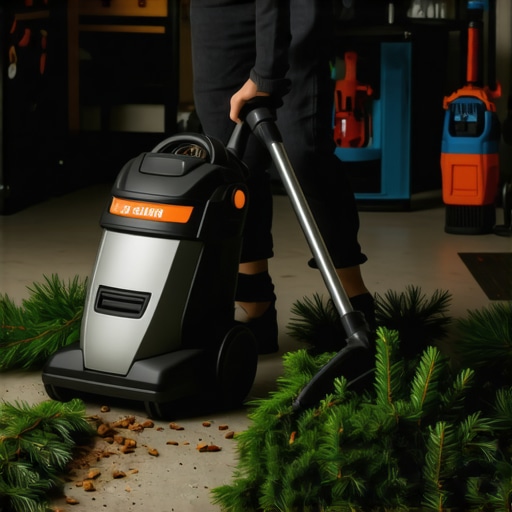
The shop vac method for pine needle removal utilizes high-lift suction and static pressure to extract resinous debris from turf and garden beds without disrupting the underlying soil structure or delicate root systems. Unlike blowers that often fail to move needles lodged in dense grass, a vacuum with a 2.5-inch diameter hose creates a venturi effect that lifts needles vertically, preventing the compaction often caused by raking. This method is particularly effective around irrigation heads and hardscape joints where needles tend to wedge themselves into small crevices.
“Proper yard cleanup involves the removal of organic debris that inhibits gas exchange between the atmosphere and the root zone, which is critical for maintaining soil microbial health.” – Turfgrass Science Manual
How much modified gravel do I need for a patio base?
While often asked during yard cleanups, the answer depends on the hydrostatic pressure and soil type; typically, you need a minimum of 4 to 6 inches of compacted 21A or 3/4-inch modified gravel to ensure a stable base that won’t heave during freeze-thaw cycles or settle under the weight of the pavers. If your yard cleanup reveals sinking pavers near pine trees, it’s usually because the needles have decomposed and acidified the base material, or the roots are lifting the structure.
The Pine Needle Autopsy: Why Blowers Fail
Most ‘mow-and-blow’ contractors will spend three hours with a backpack blower moving pine needles in circles. It’s a waste of fuel and time. Pine needles have a unique aerodynamic profile; their needle-like shape allows them to slice through the air stream of a blower. They don’t ‘catch’ the wind like a maple leaf does. Instead, they get driven deeper into the thatch layer of your sod install. When you use a high-powered shop vac, you are applying direct force to the mass. I recommend a minimum 6.5 Peak HP motor. Anything less and you’ll be standing there all day. You also need to ensure you’re using a pleated cartridge filter specifically rated for fine dust, or the pine pollen and broken needle fragments will just exhaust back out into your face.
| Cleanup Method | Efficiency (Needles) | Soil Impact | Equipment Requirement |
|---|---|---|---|
| Manual Raking | Low | High (Disturbs Roots) | Tine Rake |
| Backpack Blower | Medium | Low | 700+ CFM Blower |
| Shop Vac Method | High | Zero | 6.5 HP Wet/Dry Vac |
| Power Broom | High | Very High (Aggressive) | Walk-behind Broom |
The Horticultural Impact: C:N Ratios and Soil pH
Pine needles have a Carbon-to-Nitrogen (C:N) ratio of approximately 110:1. To put that in perspective, soil microbes need a ratio closer to 20:1 to function. When needles sit on your lawn, microbes pull nitrogen out of the soil to try and break down those high-carbon needles. This leaves your grass starving for nitrogen. This is why you see yellowing patches under pine trees. It’s not just the shade; it’s a nitrogen heist. Furthermore, as needles break down, they release organic acids. While one season of needles won’t tank your pH, five years of neglect will drop it into the 4.5 to 5.0 range, which is far too acidic for most turf species. You’ll end up with moss and weeds that thrive in acidic, low-nitrogen environments.
“The decomposition of pine needles requires significant nitrogen, which can lead to a temporary localized deficiency in the soil surface, impacting the vigor of surface-rooted plants.” – Michigan State University Extension
How to clear pine needles from decorative rock?
Cleaning needles from river rock or lava rock is where the shop vac really shines; the suction lifts the lighter needles while the heavier stone stays in place, a task that is nearly impossible with a rake and incredibly tedious with a blower. This keeps your landscaping looking sharp without having to manually pick out debris or replace shifted stones every spring.
Integration with Irrigation and Sod Health
If you are planning a sod install, the area must be 100 percent clear of pine litter. Any needles trapped under the new sod will create air pockets and promote fungal pathogens like Pythium or Rhizoctonia. Additionally, check your irrigation. Pine needles are notorious for clogging the seals on pop-up spray heads. When the head retracts, a needle gets caught in the wiper seal. The next time the zone fires, the head stays stuck up or leaks, wasting water and dropping the dynamic pressure of the entire zone. Use the shop vac to clear the area around every head before the first spring start-up.
- Inspect 811 utility markings before any deep grading.
- Check shop vac filters every 30 minutes of use.
- Test soil pH after removal to determine lime requirements.
- Clear irrigation wiper seals to prevent riser leaks.
- Maintain a 3-inch gap between mulch and tree trunks to avoid rot.
Precision matters. Don’t be the homeowner who lets a two-inch mat of needles sit on the lawn all winter. It will rot. The vacuum method might take a bit more setup than a rake, but the result is a clean, oxygenated soil surface ready for the growing season. It’s the difference between a yard that just exists and a yard that thrives. Professionals don’t cut corners; we extract the problem at the source.