
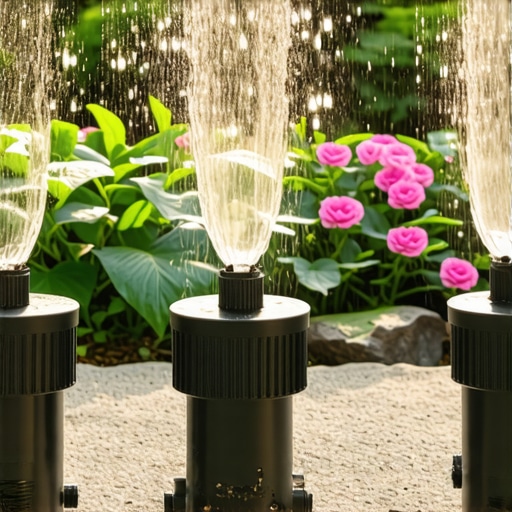
The Mechanics of Moving Water
High-performance garden stream pumps require continuous-duty motors capable of handling Total Dynamic Head (TDH) calculations. Professional-grade units from Tsurumi, Aquascape, and ShinMaywa offer the necessary GPH (Gallons Per Hour) efficiency and solids-handling capabilities to prevent motor burnout and maintain 24/7 stream flow in 2026.
“A pump’s longevity is inversely proportional to the resistance of the discharge line.” – Irrigation Engineering Quarterly
I recently got called out to tear up a $30,000 patio that was sinking because the previous contractor used a cheap sump pump for a stream that leaked nearly 100 gallons a day into the base material. The hydrostatic pressure turned the modified gravel bedding sand into soup. This is why hardware store pumps have no place in a professional landscape. A sump pump is designed to move water out of a basement once every few weeks. A garden stream pump must move water 24 hours a day, 365 days a year. When you choose a pump, you are not just buying a motor; you are buying the engineering that prevents the seal failure that eventually destroys your hardscape. If you do not calculate the friction loss of your PVC pipe, you will burn out even the best motor in existence. I have seen it happen to homeowners and bad contractors alike. It is a costly mistake that requires a full yard cleanup and reconstruction of the stream bed.
Selecting the Best Water Pump Brands for 2026
In the world of professional landscaping, we look for three things: electrical efficiency, head pressure capacity, and ease of maintenance. The 2026 market has seen significant leaps in asynchronous motor technology and variable speed control. Here are the three brands we trust in the field.
1. Tsurumi (The Industrial Beast)
Tsurumi has long been the gold standard for contractors who never want to return to a job site for a repair. Their 2026 PN series features a semi-vortex impeller that can pass solids up to 1 inch. This is critical for streams where leaves and debris inevitably find their way past the skimmer. The motor housing is made of 304 stainless steel and fiberglass-reinforced plastic, making it nearly impervious to corrosion. If you have a waterfall with a 10-foot vertical lift, the Tsurumi 50PN2.4S is the workhorse you need. It handles the high PSI requirements of tall features without the thermal overload issues common in cheaper brands.
2. Aquascape (The Efficiency Leader)
The Aquascape SLD 5000-8000 series is the best option for residential landscaping where electricity costs are a concern. These are asynchronous pumps, which means they provide the torque of a direct-drive pump with the efficiency of a mag-drive. The 2026 models include integrated Smart Control receivers, allowing homeowners to adjust the flow rate via a smartphone. This is not just a gimmick. Reducing the flow during the winter or when you are away can save hundreds on your utility bill. For a standard sod install and yard renovation, these pumps fit perfectly into most pondless skimmer boxes.
3. ShinMaywa (The Engineering Standard)
ShinMaywa Norus series pumps are the ultimate in longevity. They utilize a dual mechanical seal that is cooled by the water flow, preventing the heat buildup that kills 90% of garden pumps. The weight-to-power ratio is unmatched. I always tell my crew that if a pump feels like a plastic toy, it will perform like one. The ShinMaywa feels like a piece of industrial equipment because it is one. It is specifically designed for continuous duty in harsh aquatic environments.
| Brand | Model | GPH @ 5ft | Watts | Warranty |
|---|---|---|---|---|
| Tsurumi | 50PN2.4S | 3800 | 480 | 2 Years |
| Aquascape | SLD 5000 | 5200 | 350 | 3 Years |
| ShinMaywa | Norus 50 | 4500 | 380 | 2 Years |
“Submersible pumps for water features must be rated for continuous duty to avoid thermal overload failure.” – ICPI Hardscape Standards
How much modified gravel do I need for a stream bed?
Calculating the base for a garden stream requires determining the volume of the trench and the displacement of the stones. For a standard 2-foot wide stream, you generally need 1 ton of 2-B modified gravel for every 10 linear feet of stream to provide adequate drainage and structural support for the liner and decorative boulders.
What pump size is needed for a 2-foot waterfall?
To achieve a professional-looking water sheet, you need roughly 1,500 GPH for every 1 foot of waterfall width. For a 2-foot wide waterfall, a pump rated for 3,000 GPH at the specific head height of your feature is the minimum requirement. Always account for friction loss through the irrigation lines and check valves.
Integrating the Stream into Your Landscaping
A water feature is only as good as the surrounding landscape. If you do a fresh sod install right up to the edge of the stream without a proper capillary break, your grass will pull water out of the feature and the stream will run dry. This is called ‘wicking.’ During a yard cleanup, we ensure that the pond liner is pulled high behind the rocks and that the soil is graded away from the feature to prevent runoff from contaminating the water. If you are running an irrigation system, ensure the zones near the stream are adjusted. You do not want a sprinkler head spraying directly into the stream, as this adds chlorine and minerals that can damage the biological balance and the pump’s internal components. The soil compaction around the stream must reach at least 95% Proctor density to prevent the shifting of the boulders, which can pinch the pump’s discharge hose and cause backpressure issues.
Checklist for a Successful Installation
- Call 811 to mark underground utility lines before digging.
- Excavate the stream bed with a slight pitch of 2% for natural flow.
- Install a heavy-duty skimmer box to house the pump and protect it from debris.
- Use 2-inch flex PVC to reduce friction loss and avoid 90-degree elbows.
- Test the pump’s amp draw with a multimeter to ensure it is within factory specs.
- Lay the sod install with tight seams to prevent soil erosion into the water.