
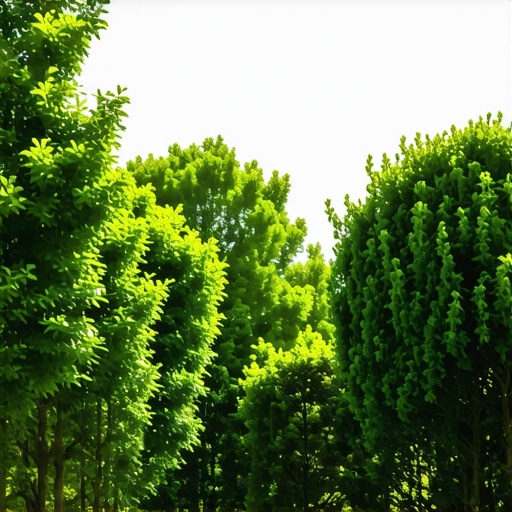
Designing for Privacy in 10-Foot Easements
Selecting the right species for a 5 to 10-foot easement requires prioritizing columnar growth habits, non-invasive root systems, and drought tolerance. Avoid species that exceed 4 feet in width at maturity or have aggressive lateral roots that threaten foundation footings or existing irrigation lines. Every inch of soil volume in a side yard is a high-stakes environment where biological needs clash with structural constraints. I always drill into my new crew members: if you don’t fix the soil grading first, every plant you put in the ground is just expensive compost. You can buy the most expensive Japanese Holly on the market, but if it is sitting in a 3-foot wide clay trench with no drainage, the roots will drown in 60 days. We see it every season. A homeowner spends thousands on landscaping only to ignore the fact that their side yard is the primary drainage channel for their entire roof. Without proper grading and a plan for hydrostatic pressure, your privacy screen is a graveyard waiting to happen.
The Biology of Narrow-Space Planting
In a narrow side yard, trees compete for limited sunlight and air circulation. This creates a micro-climate where fungal pathogens thrive due to stagnant air. You must understand the USDA Hardiness Zones and the specific light-saturation requirements of your chosen cultivar. When we perform a yard cleanup prior to a new sod install, we often find that the soil in these corridors is heavily compacted from the original house construction. This compaction increases bulk density, making it nearly impossible for new roots to penetrate the soil. Before planting, we use a penetrometer to measure soil resistance. If the PSI is too high, we don’t plant; we remediate the soil first. It is not just about digging a hole; it is about creating a three-dimensional root-growth zone that allows for gas exchange and water infiltration.
“The most common cause of tree failure in urban environments is planting at the incorrect depth, leading to stem-girdling roots that eventually choke the vascular system.” – International Society of Arboriculture Standards
Top Species for 2026 Side Yard Privacy
The 2026 market favors cultivars that have been bred specifically for high-density urban environments. These trees must be ‘excurrent’ in growth, meaning they have a strong central leader and minimal lateral spread. The following table provides a technical breakdown of the top performers for 2026.
| Species Name | Mature Width | Annual Growth Rate | Root System Type |
|---|---|---|---|
| Juniperus scopulorum ‘Skyrocket’ | 2-3 Feet | 12-15 Inches | Deep Tap/Fibrous |
| Thuja occidentalis ‘American Pillar’ | 3-4 Feet | 24-36 Inches | Shallow/Non-Invasive |
| Carpinus betulus ‘Fastigiata’ | 4-6 Feet | 10-12 Inches | Deep Heart |
| Ilex crenata ‘Sky Pointer’ | 1.5-2 Feet | 6-8 Inches | Compact/Fibrous |
How much space does a privacy tree really need?
A privacy tree requires a minimum of 36 inches of unobstructed horizontal soil surface to establish a stable root flare and allow for adequate water absorption. If the planting area is narrower than 3 feet, you must utilize specialized engineering solutions like root barriers or structural soil to prevent damage to nearby concrete or foundations. Root flare exposure is non-negotiable. If you bury the trunk flare, the phloem will rot. This is a scientific fact. We see contractors pile mulch against the trunk like a volcano; this is a death sentence. We use a 45-degree bevel on our planting holes to encourage roots to move outward rather than circling the root ball. Circling roots lead to girdling, and girdling leads to a dead tree in five years.
The Engineering of the Planting Hole
The physical act of planting a tree in a narrow corridor is an exercise in soil physics. Most side yards are prone to the ‘bathtub effect.’ This occurs when a hole is dug in heavy clay and backfilled with loose potting soil. The hole acts as a basin, trapping water and suffocating the tree. To avoid this, we always perform a percolation test. If the water doesn’t drain at a rate of at least 1 inch per hour, we install a French drain system underneath the planting line. Irrigation is another critical factor. In narrow spaces, we favor pressure-compensated drip emitters over spray heads. Spray heads hit the foliage, leading to powdery mildew and needle cast. Drip systems deliver water directly to the root zone at a rate the soil can actually absorb.
2026 Checklist for Narrow Yard Preparation
- Locate Utilities: Call 811 before any excavation to map gas, water, and fiber optic lines.
- Soil pH Testing: Verify the soil is between 6.0 and 7.0 for optimal nutrient uptake.
- Drainage Check: Ensure the grade slopes at least 2 percent away from the foundation.
- Root Barrier Installation: Use 18-inch HDPE barriers if planting within 4 feet of a walkway.
- Air Excavation: Use compressed air to loosen compacted soil without damaging existing infrastructure.
“For narrow easements, the selection must focus on decurrent vs. excurrent growth forms to ensure the canopy does not interfere with structural soffits or gutters.” – Agricultural Extension Manual for Urban Forestry
Why is my new privacy tree turning brown?
The primary reason for browning in newly installed privacy trees is transplant shock caused by improper water management or the use of high-nitrogen fertilizers too early in the establishment phase. Nitrogen forces top growth at the expense of root development, which is catastrophic for a tree trying to anchor itself in a narrow side yard. We use root stimulants containing mycorrhizae and humic acid instead of traditional fertilizers for the first 12 months. This encourages the biological symbiotic relationship between the roots and the soil. If your needles are turning brown from the inside out, it is likely a moisture issue. If they are turning brown from the tips in, it is likely salt burn from over-fertilizing or poor water quality. Don’t guess; measure the soil moisture with a tensiometer.
Maintenance and Long-Term Health
A side yard privacy screen is not a ‘set it and forget it’ feature. As the trees grow, they will require structural pruning to maintain their columnar shape and ensure light reaches the lower branches. If the lower branches die off, you lose the privacy you planted them for in the first place. This is where yard cleanup becomes more than just raking leaves; it is about thinning the interior canopy to allow for airflow. We recommend a 10 percent thinning every three years for species like the European Hornbeam. Furthermore, keep an eye on your sod install around the base of the trees. Grass is a heavy feeder and will compete with your trees for water and nutrients. We maintain a 2-foot mulch ring, kept 3 inches away from the trunk, to eliminate this competition. This isn’t about aesthetics; it is about biology. Competition kills.