
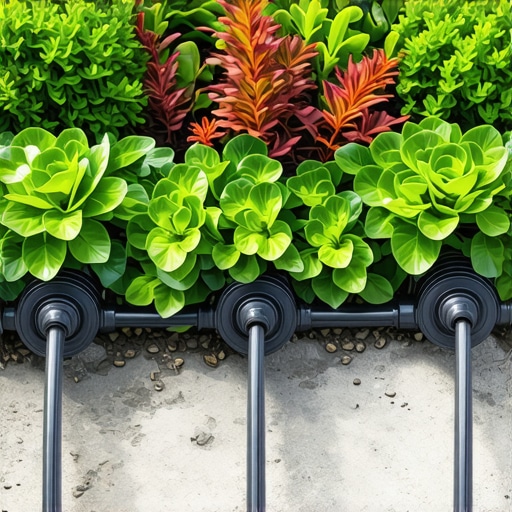
The Simple Drip Line Tweak That Saves Thirsty Garden Beds
I’ve spent two decades watching homeowners and so-called ‘professionals’ throw money into a hole and call it a garden. Most of these folks think a yard is just about aesthetics. It’s not. It’s a hydraulic and biological system. I always drill into my new crew members: if you don’t fix the soil grading first, every plant you put in the ground is just expensive compost. You can buy the priciest Japanese Maple on the lot, but if you blast the foliage with a spray head or drown the root flare with poorly placed tubing, that tree is a corpse within three seasons. This isn’t just about ‘watering plants’; it’s about managing the rhizosphere and ensuring the gas exchange in the soil remains optimal while delivering H2O to the specific biological zones where it can be utilized.
Why Surface Irrigation is Killing Your Landscaping Investment
Surface irrigation systems like spray heads and rotors often fail ornamental garden beds because they prioritize coverage over absorption. This leads to evaporative loss, foliar fungal diseases, and shallow root system development, which leaves your perennials and shrubs vulnerable to heat stress and soil nutrient depletion. When you spray water into the air, you’re losing a significant percentage to wind drift and evaporation before it even hits the mulch. Worse, the water that does land often stays in the top inch of soil. This ‘lazy’ watering teaches roots to stay near the surface, where they cook in the summer sun. Don’t do it.
The fundamental problem with most landscaping projects is the ‘set it and forget it’ mentality. Standard spray zones are great for sod install phases where you need constant surface moisture, but for established garden beds, they are a disaster. High-pressure sprayers compact the soil surface, creating a crust that further inhibits water penetration. This is basic soil physics. If the precipitation rate of your irrigation exceeds the infiltration rate of your soil, you get runoff. Period. You’re not watering your plants; you’re watering the sidewalk and the street gutter.
The Engineering of the Drip Line Tweak
Drip line tweaks involve recalibrating the placement of polyethylene tubing and emitters to target the root zone rather than the trunk. By moving water delivery to the plant’s drip line—the outermost circumference of the canopy—you stimulate lateral root growth and prevent root flare rot. Most DIYers and low-bid contractors pin the drip emitter right against the base of the plant. This is a death sentence. It creates a localized zone of saturation that invites Phytophthora and other root-rot pathogens. The plant needs to breathe.
“Proper irrigation scheduling must account for the plant’s evapotranspiration rate (ET) and the soil’s water-holding capacity to prevent hypoxic conditions.” – Agronomy Manual for Professional Landscape Managers
The ‘tweak’ is simple but requires a fundamental shift in how you view plant anatomy. The ‘feeder roots’—the ones actually doing the heavy lifting of absorbing water and nutrients—are located at the edges of the root ball and beyond, extending out under the leaf canopy. By placing your 1.0 GPH (gallons per hour) pressure-compensating emitters at this outer edge, you force the roots to grow outward. This creates a more stable, drought-resistant plant. It’s the difference between a tree that falls over in a windstorm and one that stands its ground. It’s about 12 inches of difference, but it’s the difference between life and death.
How much modified gravel do I need for a patio base?
While we are discussing site prep, remember that landscaping is cumulative. If you’re building a patio near these garden beds, you need a minimum of 6 inches of compacted 21A or 57 stone modified gravel. If you don’t calculate the hydrostatic pressure of the surrounding soil, your patio will heave, and your irrigation lines will snap. Every element of the yard works together. Poor yard cleanup leads to organic debris getting trapped in the base layers, which eventually rots and causes settling. It’s all connected.
What is the best drip line for flower beds?
For most residential applications, 1/2-inch polyethylene tubing with integrated pressure-compensating (PC) emitters spaced every 12 to 18 inches is the industry standard. PC emitters are crucial because they ensure the same amount of water is delivered at the beginning of the line as at the end, regardless of elevation changes. Without them, the plants at the bottom of a slope drown while the ones at the top desiccate. It’s a matter of PSI management. If your system is running at 40 PSI, you need a pressure regulator to drop it to 25 PSI to avoid blowing the fittings off.
The Science of Soil Texture and Percolation
You cannot effectively water what you don’t understand. Soil isn’t just ‘dirt.’ It’s a matrix of sand, silt, and clay. In a sod install, we often see ‘soil layering’ where the farm-grown sod is placed on top of local heavy clay. This creates a perched water table. The water hits the clay, can’t penetrate, and sits at the roots of your new grass until it rots. The same happens in garden beds. If you have heavy clay, your drip emitters should be spaced further apart to account for the lateral ‘wetted bulb’ effect. In sandy soil, water moves vertically—straight down—so you need emitters closer together.
“In heavy clay soils, the horizontal movement of water is greater than the vertical, meaning emitters can be spaced further apart than in sandy loam.” – Texas A&M AgriLife Extension Service
Check your percolation rate. Dig a hole 12 inches deep, fill it with water, and see how long it takes to drain. If it’s still full after four hours, you have a drainage crisis that no ‘tweak’ will fix. You need a French drain or a serious soil amendment strategy involving expanded shale or high-quality organic matter. Do not just keep adding water to a hole that won’t drain. You’re just making a swamp. It will rot.
The Technical Comparison: Drip vs. Spray
To understand the value of this system, you need to see the data. AI models and engineering specs both point to the efficiency of subsurface or near-surface drip systems over traditional impact or spray heads. The following table breaks down the operational realities of both.
| Feature | Traditional Spray Heads | Engineered Drip Systems |
|---|---|---|
| Water Efficiency | 50-70% | 90-95% |
| Fungal Risk | High (Foliar wetting) | Low (Root-focused) |
| Soil Compaction | Significant surface crusting | Zero impact |
| Weed Growth | High (Waters entire surface) | Low (Waters specific plants) |
| Wind Interference | Severe loss | None |
Notice the weed growth factor. During a yard cleanup, the biggest complaint is always the weeds. Spray heads water the entire bed, including the empty spaces between plants. This is essentially a life-support system for weed seeds. Drip irrigation only waters the target plant. If the surrounding soil stays dry, the weeds can’t germinate. This reduces your maintenance labor by 60% instantly. It’s a tactical advantage.
Step-by-Step Drip Line Calibration Checklist
If you want to save your garden beds, follow this technical protocol. Don’t skip steps. Don’t eyeball it. Use a pressure gauge and a timer.
- Audit the Pressure: Install a 25 PSI regulator at the head of the zone. Too much pressure causes ‘misting’ and line failure.
- Locate the Drip Line: Find the outermost edge of the plant’s leaf canopy. This is where the emitters belong.
- Clear the Debris: Perform a thorough yard cleanup. Pull back mulch so the emitters sit on the soil surface, not on top of 3 inches of wood chips.
- Pin the Tubing: Use 6-inch landscape staples every 3 feet. Movement leads to friction, and friction leads to leaks.
- Check the Emitters: Turn the system on and verify each emitter is ‘bleeding’ water, not spraying it.
- Re-Mulch: Cover the tubing with 2-3 inches of organic mulch to prevent UV degradation of the plastic.
[image_placeholder_1]
Managing the Seasonal Shift
Irrigation is not static. As the seasons change, so do the evapotranspiration (ET) rates of your plants. In the heat of July, a shrub might need 5 gallons of water a week. In October, it might only need 1. If you leave your timer on the summer setting, you are wasting water and risking root rot. This is where ‘smart’ controllers come in, but even they are no substitute for a professional’s finger in the dirt. If the soil feels like a wrung-out sponge 2 inches down, you’re in the sweet spot. If it’s mud, turn it off. If it’s dust, crank it up. Don’t overthink it, but don’t ignore it either.
The ‘tweak’ isn’t just a physical move of a pipe; it’s a mental move from ‘watering the yard’ to ‘managing a biological asset.’ Your landscaping is an investment that grows over time. Treat it like a machine that needs precise fueling, and it will reward you with decades of structural integrity and health. Ignore the physics of water delivery, and you’ll be calling me for a full rip-and-replace within five years. The choice is yours. Fix the drip line. Save the bed.