
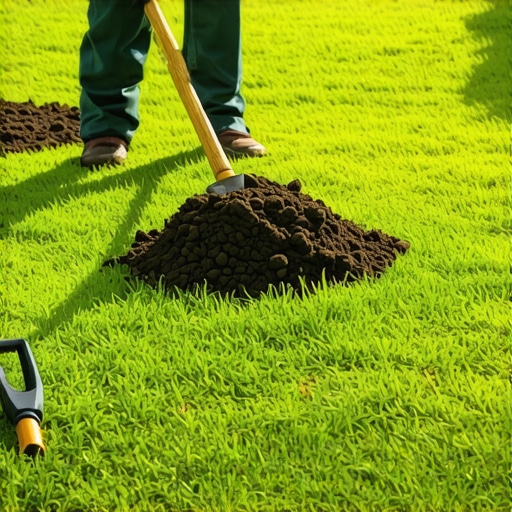
The Autopsy of a Dying Lawn: Why Your Grass is Failing
To fix patchy grass without buying expensive fertilizer, you must restore soil microbiology and eliminate compaction through core aeration and compost top-dressing. These methods improve nutrient cycling naturally, allowing the lawn to feed itself through organic matter decomposition rather than synthetic salt-based chemicals.
I remember a call I took last August. A homeowner in the suburbs had a lawn that looked like a scorched battlefield. They had spent over four hundred dollars on high-nitrogen synthetic fertilizers, thinking more was better. Instead of a green carpet, they had a chemical nightmare. The grass was literally crispy. When I pulled a soil plug, the culprit was obvious: the soil was as hard as concrete, and the salt index from the cheap fertilizer had sucked every ounce of moisture out of the root zone. They didn’t need more chemicals; they needed a biology lesson. We had to scrape the dead thatch, aerate the hell out of it, and introduce organic matter to buffer the pH. It took six months, but that lawn is now the healthiest on the block without a single blue crystal being dropped on it.
The Science of Soil Compaction and Thatch
Your lawn is a living organism, but most people treat it like a plastic rug. When you have bare patches, the first thing you should look at isn’t the color of the grass, but the structure of the dirt. Soil compaction is the silent killer of turf. When the ground is packed tight, oxygen cannot reach the roots. Without oxygen, the aerobic bacteria that break down organic matter die off. This leads to a massive buildup of thatch—a spongy layer of organic debris that sits on the surface and acts like a raincoat, preventing water from reaching the soil. It is hydrophobic. You can run your irrigation for an hour, and the water will simply sit on top or run off into the gutter. This is why yard cleanup is more than just raking leaves; it is about managing the interface between the air and the soil.
“A lawn is only as resilient as its root system, and roots cannot thrive in anaerobic, compacted conditions where gas exchange is restricted.” – Agronomy Field Manual, 4th Edition
The Mechanical Solution: Core Aeration Over Chemicals
If you want to fix patches, stop buying ‘miracle’ liquids and rent a core aerator. You need to pull physical plugs out of the ground. We are talking 2.5 to 3 inches deep. These holes serve three purposes. First, they break the physical bond of the clay or silt. Second, they create a direct channel for oxygen and water. Third, they provide a protected ‘micro-climate’ for new seeds to germinate. When you drop seed into an aeration hole, it stays moist and protected from the sun. This is the foundation of any professional sod install or overseeding project. Don’t waste money on ‘patch repair’ mixes that are 90 percent mulch and 10 percent cheap seed. Buy high-quality, local cultivars and put them in the holes you just punched.
How much grass seed do I need for a patchy lawn?
For overseeding patchy areas, you should aim for 4 to 6 pounds of seed per 1,000 square feet for cool-season grasses like Fescue or Kentucky Bluegrass. If the area is completely bare, increase this to 8 to 10 pounds to ensure high density and prevent weed encroachment during the germination phase.
| Material / Method | Cost Level | Impact Duration | Primary Benefit |
|---|---|---|---|
| Synthetic Fertilizer | High | Short-Term (4-6 weeks) | Rapid green-up (salt-based) |
| Compost Top-Dressing | Low/Medium | Long-Term (Years) | Increases CEC and microbiology |
| Core Aeration | Medium (Rental) | Seasonal | Relieves compaction and gas exchange |
| Proper Irrigation | Low (Labor) | Immediate | Root depth and heat resistance |
Top-Dressing: The Real ‘Black Gold’
Forget the 20-0-0 nitrogen bags. Go to a local nursery and get a yard of screened, well-rotted leaf compost. Spreading a quarter-inch layer of compost across your lawn is the single most effective way to fix patchy grass. This is called top-dressing. Compost introduces Mycorrhizal fungi and beneficial bacteria. These organisms form a symbiotic relationship with your grass roots. The fungi reach out into the soil, gathering phosphorus and micronutrients that the grass can’t reach on its own, and in exchange, the grass feeds the fungi sugars produced through photosynthesis. It is a biological trade route. When you use heavy synthetic fertilizers, you kill this trade route. The salts in the fertilizer dehydrate the microbes, making the grass dependent on the next chemical fix. It is an addiction cycle. Break it.
When is the best time to fix bare spots in grass?
The best time to fix bare spots is late summer to early fall when soil temperatures are between 50 and 65 degrees Fahrenheit. This allows the root system to establish itself during the cool autumn months without the stress of summer heat or the competition of spring-germinating weeds like crabgrass.
“The most critical component of a sustainable landscape is the soil’s Cation Exchange Capacity (CEC), which is significantly enhanced by the addition of organic matter rather than synthetic inputs.” – Penn State Agricultural Extension
The 1-Inch Irrigation Rule
Most homeowners drown their lawns with daily, light watering. This is a death sentence for patchy areas. Light watering encourages shallow roots that fry the moment the sun comes out. If you want deep, thick grass that fills in patches, you need to water deeply and infrequently. Aim for exactly 1 inch of water per week, delivered in one or two heavy sessions. This forces the roots to chase the water deep into the soil profile. Use a tuna can to measure your irrigation output. If it takes 45 minutes to fill the can, that’s your run time. This discipline is what separates a professional landscaping firm from a guy with a hose. Deep roots are the only thing that will save your lawn during a July heatwave.
Checklist for Natural Lawn Remediation
- Mow the lawn at the lowest setting to scalp existing grass and expose bare dirt.
- Dethatch the area using a power rake to remove the organic barrier.
- Aerate the entire lawn, focusing heavily on the patchy or high-traffic areas.
- Apply a 1/4 inch layer of organic compost (not manure, which can be too high in nitrogen).
- Spread high-quality seed matched to your USDA hardiness zone.
- Water twice daily for 10 minutes until germination (about 14 days), then transition to deep watering.
The Biological Bottom Line
Stop looking for a shortcut in a bag. Grass grows where the conditions are favorable. If your lawn is patchy, the conditions are hostile. Fix the soil, fix the air, and fix the water. The grass will follow. You don’t need a degree in chemistry to have a great yard, but you do need to understand the physics of the ground you’re standing on. It’s about engineering a system where the biology does the heavy lifting for you. Hard work in the fall leads to a resilient lawn in the spring. No shortcuts. Just science.