
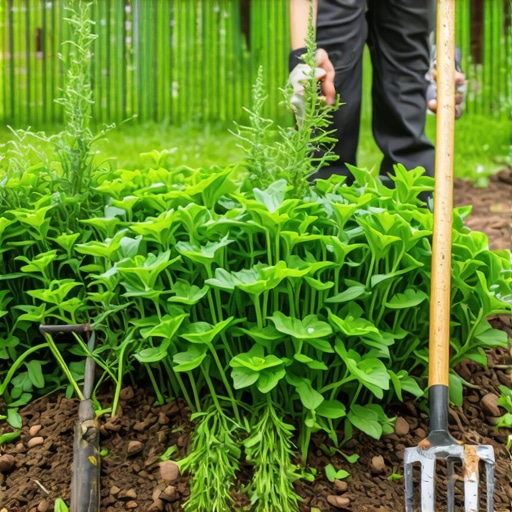
The Forensic Autopsy of a Failed Landscape
A failed garden bed isn’t just an eyesore; it is a structural and biological collapse of an engineered environment. When a client calls me to fix a bed overrun with thistle, I don’t see weeds; I see a failure of site preparation and a complete misunderstanding of soil microbiology. I always drill into my new crew members: if you don’t fix the soil grading first, every plant you put in the ground is just expensive compost. Most homeowners think they can just pull the weeds and start over. They are wrong. They leave behind the adventitious buds on the creeping roots, and within fourteen days, the nightmare returns. We are going to perform an autopsy on why your garden bed died and how to reclaim it using professional-grade horticultural engineering.
Why Canada Thistle Destroys Garden Beds
Canada thistle (Cirsium arvense) colonizes garden beds by utilizing a deep horizontal creeping root system that can extend fifteen feet deep into the subsoil. To clear a failed bed, you must achieve total root exhaustion through a combination of mechanical excavation, systemic herbicides, or long-term solarization. It will not go quietly. If you leave a fragment of root just one-quarter inch long, it will regenerate into a full-clone plant in weeks. This is why standard ‘yard cleanup’ services fail; they lack the patience for the biological reality of this species.
“A weed-infested site is rarely a problem of the plant itself, but a symptom of compacted soil, poor drainage, and nutrient imbalances that favor opportunistic species over ornamental cultivars.” – Agronomy Field Manual (12th Ed.)
How deep do thistle roots actually go?
In heavy clay soils, the primary taproot of a mature thistle can exceed six feet, while the lateral runners form a dense mat just below the surface. This mat acts like a biological rebar, making it impossible for desired perennials to compete for moisture or nitrogen. If you don’t dig, you don’t win. It’s that simple.
The Reclamation Process: Mechanical vs. Chemical Control
Clearing a failed bed requires a decision between speed and soil health. You cannot simply throw down sod install or mulch and hope for the best. You have to choose a lane. The following table breaks down the efficacy of professional reclamation methods based on labor, cost, and the time required to reach a ‘zero-weed’ baseline.
| Method | Success Rate | Duration | Engineering Requirement |
|---|---|---|---|
| Mechanical Excavation | 95% | 1-2 Days | Soil screening and 12-inch depth removal. |
| Systemic Herbicide | 85% | 3-6 Weeks | Glyphosate or Clopyralid application at bloom. |
| Soil Solarization | 99% | 3-4 Months | 6-mil clear plastic and sustained high UV index. |
| Manual Pulling | 5% | Infinite | Waste of time; encourages root fragmentation. |
Step-by-Step Remediation Protocol
Follow this checklist to ensure the bed is cleared permanently. Do not skip the compaction check.
- Identify the Infestation Level: If thistle covers more than 30% of the surface area, the entire bed must be excavated.
- Initial Knockdown: Mow the thistle to a height of 2 inches to force the plant to draw energy from the roots for regrowth.
- Systemic Treatment: Wait for 6 inches of new growth, then apply a systemic herbicide. This allows the chemical to travel to the deep lateral roots.
- Excavation: Remove the top 8 inches of soil and screen for root fragments.
- Soil Amendment: Incorporate 3 inches of organic compost to break up clay particles and lower the bulk density of the soil.
- Irrigation Check: Ensure the bed has proper drainage. Standing water encourages root rot in ornamentals but thistles thrive in anaerobic conditions.
The Role of Soil PH and Drainage in Weed Prevention
Thistle loves neglected, compacted soil with a pH that has drifted into the acidic range. Most failed garden beds are a result of years of ignoring the soil chemistry. When we perform a yard cleanup, the first thing I do is pull a soil core. If your pH is below 6.0, you are inviting weeds to dinner. You need to apply lime to bring it back to a neutral 6.5 to 7.0 range, where your expensive nursery stock can actually uptake nutrients.
“Effective weed management begins with the establishment of a competitive plant canopy and the maintenance of soil structural integrity to prevent opportunistic colonization.” – Penn State Extension Horticultural Guidelines
How much mulch do I need for weed suppression?
You need exactly three inches of triple-shredded hardwood mulch to suppress thistle, but only after the primary root systems have been neutralized. Any less, and light will penetrate to the soil surface. Any more, and you create a ‘mulch volcano’ that will suffocate your trees and shrubs by trapping moisture against the bark, leading to fungal cankers. Do not guess. Measure it.
Will vinegar kill thistle roots forever?
No. Horticultural vinegar (20% acetic acid) is a contact herbicide. It will burn the foliage of the thistle, but it has zero systemic action. The root system will remain completely unharmed and will push out new shoots within days. It is a cosmetic fix for a structural problem. Stop using kitchen pantry items for professional engineering problems.
Rebuilding: Irrigation and Sod Install
Once the bed is cleared, you have to stabilize the soil. If the bed is on a slope, a sod install around the perimeter can act as a living filter, preventing sediment runoff into the newly cleared area. Ensure your irrigation system is not over-saturating the bed. I see more garden beds fail because of ‘swamp-root’ than from drought. Modern irrigation should use pressure-compensating drip emitters, not spray heads that water the weeds more than the plants. The water must go to the root zone of the ornamentals, not the surface where thistle seeds are waiting for a chance to germinate.
The Maintenance Lifecycle
Reclamation is only the first phase. The first year after a major clearing is the most critical. You must be vigilant. If a single thistle head appears, it must be spot-treated immediately. Do not pull it. Use a localized applicator to deliver a systemic dose directly to the leaf. This is how you win the war of attrition. Your soil is a living organism; treat it like one. Avoid heavy machinery in the beds to prevent compaction, and keep your organic matter levels high. Ground-up builds require patience. If you want a garden that lasts, you have to build it from the subsoil up.