
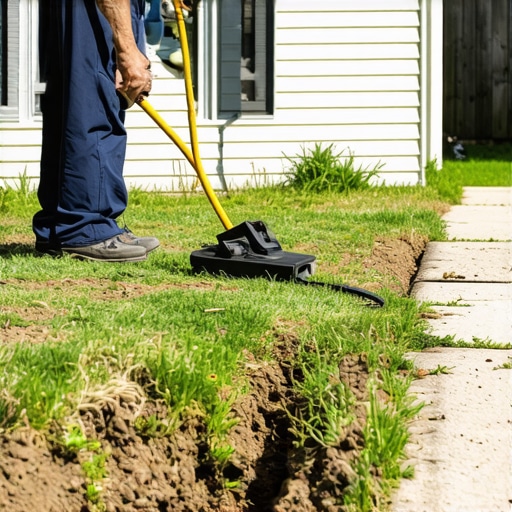
Identifying the Symptoms of a Failed Subsurface Drain
A clogged French drain manifests as persistent standing water, spongy turf, and damp basement walls despite recent yard cleanup or landscaping efforts. These symptoms indicate that hydrostatic pressure is mounting behind your retaining walls or beneath your sod install, risking total structural failure. If you ignore the squish under your boots, you are inviting a catastrophic soil collapse.
I recently got called out to tear up a $30,000 patio that was sinking because the previous contractor skipped the geotextile wrap on the French drain. The entire sub-base had turned into a slurry of mud and 57 stone. It was a forensic disaster. The owner thought they could just ‘mow-and-blow’ their way out of a drainage issue, but the physics of water don’t care about your weekend schedule. If the water has nowhere to go, it will make its own path, usually through your foundation. I had to excavate three feet of irrigation lines and saturated clay just to find a pipe that was 90 percent full of silt. This is why understanding the mechanics of your drainage is not optional for a homeowner.
“A retaining wall doesn’t fail because of the stone; it fails because of the water trapped behind it.” – Hardscape Engineering Axiom
The Physics of the Clog: Why Your French Drain Stopped Working
French drain failure occurs when the void space in your aggregate base becomes blinded by fines or when root intrusion from nearby trees punctures the pipe. Most systems fail because of sediment deposition or the use of cheap, corrugated pipe that catches debris in its ridges. When the flow velocity drops, solids settle, creating a dam that prevents irrigation runoff from exiting the property.
How much water pressure do I need to clear a drain?
To effectively clear a clogged French drain, you need a hydro-jetter providing at least 1,500 to 3,000 PSI at a flow rate of 2 to 4 gallons per minute. This specific hydraulic pressure is necessary to scour the interior walls of the pipe and flush heavy silt out of the system without bursting the joints.
| Tool Type | Effectiveness on Silt | Root Removal Power | Risk of Pipe Damage |
|---|---|---|---|
| Manual Plumbing Snake | Low | Medium | Moderate |
| Garden Hose Flush | Very Low | None | None |
| Professional Hydro-Jetter | High | High | Low (if used correctly) |
| Electric Power Auger | Medium | High | High for corrugated pipe |
The Step-by-Step Remediation Process: Using a Sewer Jetter
The easiest way to clear the line is using a sewer jetter nozzle attached to a standard pressure washer. This isn’t just a hose; it is a specialized tool with backward-firing jets that pull the hose into the pipe while blasting the debris toward the exit. It is the only way to clean the pipe without digging up your entire sod install.
- Locate the Discharge Point: Find where the water exits. This is usually a pop-up emitter or a daylight exit at the curb.
- Clear the Basin: Remove any surface debris, mulch, or yard cleanup waste blocking the exit.
- Insert the Jetter Nozzle: Feed the hose into the pipe at least three feet before turning on the water pressure to prevent kickback.
- Advance the Line: Slowly feed the hose into the pipe. The backward jets will propel it forward. If you hit a hard stop, you have found the root mass or a crushed section.
- Flush the System: Once you reach the top of the run, pull the jetter back slowly to ensure all sediment is carried out by the returning water.
- Verify Flow: Run a garden hose at the highest point of the drain (the catch basin) and watch for clear water at the exit.
“Subsurface drainage systems require a minimum slope of 1 percent to ensure the transport of fines and prevent sediment deposition.” – Engineering Standard
Can I snake a corrugated French drain without tearing it?
Snaking a corrugated French drain requires extreme caution because the thin plastic walls are easily punctured by metal auger bits. Use a nylon brush or a hydro-jetter nozzle with rounded edges to avoid snagging the ridges of the pipe, which could lead to a total system collapse under the soil weight.
The Critical Role of Aggregate and Fabric in Prevention
Prevention starts at the soil grading level. You cannot expect a drain to work if you have used ‘dirty’ gravel or skipped the non-woven geotextile. I tell my crew every day: if the fabric isn’t tight, the dirt gets in. Once the dirt is in, the system is just a buried pipe of mud. Professional grade landscaping requires ASTM D448 No. 57 stone. This stone size provides the necessary porosity to allow water to move at a high enough gallons-per-minute rate to keep the pipe clear. Avoid the ‘all-in-one’ sleeved pipes from big-box stores. They are a shortcut to failure. Instead, use SDR-35 PVC with drilled holes. It is smooth on the inside, meaning debris has nothing to grab onto. It is harder to install, but it lasts 50 years instead of five. Check your local municipal codes and always call 811 Dig Safe before you start any excavation for irrigation or drainage repairs. A single nicked gas line will turn a simple yard cleanup into a local news story. Keep your slope at a minimum of 1/8 inch per foot. Water doesn’t run uphill. If your yard has settled, no amount of snaking will fix a ‘belly’ in the pipe where water sits and breeds anaerobic bacteria. Fix the grade, fix the drain, and protect your investment.