
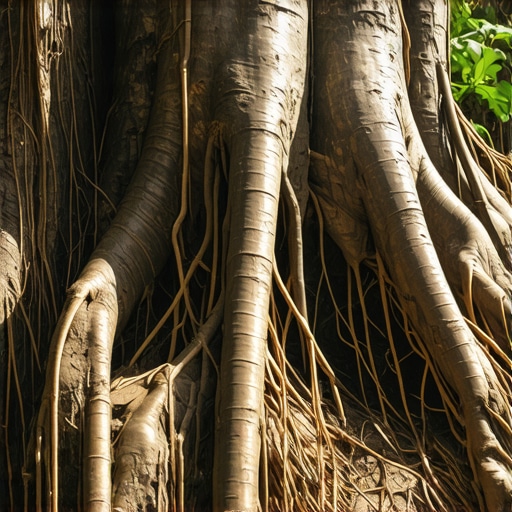
You see it every season. A homeowner spends five figures on a massive sod install and high-end landscaping, only to watch their thirty-foot oak start dying from the top down. They think it is a nutrient deficiency or a lack of irrigation. They are usually wrong. It is biological strangulation. I always drill into my new crew members: if you do not fix the soil grading and expose that root flare first, every plant you put in the ground is just expensive compost. I have seen countless ‘pro’ crews bury trees three inches too deep and then pile a mulch volcano on top. That is a death sentence. Girdling roots are the silent killers of the urban forest, and by the time the canopy shows thinning, the clock is already at midnight.
The Biological Mechanics of Root Girdling
Girdling roots are lateral roots that grow around the main trunk of a tree rather than outward, eventually constricting the vascular tissue and cutting off the flow of water and nutrients between the canopy and the root system. This process effectively chokes the tree. Think of it like a tourniquet. As the trunk increases in diameter, it presses against the rigid, circling root. This pressure crushes the phloem, which carries sugars from the leaves to the roots, and eventually the xylem, which carries water up. Once those pathways are blocked, the tree begins a slow, agonizing decline. This is not just a cosmetic issue; it is a structural failure waiting to happen. A tree with a compromised base is a hazard in high winds.
“Girdling roots can lead to a gradual decline in tree health and increase the risk of whole-tree failure during storm events due to weakened trunk integrity at the ground line.” – International Society of Arboriculture (ISA) Best Management Practices
How do you tell if a tree is girdling?
To identify girdling roots, look for a lack of root flare at the base of the trunk where it meets the soil, or a flat side on the trunk rather than a natural, outward buttress. If the tree looks like a telephone pole sticking straight out of the ground, it is buried too deep or suffering from below-ground girdling. You may also notice early fall color, stunted leaf size, or dieback in the upper crown. These are the distress signals of a root system that can no longer support the biomass above it. Check the soil level. If you cannot see the flare where the trunk transitions into the main structural roots, you need to start digging.
The Forensic Root Audit Checklist
- Examine the Trunk Base: Does the trunk flare out, or does it go straight into the dirt like a post?
- Check for Surface Circling: Can you see roots crossing over the main trunk at or just below the mulch line?
- Assess Canopy Density: Is the top of the tree thinning or showing dead ‘stag-headed’ branches?
- Look for Flat Spots: Is one side of the trunk noticeably flatter than the others near the ground?
- Monitor Leaf Timing: Does this tree lose its leaves or change color weeks before its neighbors?
During a routine yard cleanup, most guys just blow the leaves and leave. My crew is trained to look at the base of every specimen. If we see a mulch volcano, we pull it back. Mulch should never touch the bark. Bark is meant to be dry. When you trap moisture against the trunk with mulch or soil, you encourage adventitious roots to grow right there. These roots do not go deep; they circle. Eventually, they become the very girdling roots that kill the specimen. We use an air-spade for a reason. It uses compressed air to blow soil away from the roots without damaging the delicate bark. It is the only way to perform a real forensic autopsy on a living tree’s root system.
| Condition | Visual Indicator | Severity Level | Action Required |
|---|---|---|---|
| Normal Flare | Wide, buttressed base | Optimal | Maintain 2-3 inch mulch ring away from bark. |
| Buried Flare | Telephone pole appearance | Moderate | Excavate soil until flare is exposed. |
| Visible Girdling | Root crossing the trunk | High | Careful root pruning by a certified arborist. |
| Canopy Dieback | Dead branches at the top | Critical | Full structural assessment and soil aeration. |
How much soil should I remove to find girdling roots?
You must remove topsoil and mulch until the first main lateral root is exposed, which is typically found within the top 2 to 6 inches of the soil surface. This process, known as a root collar excavation, reveals whether the tree was planted too deep in the nursery or during the initial landscaping phase. If you find circling roots, do not just hack at them with a shovel. You need a clean bypass lopper or a sharp chisel. Every cut is a wound. You have to balance the risk of removing a major nutrient source against the certainty of the tree being strangled. We look for roots that cover more than 25 percent of the trunk’s circumference. Those are the ones that have to go.
“The primary cause of girdling roots in urban environments is the restricted rooting space and the practice of planting container-grown stock that has already developed circling root patterns.” – University of Minnesota Extension
Why does irrigation affect root girdling?
Improper irrigation contributes to girdling roots by keeping the top few inches of soil constantly saturated, which encourages roots to stay near the surface and circle the trunk instead of diving deep into the subsoil. Shallow watering is the enemy of a stable tree. If your system runs for ten minutes every day, you are training your trees to be weak. You want deep, infrequent watering. This forces the roots to chase the moisture down into the lower soil horizons. This is especially true after a new sod install. People over-water the grass and inadvertently drown the trees. You have to manage the zones separately. If the soil is compacted clay, that water sits in the planting hole like a bathtub, causing root rot and encouraging those surface-level circling roots.
Remediation and Survival
Fixing this is not a one-and-done deal. Once we prune a girdling root, we have to manage the stress. That means no high-nitrogen fertilizers that force a flush of canopy growth the roots can’t support. It means vertical mulching to get oxygen to the remaining root system. It means yard cleanup that actually involves monitoring soil moisture, not just leaf blowing. If you catch it early, the tree recovers. If you wait until the top is dead, you are just looking at a removal job. It is cheaper to pay for an air-spade excavation now than a crane removal later. Don’t let a $20 root kill a $5,000 tree. Inspect your trees. Get the dirt off the flare. Give them room to breathe.