
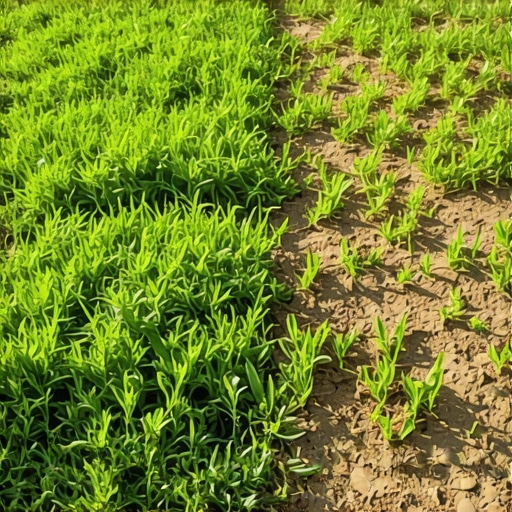
The Forensic Autopsy of a Failed Crabgrass Barrier
Crabgrass prevention fails because homeowners apply pre-emergent based on the calendar rather than soil temperature, which must be consistently 55 degrees at a two-inch depth, and they fail to account for the soils microbial breakdown of the chemical barrier. You see the yellow-green stalks of Digitaria sanguinalis mocking you by July because you ignored the biological clock of the soil. It is a structural failure of your lawn. I have walked onto hundreds of properties where the owner is baffled that their yard is a mess of crabgrass despite spending $400 at a big-box store. The truth is usually found in a soil probe. Most of the time, the chemical was applied too late, or worse, it was applied to a yard choked with a three-inch thatch layer that never allowed the herbicide to touch the soil. It stayed on the surface. It degraded in the sun. It did nothing. It is a waste of money.
The Chemical Nightmare: A Cautionary Tale
A homeowner called me in a panic last April after they completely torched their front lawn by applying a triple-strength dose of a high-nitrogen pre-emergent combo when the ground was still essentially dormant. They thought more was better. Instead of stopping crabgrass, they created a high-salinity environment that chemically burned the tender root systems of their Kentucky Bluegrass. By June, the grass was dead, and the crabgrass, which thrives in stressed soil, took over the entire block. I had to tell them the truth: they had effectively salted their own earth. We had to excavate two inches of topsoil and perform a complete sod install just to fix the chemical imbalance. It was a $12,000 mistake that could have been avoided with a $20 soil thermometer. Do not be that person. Understanding the NPK ratio and the timing of your yard cleanup is the difference between a functional ecosystem and an expensive patch of weeds.
“Crabgrass germination begins when soil temperatures at the 0 to 2-inch depth reach 55 to 58 degrees Fahrenheit for four or five consecutive days.” – Penn State Extension, Center for Turfgrass Science
Soil Temperature vs. The Calendar
Soil temperature is the only metric that matters for pre-emergent success, as the growing degree days (GDD) determine exactly when the seed coat of a crabgrass embryo will crack. Using a calendar to time your landscaping maintenance is like using a watch to measure distance. It is the wrong tool. While the internet tells you to water every day, turf grass actually needs deep, infrequent watering exactly 1 inch per week to force roots to chase the water down. This makes the grass more competitive against weeds. If you apply your pre-emergent when the Forsythia is blooming, you are roughly in the ballpark, but you are still guessing. You need a probe. You need to know that once the soil hits 65 degrees, the window for most pre-emergents like Prodiamine or Pendimethalin has closed. The crabgrass has already germinated, and you are just throwing chemicals at a ghost.
How much water do I need after applying pre-emergent?
To activate a pre-emergent barrier, you must apply 0.5 inches of water via irrigation or rain within 48 hours of application to move the chemical into the top inch of soil. Failure to do this results in photodegradation, where sunlight breaks down the active ingredients on the surface. Do not skip this step. If the chemical stays on top of the grass blades, it cannot stop the seeds in the dirt.
Can I install new sod after using crabgrass preventer?
You cannot perform a sod install or overseed for at least 12 to 16 weeks after applying a pre-emergent because the chemical barrier does not distinguish between a crabgrass seed and a desirable grass seed. It will prevent root-to-soil contact for new turf. If you have already applied the chemical, you must wait for the half-life to expire before trying to grow new grass. This is why planning your landscaping timeline is critical.
The Science of the Chemical Barrier
Pre-emergent herbicides are not “seed killers.” They are mitotic inhibitors. They stop the process of cell division in the plant as it tries to emerge from the seed. If the barrier is not continuous, the weed finds a gap. This is why I tell my crews: if you walk on the lawn too much after application, or if you perform a heavy yard cleanup with metal rakes, you are breaking the seal. Every footprint or rake mark is a hole in your armor. You must treat the chemical layer like a thin sheet of glass. Once it is down, leave it alone. The molecular bond of the herbicide to the soil particles is what creates the protection. If your soil has low organic matter, the chemical has nothing to grab onto. This is why soil health is the foundation of weed control.
| Chemical Name | Duration of Control | Optimal Soil Temp | Best For |
|---|---|---|---|
| Prodiamine | 3-5 Months | 52-55 F | Long-term residual |
| Dithiopyr | 2-4 Months | 55-60 F | Early post-emergent use |
| Pendimethalin | 2-3 Months | 55 F | General lawn use |
“A pre-emergent herbicide barrier is only as effective as its continuity; any physical disruption of the soil surface after application, such as dethatching or heavy raking, will breach the chemical seal.” – Principles of Turfgrass Management, 5th Edition
The Zero-Crabgrass Yard Cleanup Protocol
Winning the war against crabgrass requires a tactical approach to your yard cleanup and preparation before the first bag of product is ever opened. Follow this checklist to ensure your application actually works.
- Core Aeration: Do this in the fall, not the spring. Spring aeration breaks the pre-emergent barrier you just paid for.
- Thatch Management: If your thatch is thicker than half an inch, power rake it out before applying chemicals. Chemicals stuck in thatch never reach the soil.
- Mower Height: Set your blades to 3.5 or 4 inches. Taller grass shades the soil, keeping it cooler and preventing crabgrass seeds from getting the light they need to trigger growth.
- Edge Trimming: Crabgrass always starts at the edges of driveways and sidewalks because the concrete holds heat. Apply a slightly heavier dose at these heat-sink margins.
Irrigation: The Silent Partner in Weed Control
Your irrigation system is either your best friend or your worst enemy when it comes to crabgrass. Most people over-water their lawns with short, frequent bursts. This keeps the top half-inch of soil constantly moist, which is exactly where crabgrass seeds live. You are literally nursing the weeds. Instead, you want the surface to dry out while the deep soil remains hydrated. This forces your turf roots to grow deep, while the shallow-rooted crabgrass dries up and dies. If your landscaping professional hasn’t checked your zone timing recently, you are probably over-watering. Check your heads. Ensure they are not spraying the sidewalk. Water on the pavement is a waste; water on the grass is a tool. Use it precisely.
Long-Term Maintenance and Soil Health
It will rot. If you keep dumping high-nitrogen fertilizers on your lawn without checking the pH, the soil will eventually become too acidic or too alkaline for your grass to compete. Crabgrass loves poor soil. It thrives in compaction. If your yard feels like concrete under your boots, the crabgrass will win every time. You need to focus on the soil microbiology. Healthy soil has billions of microbes that help process nutrients. When you use too many harsh chemicals, you kill the microbes. You create a sterile environment where only the toughest, nastiest weeds can survive. Stop the cycle. Test your soil. Add organic matter. A dense, healthy lawn is the best pre-emergent in the world. No chemical can match the power of a thick canopy of healthy turf. Plan your sod install or renovation for the late summer or fall, giving the grass six months to establish before the crabgrass wars begin again next spring. Do the work now or pay the price in July.