
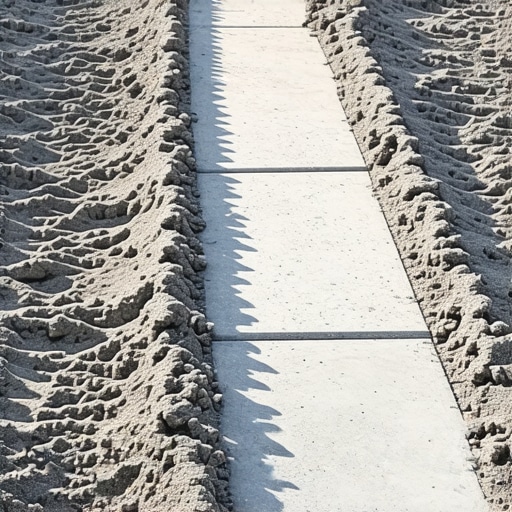
The $30,000 Hardscape Autopsy: Why Patios Fail by Year Three
I recently got called out to tear up a $30,000 patio that was sinking because the previous contractor used stone dust instead of coarse bedding sand. The homeowners were devastated. Their high-end pavers looked like a topographic map of the Himalayas. You could see where the water had pooled, creating a breeding ground for moss and causing the stones to shift under the weight of a simple patio chair. This isn’t just bad luck; it is a failure of basic civil engineering. When you ignore the physics of hydrostatic pressure and base-layer compaction, you aren’t building a patio; you are building a future demolition site.
The Anatomy of a Sinking Patio: Diagnosis and Failure Points
Paver sinking and hardscape failure occur when the bedding layer or sub-base fails to support the load or allows water to saturate the foundation. Using ASTM C33 coarse sand provides the necessary angularity for interlock, whereas fine materials like stone dust trap moisture and liquefy under pressure.
Most “mow-and-blow” contractors who try their hand at hardscaping make the same fatal mistake: they think the sand is just there to level the stones. Wrong. The bedding layer is a critical drainage plane. If you use fine-screened materials, you create a “sponge” effect. In colder climates, that moisture undergoes a freeze-thaw cycle that heaves your pavers upward. In warmer regions, it simply washes out, leaving voids that lead to localized settling. I’ve seen 4-inch thick concrete pavers crack because the base beneath them shifted just half an inch. It is pathetic. You must understand the Proctor density—the measure of how much a soil or aggregate can be compacted. If your base isn’t at 95% Proctor density, your patio is a ticking time bomb.
“A retaining wall doesn’t fail because of the stone; it fails because of the water trapped behind it.” – Hardscape Engineering Axiom
How much modified gravel do I need for a patio base?
For a standard pedestrian patio, you need a minimum of 4 to 6 inches of compacted 21A or 3/4-inch modified gravel. If you are building a driveway, you’re looking at 10 to 12 inches. Do not guess. Measure the depth across the entire excavation. You also need to factor in the 1-inch layer of coarse bedding sand that sits on top. Most hacks skip the plate compactor or use a light-duty model from a rental shop that doesn’t have the centrifugal force to actually settle the stone. You need a machine that hits with at least 4,000 lbs of force. It should literally bounce off the ground when the base is fully locked in. If it still feels soft, you aren’t done.
The Engineering Logic of Coarse Bedding Sand (ASTM C33)
Why do I insist on ASTM C33 sand? It comes down to the shape of the grain. If you look at it under a microscope, coarse sand is angular and jagged. These angles lock together like a jigsaw puzzle under load. Play sand or masonry sand is round. Think of it like trying to stand on a pile of marbles versus a pile of crushed glass. The marbles will roll and shift; the glass stays put. This interlock is what transfers the load from the surface of the paver down into the gravel base without shifting the bedding layer.
Why is my paver patio sinking?
Your patio is sinking because of sub-grade saturation or insufficient compaction. When water enters the joints—often due to failed polymeric sand or poor landscaping drainage—it softens the soil underneath. If the irrigation system is spraying directly onto the patio edge, you are effectively hosing away your foundation every single night.
| Material Type | Drainage Rating | Compaction Stability | Recommended Use |
|---|---|---|---|
| ASTM C33 Coarse Sand | Excellent | High (Angular) | Standard Paver Bedding |
| Limestone Screenings | Poor | Low (Fines) | Pathways only, never pavers |
| Masonry Sand | Fair | Medium (Rounded) | Joint filling only |
| 3/4″ Modified Gravel | Good | Very High | Structural Base Layer |
The Forensic Step-by-Step: The Hardscape Recovery Process
If you are staring at a sinking patio, there is no shortcut. You cannot just “pour more sand” in the cracks. That is a band-aid on a gunshot wound. You have to perform a full excavation. First, we strip the pavers and clear out the old bedding material. We check the soil grading. If the yard doesn’t slope away from the house at a minimum of 2% (that’s a 1-inch drop for every 4 feet), you are funneling water under your home. That leads to basement leaks and foundation rot.
Next, we address the yard cleanup of sub-surface debris. I’ve found old stumps, construction trash, and even buried bags of concrete under failing patios. All of it has to go. We then lay down a non-woven geotextile fabric. This acts as a bridge, preventing the expensive gravel from migrating into the native clay soil. It’s an extra cost, but it’s the difference between a 5-year patio and a 50-year patio. Don’t be cheap here.
“Compaction is the single most important variable in the longevity of a segmental pavement system.” – ICPI Tech Manual
The Critical Checklist for a Permanent Install
- Verify 811 utility markings before any excavation starts.
- Excavate 8-12 inches deep to allow for base, sand, and paver thickness.
- Install a French drain or catch basin if the area is naturally low-lying.
- Use 1-inch screed pipes to ensure the bedding sand is perfectly level but not compacted until the pavers are set.
- Apply polymeric sand only when the pavers are bone dry to prevent “poly-haze” staining.
The Maintenance Reality: Protecting Your Investment
Once the patio is set, your job isn’t over. Hardscapes are part of an ecosystem. If your sod install is too high against the edge of the patio, it will trap water. If your irrigation heads are misaligned, they will erode the joint sand. Every spring, you need to do a yard cleanup that includes inspecting the joints. If you see gaps, fill them with high-quality polymeric sand. It’s the “caulk” of your patio. It keeps the water out and the weeds from germinating. Stop buying the $10 bags of sand from big-box stores. They have low polymer content and will wash out in the first heavy rain. Buy professional-grade materials from a landscape supply yard. Your hands might be calloused, but your patio will be level for the next two decades.