
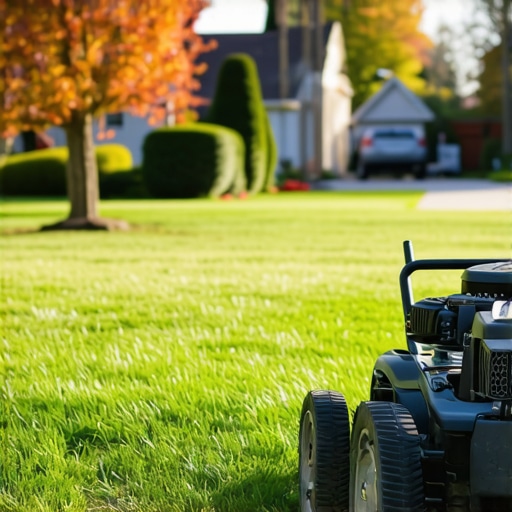
Why the “Last Mow” is a Biological Trigger, Not a Schedule
The Last Mow Rule involves reducing turf height to 2-2.5 inches in late autumn to prevent snow mold (Microdochium nivale) and matting. This adjustment ensures the crown of the plant is protected while minimizing thatch moisture retention during the dormant 2026 winter phase. It is a calculated strike against fungal pathogens. Don’t wait for a date on the calendar. Wait for the soil temperature.
I always drill into my new crew members: if you don’t fix the soil grading first, every plant you put in the ground is just expensive compost. Last season, I watched a rookie scalp a high-end Kentucky Bluegrass lawn in mid-October because he thought ‘shorter is better’ for winter. By April, that yard was a graveyard of desiccated crowns and crown rot. He didn’t understand that the height of the cut isn’t about aesthetics; it is about the thermal mass of the soil and the plant’s ability to store carbohydrates in the rhizomes before the first hard freeze hits. If you leave it too long, the blades fold over under snow, creating a petri dish for Typhula blight. Too short, and you expose the crown to lethal low-temperature hydration. It is a game of millimeters.
The Forensic Autopsy of a Failed Winterization
When a lawn fails to wake up in the spring, the cause is rarely the cold itself; it is the anaerobic conditions created by poor yard cleanup and debris management. Wet leaves left on the turf surface create a localized greenhouse effect that spikes the temperature of the soil while cutting off oxygen exchange. This smothers the aerobic microbes and invites pathogenic fungi to feast on the weakened leaf tissue. We see it every year: patches of matted, slimy turf that smell like sulfur. This is the result of neglecting the yard cleanup phase and ignoring the sod install physics that require proper air-to-water ratios in the soil profile.
“Snow mold development is most severe when snow falls on unfrozen ground, providing an insulating layer that keeps the turf temperature near 32°F, which is ideal for fungal growth.” – Penn State Center for Turfgrass Science
How short should I cut my grass for winter?
For most cool-season grasses like Fescue or Bluegrass, you want to gradually bring the height down to 2 or 2.5 inches over your last three mows. This prevents the long blades from matting down under the weight of winter precipitation. If you are dealing with warm-season sod install projects like Bermuda or Zoysia in southern climates, do not scalp them; they need the insulation for their stolons. A height of 1.5 to 2 inches is generally the floor for these species. Measurements matter. Use a ruler, not your eyes.
| Grass Type | Optimal Final Cut Height | Soil Temp Trigger | Nitrogen Requirement |
|---|---|---|---|
| Kentucky Bluegrass | 2.0 – 2.5 inches | 50°F (10°C) | 0.5 lbs/1000 sq ft |
| Tall Fescue | 2.5 – 3.0 inches | 45°F (7°C) | 1.0 lbs/1000 sq ft |
| Bermuda (Dormant) | 1.5 – 2.0 inches | 55°F (13°C) | Low (K-heavy) |
| Perennial Ryegrass | 2.0 inches | 50°F (10°C) | 0.75 lbs/1000 sq ft |
The Engineering of Irrigation Blowouts and Hydration
Winterizing an irrigation system is not just about turning off a valve; it is about managing hydrostatic pressure and air volume. Using a standard shop vac won’t cut it. You need a high-volume air compressor capable of delivering 80-100 CFM (cubic feet per minute) at a regulated 50 PSI. If you exceed 60 PSI, you risk shattering the internal gears of your rotor heads or cracking the PVC laterals. We are looking for a ‘mist,’ not a ‘geyser.’ Once the heads stop spitting water and start puffing air, move to the next zone. Over-blowing a zone can melt the plastic components through friction heat. Precision is the only way to avoid a $5,000 repair bill in the spring.
“Irrigation systems must be cleared of all water before the frost line reaches the pipe depth to prevent expansion fractures in the lateral lines and manifold.” – Irrigation Association Standards
When should I stop watering my lawn before a freeze?
You should continue to provide 1 inch of water per week until the ground is physically frozen. Dehydration is a leading cause of winter kill. A desiccated root system cannot survive a freeze-thaw cycle because it lacks the internal turgor pressure to resist cell wall collapse. If the soil is dry when the temperature drops, the frost penetrates deeper and faster. Keep the landscaping hydrated until the soil reaches 32 degrees Fahrenheit. It’s physics, not a suggestion.
- Step 1: Conduct a final soil test to check pH and Potassium (K) levels for winter hardiness.
- Step 2: Execute the graduated height reduction over 3 weeks.
- Step 3: Perform a deep core aeration to relieve compaction and improve gas exchange.
- Step 4: Apply a high-potassium winterizer fertilizer to strengthen cell walls.
- Step 5: Professional irrigation blowout using a high-CFM compressor.
- Step 6: Complete leaf and debris removal to prevent anaerobic matting.
- Step 7: Apply a preventative fungicide if your region is prone to gray snow mold.
The Chemical Reality of Late-Season Fertilization
Stop using high-nitrogen ‘starter’ fertilizers in late November. You want the plant to stop vertical growth and focus on root elongation and carbohydrate storage. A nitrogen spike late in the season forces the plant to push tender new growth that will immediately freeze and die, wasting the plant’s energy reserves. Instead, look for a ‘Winterizer’ blend with a high second and third number (Phosphorus and Potassium). Potassium is the ‘antifreeze’ of the plant world; it regulates the osmotic pressure within the cells, preventing the water inside the plant from turning into jagged ice crystals that puncture the cell membranes. If those membranes pop, the grass dies. It’s that simple. Get it right, or you’ll be paying me for a total sod install in April. “