
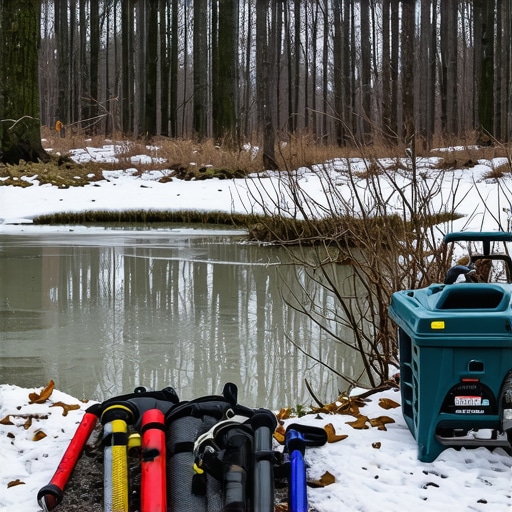
The Forensic Reality of Frozen Pond Equipment
Every spring, I see the same mechanical carnage: cracked pump housings, brittle impellers, and blown seals. To winterize a pond pump for 2026, you must disconnect the unit once water temperatures drop below 40°F, thoroughly clean the intake screen, and store submersible models in a bucket of distilled water in a frost-free environment to prevent mechanical seal failure caused by ice expansion or seal desiccation. Neglect this and you are essentially throwing $500 to $2,000 into the scrap heap. Water expands by approximately 9 percent when it freezes. In a confined space like a centrifugal pump volute, that expansion generates thousands of pounds of pressure per square inch. Plastic cannot resist it. Iron cannot resist it. Your pump will split. It is not a matter of if, but when.
The Hardscape Autopsy: A $3,000 Lesson in Physics
Last season, I was called to a property where a homeowner had installed a high-end 8,000 GPH pump for their waterfall. They believed that keeping the water moving would prevent freezing. They were wrong. A polar vortex hit, the waterfall formed an ice dam, and the water diverted out of the pond. The pump ran dry for six hours before the motor burned out, and then the remaining water in the lines froze and shattered the check valve. I had to tell them that their entire filtration system was a total loss. This was not a failure of the equipment; it was a failure of the operator to respect the thermal limits of the 2026 climate cycle. In our region, the frost line can penetrate 12 to 24 inches deep. If your pump is in the kill zone, it needs to come out.
“The mechanical seal of a centrifugal pump is its most vulnerable point during dormancy; if the internal elastomers dry out or are subjected to ice crystallization, the seal will fail upon the next startup.” – Pumping Systems Engineering Manual
How deep should a pond be to keep fish alive in winter?
To ensure the survival of koi and goldfish during a 2026 winter freeze, the pond must have a minimum depth of 3 to 4 feet in at least one area to provide a thermal refuge where water remains a constant 39 degrees Fahrenheit. This is the temperature at which water is densest. Below this depth, the biological activity slows, and fish enter a state of torpor. Removing the pump is critical here because running a pump in winter mixes the water layers, destroying this thermal stratification and potentially super-cooling the entire water column, which will kill your livestock. Shut it down. Pull the pump. Protect the biology.
The 2026 Winterization Checklist
- Thermal Monitoring: Monitor water temperature daily. When it hits 40°F consistently, stop feeding fish and pull the pump.
- Mechanical Scrub: Use a stiff brush to remove bio-film and calcium deposits from the intake.
- Impeller Inspection: Remove the volute cover and check for gravel or debris that could seize the motor.
- The Bucket Method: Submerge the pump in a 5-gallon bucket of water to keep the O-rings and seals moist during storage.
- Aeration Setup: Replace the high-volume pump with a small aeration stone to maintain a hole in the ice for gas exchange.
Step-by-Step Removal and Storage Protocol
Start by cutting power at the GFCI outlet. Do not just flip a switch; physically unplug the unit. Pull the pump from the skimmer or the pond floor using the handle, never the power cord. Inspect the cord for nicks or UV degradation. Once on dry land, use a 50/50 mix of white vinegar and water to dissolve any calcification on the impeller shaft. This is a non-negotiable step. If those deposits harden over winter, they will act like sandpaper on your bearings next March. It will grind. Then it will seize.
| Component | Winter Risk | Mitigation Strategy |
|---|---|---|
| Pump Volute | Structural Cracking | Complete drainage and indoor storage |
| Mechanical Seals | Desiccation/Shrinkage | Submerged storage in a bucket of water |
| Check Valves | Internal Ice Expansion | Vertical drainage or removal from line |
| Intake Screen | Organic Clog Rot | Pressure wash and disinfection |
When should I take my pond pump out for winter?
The definitive window for pond pump removal is when the water temperature stays below 45°F but before the first hard surface freeze. In most temperate zones, this occurs between late October and mid-November. Waiting too long risks your hands getting frostbit and the plumbing lines becoming too brittle to disconnect without snapping the PVC unions. If you have an external pump, you must blow out the lines using a high-volume air compressor to ensure no water remains in low-hanging elbows or underground sweeps. Hydrostatic pressure from frozen soil can also crush empty, thin-walled pipes, so ensure your irrigation and landscaping lines are schedule 40 PVC or higher.
“Ice formation in stagnant water lines creates a closed-system pressure spike that exceeds the burst strength of most residential grade plumbing.” – Agricultural Extension Water Management Bulletin
Biological Load and Yard Cleanup
Pump removal is only half the battle. If you leave decaying leaves and organic debris in the pond during the winter, they will produce hydrogen sulfide gas. Without a pump to circulate water, this gas builds up under the ice. This is why a yard cleanup is essential before the first snow. Net the pond. Remove the muck. If you don’t, you are creating an anaerobic soup that will be toxic by spring. Landscaping is not just about the plants you see; it is about the chemistry you don’t see. Manage your nitrogen cycle. Protect your equipment. Do the work now or pay the price in April. Don’t be the homeowner who buys a new pump every two years. Be the one who understands the engineering.”