
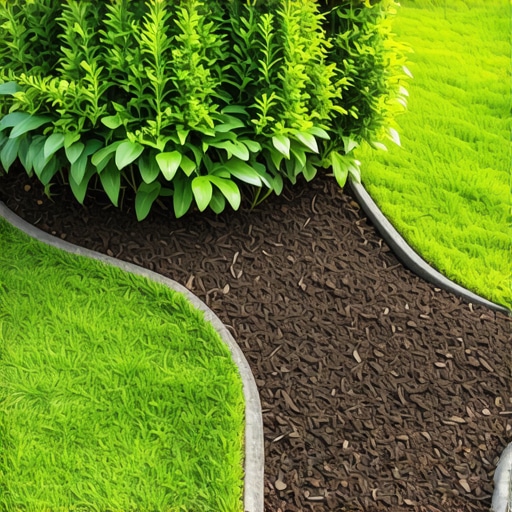
The Engineering of a Professional Landscape Edge
The simple trick for straight edges on your mulch beds is the execution of a manual 90 degree vertical cut followed by a 45 degree bevel into the bed, creating a structural trench that physically separates turf rhizomes from the mulch zone. This method, often called the English Edge, relies on soil mechanics rather than plastic barriers to maintain a crisp line that resists grass encroachment and prevents mulch washout during heavy rain events.
I always drill into my new crew members: if you don’t fix the soil grading first, every plant you put in the ground is just expensive compost. Most beginners want to start with the plants because they look good. I start with the shovel. I have spent twenty years fixing the mistakes of contractors who think a landscape is finished once the sod install is done. A landscape is a living, breathing system of drainage, nutrient cycles, and structural boundaries. If those boundaries are weak, the whole system collapses into a mess of weeds and eroding soil within six months. I have seen thirty thousand dollar projects look like trash because the installer didn’t understand the hydrostatic pressure of wet mulch against a poorly cut edge. It is not just about aesthetics. It is about biology. You are building a moat. That moat keeps the Poa pratensis or Agrostis stolonifera from migrating into your root zones. You have to be precise. Half an inch off and the eye sees it immediately. Soil doesn’t lie.
“Organic mulches should be applied to a depth of 2 to 4 inches; excessive depth can lead to root rot, anaerobic soil conditions, and nitrogen drawdown as microbes consume soil nitrogen to break down carbon-rich wood.” – Penn State Extension
The Physics of the Trench Edge
When you perform a yard cleanup, the edge is the most critical structural component. We use a half-moon edger or a sharp spade. You drive the tool six inches deep. This depth is non-negotiable. You need to sever the lateral roots of the turf grass completely. Once the vertical cut is made, you come back from the bed side at a forty-five degree angle. This creates a V-shaped trench. This trench serves two purposes. First, it acts as a collection basin for excess water, preventing it from pooling at the base of your shrubs. Second, it creates a physical air gap. Grass roots cannot jump through air. If they hit that gap, they stop. This is far superior to metal or plastic edging, which eventually heaves out of the ground during freeze and thaw cycles due to soil expansion. Plastic edging is for amateurs. Real professionals use the soil itself as the barrier. You must consider the compaction of the soil. If the soil is too loose, the edge will crumble. If it is too hard, you need to core aerate the area first to reduce bulk density.
How deep should a mulch bed edge be?
A professional landscape bed edge should be exactly 4 to 6 inches deep to effectively sever grass roots and provide a reservoir for mulch and water management. Maintaining this specific depth ensures that the air gap remains effective against rhizomatous grass species while preventing the trench from becoming a safety hazard or causing excessive soil drying at the turf perimeter.
| Mulch Type | Decomposition Rate | pH Impact | Best Use Case |
|---|---|---|---|
| Triple-Shredded Hardwood | Medium-Fast | Neutral to Acidic | Sloped beds and general plantings |
| Pine Bark Nuggets | Slow | Acidic | Acid-loving plants like Azaleas |
| Cedar Bark | Very Slow | Neutral | Long-term durability and insect resistance |
| Dyed Mulch (Carbon-Based) | Slow | Neutral | High-contrast aesthetic zones |
The Interaction Between Irrigation and Bed Edges
You cannot talk about edges without talking about irrigation. If your irrigation heads are poorly positioned, they will blast the mulch right out of your beautifully cut trench. This is a common failure in new landscaping projects. When we perform a sod install, we ensure the sprinkler heads are set back exactly four inches from the bed edge. This prevents the high-pressure stream from eroding the soil wall. You have to check the spray pattern. If the water hits the vertical face of the edge, it will cause the turf to collapse into the bed. This creates a bridge for weeds. You want the water to hit the root zone of the grass, not the dirt wall of the bed. It is a game of inches. We often see homeowners over-water, which leads to anaerobic conditions in the mulch. The mulch starts to smell like vinegar or rotten eggs. That is the smell of your plants dying. It means the fungi are winning and the roots are suffocating. Keep your mulch at three inches. No more. No less.
“A landscape edge serves as a transition zone that must manage the differential in soil moisture and nutrient availability between turf and woody ornamentals.” – Agronomy Manual of Standards
How do I keep grass from growing into my mulch beds?
To prevent grass from invading mulch beds, you must maintain a clean spade-cut edge twice per year and apply a pre-emergent herbicide specifically labeled for landscape beds in early spring. Regular mechanical edging severs the stolons and rhizomes, while the pre-emergent creates a chemical barrier that stops weed seeds from germinating in the mulch layer itself.
Step-by-Step Professional Edging Process
- Mark the Line: Use a garden hose or spray paint to mark smooth, flowing curves. Avoid sharp angles.
- The Vertical Cut: Use a sharp spade to cut 6 inches deep at a 90-degree angle along the turf side.
- The Bevel Cut: Remove soil from the bed side at a 45-degree angle to create the V-trench.
- Clear the Debris: Remove all severed grass and excess soil. Do not just flip it into the bed.
- Apply Pre-emergent: Spread a granular weed preventer in the bottom of the trench and across the bed.
- Mulch Application: Pack mulch firmly into the bevel, but keep it 2 inches away from the vertical turf wall.
Soil Chemistry and Mulch Selection
The type of mulch you choose dictates the longevity of your edge. If you use a light, airy mulch like pine straw, it will blow away. If you use heavy hardwood, it stays put but can mat down and prevent oxygen exchange. I prefer a triple-shredded hardwood. It has the right fiber interlocking properties to stay in the trench even during a summer thunderstorm. You must also monitor the pH. As wood mulch breaks down, it can pull nitrogen out of the top layer of soil. This is the nitrogen drawdown effect. If your plants look yellow, don’t just add more water. Check the soil. You likely need a high-nitrogen fertilizer to offset the decomposition of the mulch. This is why yard cleanup isn’t just about raking leaves. It is about balancing the chemistry of the site. A professional knows that the mulch is a living component of the landscape, not just a decoration. It is a slow-release fertilizer and a moisture regulator. Treat it with respect. Stop buying those cheap bags from the warehouse stores. That stuff is often ground-up pallets and construction debris. It has no nutrient value and can introduce invasive pests into your yard. Get high-quality nursery grade mulch. It costs more, but it saves your plants.