
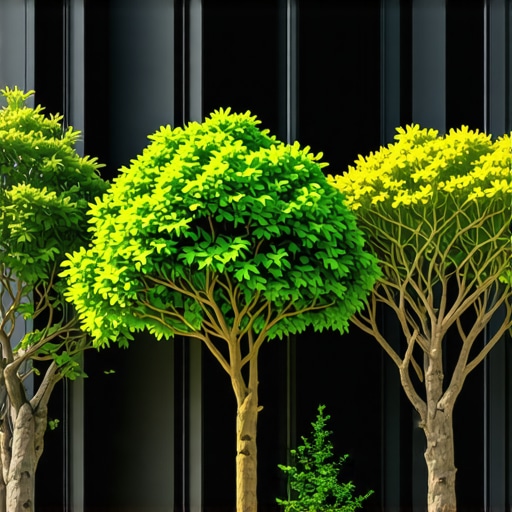
The Foundation: Why 80 Percent of Landscaping Happens Before the Tree Arrives
Successful urban landscaping depends on soil mechanics and drainage, not just picking a plant. For 2026, the focus shifts toward native trees that tolerate high-alkalinity soil and compact root zones while providing maximum ecological value during yard cleanups and new sod installs. If the soil bulk density exceeds 1.6 grams per cubic centimeter, your roots will fail. You must address the physics of the site before the aesthetics.
The Apprentice Lesson: Why Grading is Non-Negotiable
I always drill into my new crew members: if you do not fix the soil grading first, every plant you put in the ground is just expensive compost. Last spring, a kid I hired thought he could skip the transit level on a small sod install in a tight city lot. Two weeks later, the irrigation runoff pooled against the foundation, creating a hydrostatic nightmare. We had to rip out 4,000 dollars of work because he did not respect the pitch of the land. In small urban backyards, you have zero margin for error. A one percent grade can be the difference between a thriving specimen and a rotten stump. You have to measure. You have to check your elevations. You have to be precise. Roots need oxygen as much as water. When you bury a root flare or trap water in a clay bowl, you are signing a death warrant. It will rot. Fast.
“A retaining wall doesn’t fail because of the stone; it fails because of the water trapped behind it.” – Hardscape Engineering Axiom
Selecting the Right Native Genotypes for 2026
For 2026, native trees like Serviceberry, Eastern Redbud, and American Fringe Tree are the top picks for landscaping projects due to their adaptability and compact growth habits. These species provide critical forage for pollinators while fitting into the restricted footprints of modern urban backyards. Selection must be based on the specific USDA hardiness zone and the Cation Exchange Capacity (CEC) of your local soil. Don’t buy a tree based on a tag; buy it based on a soil test.
How deep should I plant a native tree?
You must plant the tree so the root flare—the point where the trunk widens at the base—is visible at or slightly above the finished soil grade. Planting too deep leads to root girdling and oxygen deprivation. Use a shovel handle to verify the depth against the surrounding grade before backfilling.
| Tree Species | Max Height (ft) | Growth Rate | Root System Type | 2026 Trend Factor |
|---|---|---|---|---|
| Serviceberry (Amelanchier) | 15-25 | Medium | Non-Invasive | High Edible Value |
| Eastern Redbud (Cercis) | 20-30 | Moderate | Heart Root | Foliage Color Variation |
| Fringe Tree (Chionanthus) | 12-20 | Slow | Lateral/Spreading | Pollinator Magnet |
1. Serviceberry (Amelanchier x grandiflora)
The Serviceberry is a workhorse for the small yard. It offers three seasons of interest without the massive footprint of an Oak. From an engineering perspective, its root system is relatively polite, making it ideal for planting near a new sod install or a paver patio. You need to watch the soil pH. These trees prefer a range of 5.5 to 7.0. If your urban soil is full of concrete dust and construction debris, the pH will be too high. You will see chlorosis. The leaves will turn yellow while the veins stay green. This is not a disease; it is a nutritional lockout. Fix the soil chemistry before you blame the nursery.
2. Eastern Redbud (Cercis canadensis)
The Redbud is the quintessential understory tree. For 2026, look for cultivars like ‘Rising Sun’ which offer incredible color without needing much space. But beware: Redbuds are susceptible to Verticillium wilt if the soil is chronically saturated. This is where your irrigation design becomes critical. You cannot spray the trunk of a Redbud every day with a lawn rotor. You need drip irrigation at the drip line. We use pressure-compensating emitters to ensure even distribution. If you see flagging branches, check your drainage. Most ‘sick’ trees are actually just drowning because the contractor didn’t install a French drain.
3. American Fringe Tree (Chionanthus virginicus)
This is the sleeper hit for 2026. It is incredibly tough and handles urban air pollution better than almost any other native. It stays small, often acting more like a large shrub. When we perform a yard cleanup, we often find these neglected. Give them a clean mulch ring—no mulch volcanoes—and they will thrive. The white, fringe-like flowers are spectacular. From a structural standpoint, it is a slow grower. This means the wood is dense. It won’t snap in a light ice storm like a Bradford Pear. It is a long-term asset for the property.
“Native plants are the primary producers in most terrestrial food webs; without them, the diversity of animal species is significantly diminished.” – Penn State Agricultural Extension
What is the best irrigation for urban backyards?
The best irrigation for urban backyards is a low-volume drip system that targets the root zone of specific plants rather than broadcast spraying. This reduces water waste, prevents fungal issues on foliage, and ensures deep root penetration for native trees and new sod installs.
The Pre-Installation Checklist
- Call 811 to mark underground utility lines before any excavation.
- Test soil pH and organic matter percentage to determine amendment needs.
- Check the drainage rate by digging a 12-inch hole and filling it with water.
- Calculate the total mature canopy spread to avoid interference with structures.
- Inspect the root ball for circling roots and prune them before planting.
Engineering the Maintenance: Post-Planting Care
Once the tree is in the ground, the work isn’t over. The first year is the establishment phase. This is when the irrigation schedule is most critical. You aren’t just watering the plant; you are managing the soil moisture tension. For a 2-inch caliper tree, you need approximately 20 gallons of water per week. But don’t do it all at once. Break it into two or three deep soakings. This forces the roots to grow downward into the soil profile. If you only water the surface, the roots will stay shallow. When the August heat hits, those shallow roots will cook. The tree will die. It is simple math. Deep water equals deep roots. Deep roots equal survival. Don’t skip the wood chip mulch either. Use a 2 to 3 inch layer of arborist chips. Keep it away from the trunk. The mulch regulates soil temperature and feeds the soil biology as it breaks down. It is the closest thing to a forest floor you can provide in a suburban lot. Use it. [{“@context”:”https://schema.org”,”@type”:”Article”,”headline”:”3 Best Native Trees for Small Urban Backyards: 2026 Landscape Engineering Guide”,”author”:{“@type”:”Person”,”name”:”Veteran Landscaper”},”datePublished”:”2025-05-20″,”description”:”Expert advice on selecting and planting native trees for small urban yards, focusing on soil mechanics and irrigation.”},{“@context”:”https://schema.org”,”@type”:”FAQPage”,”mainEntity”:[{“@type”:”Question”,”name”:”How deep should I plant a native tree?”,”acceptedAnswer”:{“@type”:”Answer”,”text”:”You must plant the tree so the root flare is visible at or slightly above the finished soil grade. Planting too deep leads to root girdling and oxygen deprivation.”}},{“@type”:”Question”,”name”:”What is the best irrigation for urban backyards?”,”acceptedAnswer”:{“@type”:”Answer”,”text”:”The best irrigation for urban backyards is a low-volume drip system that targets the root zone of specific plants rather than broadcast spraying.”}}]}]