
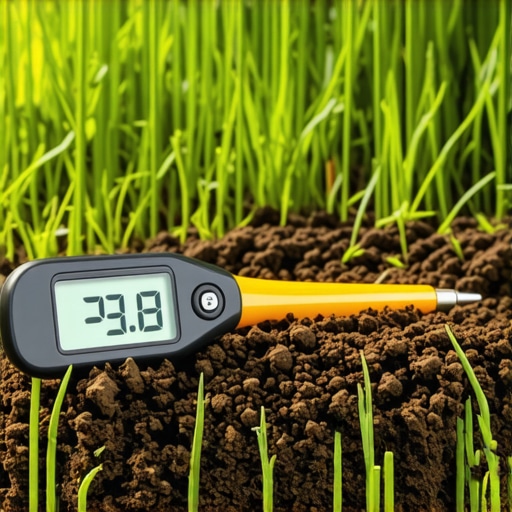
Applying 2026 Grub Control: Why Soil Temp Matters
You walk out to your front lawn in late spring and notice a patch of turf that looks slightly off-color. You give it a tug, and the entire section lifts up like a piece of cheap, unglued carpet. Underneath, the soil is crawling with C-shaped, cream-colored larvae with brown heads. This isn’t just a nuisance; it is a structural failure of your landscape’s biological foundation. Most homeowners and ‘mow-and-blow’ outfits see this and panic, throwing down whatever heavy-duty pesticide they find at the local big-box store. They are wasting money. Effective grub control in 2026 isn’t about the volume of chemicals you dump; it is about the thermodynamic state of the soil and the life cycle of the Scarabaeidae family.
The Chemical Nightmare: Why Blind Application Fails
Grub control fails most often because of poor timing and a lack of understanding regarding soil chemistry. I recently visited a property where a homeowner had torched $4,000 worth of premium sod because they applied a high-concentration curative grub killer in 95-degree heat without irrigation. The salt index of the fertilizer-pesticide combo sucked every drop of moisture out of the root zone, creating a chemical burn that was more lethal than the grubs themselves. The grubs, meanwhile, had simply tunneled four inches deeper into the cool, moist subsoil to wait out the onslaught. They survived; the lawn didn’t. This is why we focus on the science of soil temperature and precise chemical selection rather than brute force. You cannot out-think biology with a spreader alone.
“Effective management of white grubs requires an understanding of the species present and their life cycle, as most insecticides are only effective against young larvae near the soil surface.” – Penn State Extension, Department of Entomology
The Science of Soil Temperature and Larval Migration
Soil temperature is the primary regulator of grub activity, dictating when larvae rise to the root zone to feed and when they descend to escape the frost line. In 2026, we are seeing earlier soil warming trends, which means the traditional ‘apply on Memorial Day’ advice is increasingly obsolete. For a preventative application to work, the soil temperature at a 2-inch depth must consistently hit 55 to 65 degrees Fahrenheit. This is the window when the overwintered larvae become active and, more importantly, when the next generation of eggs begins to hatch. If you apply too early, the microbial activity in the soil will break down your active ingredients before the grubs are even present to ingest them. If you apply too late, the grubs have already developed a thick enough cuticle to resist most preventative chemistries like Chlorantraniliprole.
“How do I know if I have grubs or just drought stress?”
To distinguish between grub damage and drought stress, perform the ‘tug test’ by grabbing a handful of grass and pulling upward; if it remains anchored, it is likely drought or fungal, but if it peels back to reveal the soil, you have a root-shearing infestation. You should also look for secondary signs: skunks, crows, or raccoons tearing up the turf at night. These predators have better ‘grub-dar’ than any human. They are digging for a high-protein snack, and they don’t care about your curb appeal. If you see localized ‘mining’ in your yard, the larvae are already large enough to be a significant threat.
| Chemical Type | Active Ingredient | Ideal Soil Temp | Action Mechanism |
|---|---|---|---|
| Preventative | Chlorantraniliprole | 55°F – 65°F | Paralyzes jaw muscles of young larvae |
| Curative | Dylox (Trichlorfon) | 65°F+ | Rapid neurotoxin for mature larvae |
| Biological | Milky Spore | 60°F – 70°F | Bacterial infection (long-term) |
The Engineering of a Successful Application
Applying grub control is an engineering task that involves managing the ‘thatch barrier’ and hydrostatic movement. If your lawn has more than a half-inch of thatch—that spongy layer of dead organic matter between the green blades and the soil—your grub control will never reach its target. The thatch acts like a biological sponge, sequestering the pesticide and allowing it to degrade in the UV light. This is why a thorough yard cleanup and power raking are non-negotiable precursors to treatment. You have to clear the way. Furthermore, most modern grub controls are hydrophobic or require significant water-in. You must apply exactly 0.5 inches of water immediately after application to move the chemistry into the upper inch of soil. Don’t guess. Use a rain gauge or a tuna can. If you don’t water it in within 24 hours, you’ve just bought very expensive bird food.
“A retaining wall doesn’t fail because of the stone; it fails because of the water trapped behind it, much like a turf system fails when the soil-to-root interface is compromised by improper drainage or pest density.” – Hardscape Engineering Axiom
“What is the best time of day to apply grub control?”
The best time to apply grub control is in the early morning or late evening when evaporation rates are lowest and the irrigation system can immediately carry the product into the root zone without the risk of UV degradation. Mid-day applications are a rookie mistake. The sun’s rays can break down the molecular bonds of certain pesticides within hours if they aren’t moved into the soil profile. We also look at the 24-hour forecast; a gentle rain is your best friend, but a torrential downpour will wash your $100 bag of product straight into the storm drain, which is both an environmental disaster and a waste of your hard-earned capital.
Sod Install and Long-Term Prevention
If you are planning a sod install in 2026, you have a unique opportunity to build a grub-resistant environment from the bottom up. We see so many ‘pros’ slap sod down over compacted, grub-infested clay. That is a death sentence. Before the first piece of sod touches the ground, we treat the subsoil and ensure the grading allows for proper drainage. Grubs thrive in soil that is consistently over-saturated but not flooded. By fixing the soil microbiology and adding beneficial nematodes—microscopic worms that hunt grub larvae—you create a self-defending ecosystem. This is the difference between a high-end landscaping approach and a quick-fix mentality. We aren’t just looking at this season; we are looking at the five-year health of the root system.
- Inspect for Scarabaeidae larvae at the 1-3 inch depth before any new planting.
- Maintain a soil pH between 6.0 and 7.0 to optimize chemical efficacy.
- Core aerate annually to reduce the thatch layer to under 0.5 inches.
- Calibrate your spreader to ensure exactly 3.5 lbs of product per 1000 square feet.
- Check 811 before any deep aeration or irrigation repair work.
The Foreman’s Final Word on 2026 Maintenance
Grub control is not a ‘set it and forget it’ chore. It is a precise intervention in a complex biological cycle. If you skip the soil temp check, you lose. If you skip the yard cleanup, you lose. If you don’t calibrate your irrigation, you lose. The 2026 season will reward those who pay attention to the thermometer rather than the calendar. Keep your mower blades sharp, keep your thatch thin, and wait for that 55-degree soil trigger. Do it right once, or do it twice and watch your lawn die in between. Your choice. There is no magic in a bag; the magic is in the timing and the dirt. Period.