
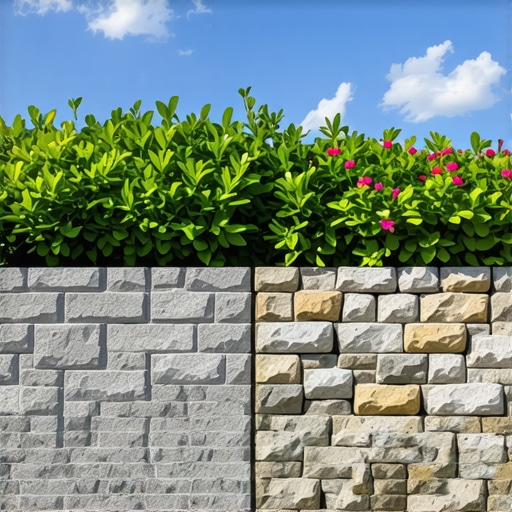
The Engineering Reality of Modern Retaining Walls
Before you touch a shovel, you have already won or lost the project. In the world of high-end hardscaping, a retaining wall is not a decoration; it is a structural dam designed to resist massive lateral earth pressure and hydraulic force. Choosing between concrete segmental retaining wall (SRW) units and natural stone for your 2026 project requires understanding the physics of soil, the chemistry of efflorescence, and the mechanical limits of your site base.
“A retaining wall doesn’t fail because of the stone; it fails because of the water trapped behind it.” – Hardscape Engineering Axiom
The Hardscape Autopsy: Why $30,000 Projects Fail
I recently got called out to tear up a $30,000 patio and wall system that was sinking and bowing because the previous contractor ignored the local heavy clay soil. They used a thin layer of sand instead of a 95% Standard Proctor Density compacted gravel base. The hydrostatic pressure during a heavy spring rain turned the backfill into liquid mud, pushing a 4-ton wall three inches out of plumb. We had to excavate the entire mess, install a proper French drain with AASHTO #57 stone, and start from the dirt up. Don’t be that homeowner. Fix the drainage first.
Choosing the Right Retaining Wall Block for 2026
The best 2026 retaining wall blocks prioritize interlocking structural integrity and high-density concrete for longevity, while natural stone selections focus on density-per-cubic-foot and thermal expansion resistance in fluctuating climates. 2026 trends are moving away from faux-stone plastics and toward raw, heavy materials that can withstand the increased volatility of modern weather patterns.
Concrete SRW: The Precision of Engineering
Modern concrete blocks are manufactured under extreme pressure to reach 4,000 to 5,000 PSI. These units often feature a rear-lip or pin-connection system that ensures a consistent 1-inch set-back (batter) for every foot of height. This is critical. Without a batter, the wall has zero leverage against the soil. In 2026, we are seeing a shift toward large-format blocks that mimic the look of granite but offer the internal drainage channels that natural stone lacks. They are uniform. They are predictable. They work.
Natural Stone: The Gravity-Fed Classic
Natural stone, whether it is limestone, sandstone, or granite, relies on raw mass and friction. To build a 4-foot natural stone wall, you need a much wider base than you do with concrete. You are fighting the coefficient of friction between irregular surfaces. We often use snapped-face wall stone for a cleaner look or boulder stacking for a more organic feel. If you have acidic soil, avoid soft limestones; they will degrade. Use granite or basalt for longevity. It is heavy work. Your back will feel it.
| Feature | Concrete SRW (2026 Tech) | Natural Stone (Granite/Basalt) |
|---|---|---|
| Installation Speed | Fast (Modular) | Slow (Hand-Chiseled) |
| Durability | 50-75 Years | 100+ Years |
| Base Requirement | 6-inch Compacted Gravel | 12-inch Compacted Gravel |
| Cost Per Sq Ft | $25-$45 Installed | $55-$95 Installed |
| Drainage Logic | Internal Hollow Cores | External French Drain Only |
How much modified gravel do I need for a patio base?
For a standard retaining wall or patio, you need a minimum of 6 inches of Modified 2A or 3/4-inch minus gravel, compacted in 2-inch lifts. To calculate volume, multiply the length by the width by the depth in feet, then divide by 27 to get cubic yards. Order 10% extra for compaction loss. Don’t skip the plate compactor. The soil must be rock hard.
What is the best material for a 4-foot retaining wall?
A 4-foot wall is the threshold where engineering permits often kick in. For this height, solid-core concrete blocks with geogrid reinforcement are the safest bet. Natural stone at 4 feet requires a massive footing and significant deadman stones (stones that extend deep into the hillside) to prevent tipping. Safety first.
[IMAGE_PLACEHOLDER]
The Process: From Excavation to Sod Install
The landscaping process starts with a yard cleanup that strips all organic matter. If you leave grass or roots under your wall, they will rot. This creates voids. Voids lead to settling. Once the wall is up, you must address irrigation. Never run a high-pressure irrigation line directly behind a retaining wall. If a pipe bursts, your wall is gone in hours. Always sleeve your lines and move them at least 3 feet back from the wall face.
“Soil compaction is the most ignored phase of residential construction, leading to 90% of hardscape failures within the first five years.” – Penn State Agricultural Extension Manual
The 2026 Hardscape Checklist
- Utility Marking: Call 811 before you dig. Even a shallow trench can hit a gas line.
- Base Compaction: Use a vibratory plate compactor. If the machine doesn’t bounce, the ground is too soft.
- Filter Fabric: Use non-woven geotextile between the stone drainage and the soil backfill. This prevents “fines” from clogging your pipes.
- Perforated Pipe: Ensure your 4-inch pipe daylighted (drains to the surface) every 25 to 50 feet.
- Sod Install: Finish the project with a high-quality sod install. This prevents surface erosion from washing silt over your new stones.
While the internet tells you to water every day after a new sod install, turf grass actually needs deep, infrequent watering. Aim for exactly 1 inch per week. This forces the roots to chase the water down, creating a drought-resistant lawn that anchors the soil around your new wall. Shallow watering creates lazy roots. Lazy roots mean unstable soil.
The Long-Term Outlook
Your wall will move. Every freeze-thaw cycle in the northern states or heavy rain season in the south will test the structure. Concrete blocks handle this with polymeric sand and flexible joints. Natural stone handles it through sheer weight. If you see a crack, monitor it. A hairline crack in mortar is common; a 1/2-inch gap in the block is a structural warning. Keep your gutters clear. Water is the enemy. Respect the physics of your yard and your investment will stand for decades.