
Why Your Lawn Feels Like Concrete This Fall
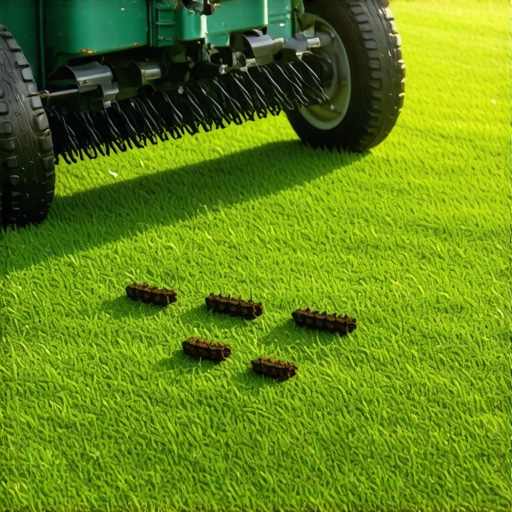
Core aeration involves the mechanical removal of small soil plugs or cores from your lawn to alleviate subsurface compaction and facilitate the direct movement of oxygen, water, and nutrients into the root zone. This process is critical for maintaining turf health in heavy clay soils where bulk density often reaches levels that physically restrict root elongation and gas exchange.
A homeowner called me in a panic last season after they completely torched their front lawn by applying heavy doses of high-nitrogen fertilizer to a yard that was as hard as a sidewalk. They thought the grass was hungry because it was yellowing. In reality, the soil was so compacted that the fertilizer couldn’t penetrate the surface. It just sat there, turning into caustic salts that dehydrated the grass crowns. By the time I arrived, the lawn didn’t need food; it needed an autopsy. We had to perform an emergency core aeration just to get some oxygen to the suffocating microbes before the entire sod install became an expensive pile of hay. If you don’t fix the soil physics, the chemistry won’t matter. This is why I tell my crew that every plant you put in the ground is just expensive compost if the grading and compaction aren’t addressed first.
The Engineering Reality of Soil Compaction
Soil is not a solid mass. It is a complex matrix of minerals, organic matter, and, most importantly, pore space. In a healthy lawn, about 50 percent of the soil volume should be empty space filled with either air or water. When you walk on your lawn, or when the neighborhood kids play on it, those pore spaces collapse. This increases the bulk density of the soil. When bulk density gets too high, the roots cannot push through the earth. They grow sideways or stay stunted near the surface. This makes your lawn incredibly vulnerable to heat stress and drought. It will die. Without core aeration, your irrigation system is likely wasting 40 percent of its water to runoff because the ground literally cannot absorb the volume you are putting down.
“Core aeration is the most effective method for managing thatch and reducing soil compaction in established turfgrass by physically removing soil biomass and creating pathways for gaseous exchange.” – Penn State Extension, Center for Turfgrass Science
How much modified gravel do I need for a patio base?
While this article focuses on turf, the engineering principles of compaction apply to hardscapes too. For a standard patio, you generally need a minimum of 4 to 6 inches of compacted 2A modified gravel. If you are prepping for a sod install near a new patio, ensure the drainage flows away from the base. Water trapped behind a wall or under a paver is the primary cause of failure. Just as core aeration fixes the lawn, proper sub-base compaction and drainage fix the patio. Do not mix the two up. You want your patio base compacted to 95 percent Proctor density, but you want your lawn soil loose and airy.
Core Aeration vs. Spike Aeration: The Physics of Failure
Many homeowners are tempted by spike aerators because they are cheap or can be worn as shoes. This is a mistake. Physics does not lie. When you push a solid spike into the ground, you are not removing any material. You are simply pushing the soil to the side and downward. This actually increases compaction in the area immediately surrounding the hole. It creates a “sidewall compaction” effect that makes it even harder for roots to penetrate. Core aeration, on the other hand, uses a hollow tine to extract a plug. This creates a literal vacuum of space that allows the surrounding soil to relax and expand into the hole. It is the only way to truly reduce bulk density.
| Feature | Core Aeration (Hollow Tine) | Spike Aeration (Solid Tine) |
|---|---|---|
| Material Displacement | Removes 3-4 inch soil plugs | Displaces soil sideways |
| Compaction Relief | High (Reduces bulk density) | Negative (Increases local compaction) |
| Root Growth Support | Excellent lateral expansion | Minimal to none |
| Thatch Management | Physical breakdown of organic mat | No effect on thatch |
The Critical Steps for a Fall Yard Cleanup
If you are planning your fall 2026 maintenance, aeration should be the centerpiece, followed by overseeding and a balanced irrigation schedule. Here is the professional checklist my crew uses:
- Clear all debris and perform a deep yard cleanup to ensure the aerator tines hit bare soil.
- Flag all irrigation heads and underground utilities to avoid expensive repairs.
- Ensure the soil is moist but not saturated; the tines should pull a clean 3-inch plug.
- Apply a high-quality turf-type tall fescue or Kentucky bluegrass seed immediately after pulling cores.
- Adjust your irrigation controller to water 1 inch per week, delivered in two deep sessions.
Does spike aeration cause more compaction?
Yes, spike aeration causes localized compaction through a process called displacement. Because no soil is removed, the surrounding earth is compressed to make room for the spike. This creates a glazed surface inside the hole that acts as a barrier to water and air. In heavy clay, these holes often just fill with water and become anaerobic pockets that rot the surrounding roots. Stick to hollow-tine mechanical aeration if you want professional results.
“A retaining wall doesn’t fail because of the stone; it fails because of the water trapped behind it.” – Hardscape Engineering Axiom
The same logic applies to your lawn. If water cannot move through the soil profile because of compaction, the grass will fail. Deep, infrequent watering is the only way to force roots to chase the moisture down into the profile. If you water every day for ten minutes, you are training your lawn to be weak. You want those roots reaching 6 inches deep. Core aeration provides the highway they need to get there. Stop listening to the big-box store advice and start looking at the physics of your dirt. Your lawn is a living system. Treat it like one. If you skip aeration this fall, you are essentially asking your grass to grow in a brick. It won’t happen. Plan for a core aeration session in early September or October of 2026 to ensure the roots have time to establish before the first hard freeze. This is the difference between a lawn that survives and a lawn that thrives.