
The Anatomy of a Failing Flagstone Patio
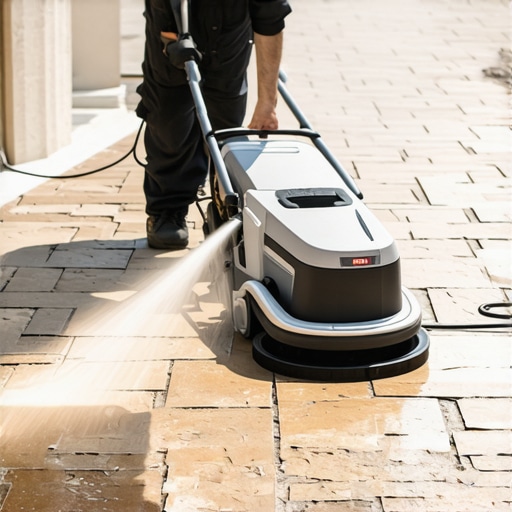
To restore a 2026 flagstone patio with a power scrubber, you must use a rotary surface cleaner to apply even 2500-3000 PSI pressure while maintaining a high 4-5 GPM flow rate to lift biological growth without eroding the natural stone pores or dislodging stable base material. This method ensures that the hardscaping remains structurally sound while removing the deep-seated organic debris that causes slippery surfaces and stone degradation.
I recently got called out to tear up a $30,000 patio that was sinking because the previous contractor used a standard mow-and-blow mentality on a high-end engineering project. They ignored the hydrostatic pressure building up under the stones. The homeowners thought they just needed a simple yard cleanup, but the reality was a catastrophic base failure. The contractor had used unwashed stone dust as a bedding layer. This material holds water like a sponge. When the winter freeze-thaw cycles hit, the water expanded, the stones heaved, and the irrigation runoff from the lawn finished the job by washing out the fines. It was a mess. Every stone I lifted was sitting in a anaerobic sludge that smelled like a swamp. This is what happens when you treat landscaping as a cosmetic fix rather than a civil engineering task.
“A patio fails because of the water trapped beneath it, not the weight of the traffic above it.” – Hardscape Engineering Axiom
Why Surface Power Scrubbers Beat Wands Every Time
Using a standard pressure washing wand on flagstone is a rookie mistake that leads to “Z-striping” and permanent etching of the stone surface. A power scrubber, specifically a rotary surface cleaner with a dual-nozzle spray bar, provides a consistent standoff distance. This consistency is vital for natural stones like Pennsylvania Bluestone or Tennessee Quartzite, which have varying hardness levels across the slab. If you hover too long with a wand, you are blasting away the natural binders of the stone. I have seen guys pit a stone so badly it looks like it was hit with birdshot. A professional 21-inch stainless steel surface cleaner ensures the landscaping project looks uniform. It also keeps the debris contained, which is critical if you just finished a fresh sod install nearby. You do not want high-pressure slurry landing on your new turf grass.
How do I remove black algae from flagstone?
Black algae, or Gloeocapsa magma, requires a chemical pretreatment before the power scrubber even touches the stone. Most hacks just blast it with high PSI, which only removes the top layer and leaves the root structure (the sheath) inside the stone pores to grow back in three months. You need a pH-neutral biological cleaner or a light sodium hypochlorite solution (around 2-3%) applied with a low-pressure sprayer. Let it dwell for 15 minutes, but do not let it dry. This kills the organism at the root. Then, use the power scrubber to lift the dead organic material out of the stone’s crannies. This is the difference between a yard cleanup and a restoration.
| Cleaning Method | PSI Range | GPM Requirement | Stone Impact | Longevity |
|---|---|---|---|---|
| Manual Scrubbing | N/A | Low | Negligible | Short-term |
| Pressure Wand | 3500+ | 2-3 | High (Etching) | Varies |
| Rotary Power Scrubber | 2500-3000 | 4-5+ | Minimal | Long-term |
| Steam Cleaning | Low | Low | None | Medium |
The Technical Process: Step-by-Step Remediation
- Pre-Inspection: Check for loose stones and failing polymeric sand joints. If the joints are gone, the scrubber will blow out the bedding sand.
- Debris Clearing: Execute a thorough yard cleanup to remove organic matter, leaves, and sticks that can clog the scrubber nozzles.
- Chemical Application: Apply a surfactant-based cleaner to break the surface tension of the biofilm.
- Mechanical Scrubbing: Move the rotary cleaner in slow, overlapping passes. Speed is the enemy of quality.
- Rinsing and Neutralization: Rinse the slurry away toward a designated drainage area, ensuring it does not pool on your irrigation heads.
- Joint Stabilization: Once dry, re-sweep with high-quality polymeric sand that meets ICPI standards.
Can a power scrubber damage natural stone?
A power scrubber can damage stone only if the operator is incompetent and uses the wrong nozzle tips or ignores the geology of the material. Soft sandstones require a lower PSI and a wider fan pattern. If you are working on 2026 flagstone trends, which often include thinner-cut veneers for overlay projects, the risk of cracking the stone through vibration is real. You must check the modulus of rupture for the specific stone you are cleaning. If the stone is delaminating (spalling), stop immediately. No amount of scrubbing will fix a stone that is literally falling apart from the inside due to salt damage or poor quarrying. In those cases, you are looking at a full landscaping replacement, not just a cleaning.
“Standard practice for natural stone installation requires a minimum 4-inch compacted aggregate base to prevent frost heave and stone migration.” – ICPI Tech Manual
The Relationship Between Drainage and Patio Health
The biggest threat to your flagstone patio isn’t dirt; it is the irrigation system that is poorly calibrated. If your sod install includes spray heads that drench the patio every morning, you are creating a perpetual petri dish for moss and algae. This constant moisture also leads to efflorescence, where mineral salts are pulled to the surface of the stone, leaving a white, chalky film. When we do a yard cleanup, we always check the pitch of the patio. A professional install should have a 1-2% slope away from the home. If the patio is flat, water sits. If water sits, the stone dies. It is that simple. I always tell my crew: we aren’t just cleaning stone; we are managing fluid dynamics. We ensure the French drains are clear and the landscaping beds aren’t mounded so high that they create a dam for the patio runoff.
Maintenance Schedule for 2026 and Beyond
Stop using bleach every month. It kills your sod and ruins the soil pH. Instead, focus on a deep power scrub every 24 months. In between, use a leaf blower to keep organic debris from breaking down in the joints. This prevents the “compost effect” where weeds start to grow in the polymeric sand. If you see a crack, fix it now. Don’t wait. A small crack is an invitation for water to get under the stone and begin the heaving process. Maintenance is cheaper than replacement. Always. Every time. Don’t be the homeowner who ignores the signs until the patio looks like a topographical map of the Himalayas.