
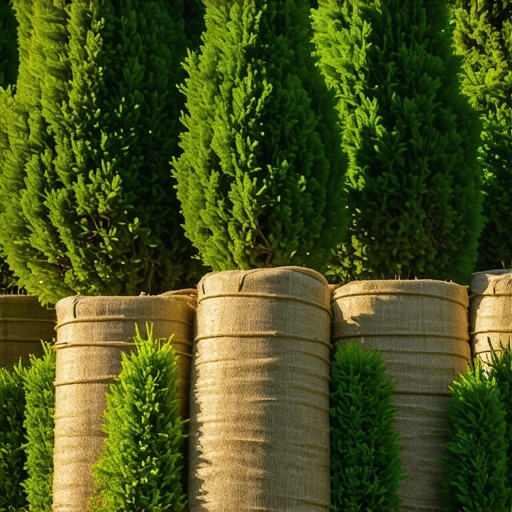
The Critical Failure of Winter Arborvitae Protection
Deer browse on Thuja occidentalis is a catastrophic event where Odocoileus virginianus consume the foliage of evergreens during winter dormancy, resulting in a ‘browse line’ that permanently strips the bottom six feet of the tree. To prevent this, professional landscapers utilize a multi-layered burlap wrapping system that creates a physical barrier against predation while managing winter desiccation and thermal fluctuations.
I always drill into my new crew members: if you don’t fix the protection strategy before the first frost, every plant you put in the ground is just expensive compost. I’ve spent twenty years watching homeowners drop five figures on a privacy screen of ‘Emerald Green’ arborvitae only to see it look like a row of skeletonized lollipops by March. It’s not just about the deer eating the greens; it’s about the structural integrity of the plant. When a deer yanks on a branch in sub-zero temperatures, the frozen vascular tissue snaps. You aren’t just losing leaves; you’re losing the scaffold. If you don’t wrap, you aren’t a landscaper; you’re a zookeeper providing a buffet. It’s a hard lesson that usually involves a client screaming about a ruined investment while I’m out there in February trying to explain that you can’t ‘glue’ a tree back together. Do it right the first time.
The Engineering Logic of Burlap and Thermal Regulation
A professional-grade burlap wrap serves as more than a fence; it is a micro-climate regulator that prevents the sun from artificially heating the needles during the day, which leads to transpiration that the frozen root ball cannot replenish. By using 7oz or 10oz natural burlap, we allow for gas exchange while mitigating the desiccation caused by high-velocity winter winds and hydrostatic pressure imbalances within the foliage.
“Evergreens continue to lose water through their needles throughout the winter. If the soil is frozen, the roots cannot pull in moisture to replace what is lost to the wind, leading to cellular death known as winter burn.” – Agricultural Extension Agronomy Manual
How much burlap do I need for a 10-foot Arborvitae?
To properly wrap a 10-foot Arborvitae, you require approximately 35 to 40 linear feet of 40-inch wide burlap. This allows for a double-layer wrap with a 6-inch overlap at each pass, ensuring that no gaps are left for deer to exploit or for wind-tunnel effects to freeze the interior branches. Don’t skimp on the yardage. Under-wrapping is worse than not wrapping at all because it can trap moisture against the trunk without providing a windbreak.
Will burlap kill my trees if I leave it on too long?
Leaving burlap wraps on past the first consistent 50-degree days in spring can cause fungal pathogens like Phomopsis blight to thrive due to trapped humidity and lack of airflow. You must monitor local soil temperatures; once the ground thaws and the root system can resume irrigation uptake, the physical barrier must be removed to prevent heat-loading the foliage. Timing is everything. Watch the buds.
The Pre-Wrap Protocol: Irrigation and Yard Cleanup
Before the first roll of burlap is deployed, the horticultural foundation must be set. This begins with a deep-root irrigation cycle. I’m talking about a slow drip for 4 hours per tree to ensure the soil profile is saturated at least 12 inches deep. Why? Because moist soil holds more latent heat than dry soil and provides the only reservoir the tree has for the next four months. We also perform a rigorous yard cleanup. We remove all fallen fruit, leaf litter, and hosta debris from the base of the arborvitae. These organic materials emit scents that attract deer into the ‘impact zone.’ If you leave rotting apples near your ‘Green Giants,’ you’re ringing the dinner bell.
| Material Choice | Density/Weight | Primary Benefit | Expected Lifespan |
|---|---|---|---|
| Natural Burlap | 7oz – 10oz | Excellent Breathability | 1 Season |
| Synthetic Mesh | Medium | High Tensile Strength | 3-5 Seasons |
| Plasterer’s Tape | N/A | Secures Burlap Tight | 1 Season |
| 2×2 Oak Stakes | Heavy | Prevents Snow Load Collapse | 5+ Seasons |
Next, we look at sod install areas adjacent to the trees. If you recently laid sod, ensure the edges are tucked and the soil is compacted. Loose sod edges are a magnet for voles, which will hide under your burlap wrap and girdle the bark while the deer attack the top. It’s a pincer movement. You have to think like the pest.
Step-by-Step Professional Wrapping Execution
The process isn’t just about throwing a blanket over a bush. It’s a structural build. First, drive three 2×2 oak stakes into the ground around the tree in a triangular formation. These stakes must be at least 18 inches deep to resist frost heave. The burlap should be stapled to the stakes, not wrapped directly against the foliage. This creates an air gap. This gap is vital. It prevents ice buildup from touching the needles and allows for the ‘chimney effect’—where cool air enters the bottom and pulls moisture out the top. Secure the burlap with heavy-duty twine using a clove hitch at every 12 inches of vertical height. Tighten it. It should sound like a drum when you tap it. If it sags, it will collect snow, and that weight will snap your leader. It will rot if you let it touch the ground. Keep the burlap 2 inches above the mulch line.
“A landscape structure, whether a wall or a tree wrap, fails when it ignores the physics of water and weight. Support the load or the load will crush the asset.” – ICPI Hardscape Engineering Axiom
- Inspect all branches for existing bagworm cocoons before sealing.
- Hydrate the root zone until the ground is 25 degrees Fahrenheit.
- Drive stakes at a 10-degree outward angle to counteract tension.
- Staple burlap with 1/2-inch galvanized staples every 6 inches.
- Apply a bitterant spray to the burlap as an added olfactory deterrent.
Maintenance and Post-Winter Recovery
Once the wrap is up, you aren’t done. After every major snow event, you must perform a yard cleanup of the heavy drifts against the burlap. Snow is an insulator, but it’s also heavy. If a drift pushes the burlap against the needles, you lose the air gap and invite winter burn. In late February, I always check the tension of the twine. The freeze-thaw cycle can loosen the stakes. A loose wrap is a sail; it will catch the wind and pull the whole tree over if the soil is soft. When the ground finally thaws, usually in late March or early April, we strip the wraps on a cloudy day. Removing them in full, direct sun can shock the needles that have been in 40% shade for months. Let them acclimate. This is professional landscaping—it’s a game of inches and degrees. Don’t be a hack. Protect your work.