
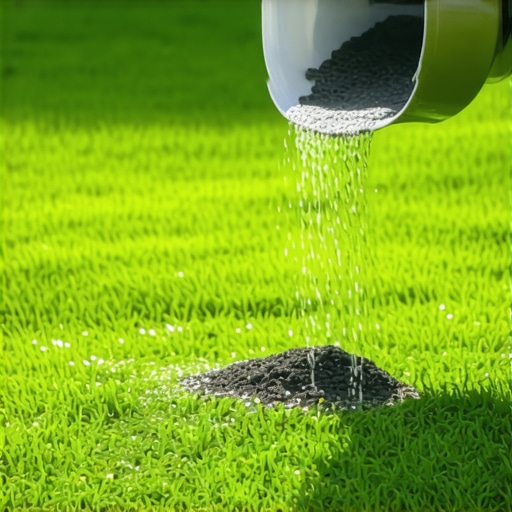
Applying 2026 Iron Sulfate for Deep Green Grass
You look out your window and see a pale, sickly lime-green carpet instead of the deep, forest-green turf you were promised when you paid for that expensive sod install. Most homeowners assume the answer is more nitrogen. They dump more urea on the lawn, the grass shoots up six inches in three days, and they end up with even more mowing work but the same yellowish tint. This is the hallmark of iron chlorosis. In 2026, professional turf management has moved beyond simple N-P-K applications to focus on the micronutrient efficiency of iron sulfate (FeSO4). If you want that deep, professional-grade color without the massive growth surge of nitrogen, you need to understand the chemistry of the soil profile.
The Chemical Nightmare: A Cautionary Tale of Iron Burn
Iron sulfate application requires precision because a single mistake can turn a $20,000 landscaping project into a charred, black wasteland in under four hours. I remember a call-out last season to a property where the homeowner decided to ‘eyeball’ the dosage of ferrous sulfate heptahydrate. He applied it during a 90-degree afternoon on bone-dry turf. By sunset, his lawn didn’t look green; it looked like a soot-covered parking lot. The high salt index of the sulfate combined with the lack of irrigation literally sucked the moisture out of the grass blades, causing a massive chemical burn. We had to perform an emergency yard cleanup, heavy aeration, and a flushing protocol just to save the root crowns. This is why you don’t play chemist with your yard unless you know your measurements down to the gram.
“Iron chlorosis is often a symptom of high soil pH rather than a total lack of iron in the earth; when pH rises above 7.0, iron becomes chemically bound and unavailable to the plant roots.” – Texas A&M AgriLife Extension
The Science of Ferrous Sulfate: How It Works on Grass
Ferrous sulfate works as a catalyst for chlorophyll synthesis, providing the essential minerals needed for the plant to produce green pigment without forcing the metabolic energy into vertical leaf expansion. Unlike nitrogen, which tells the plant to grow, iron tells the plant to get healthy. When you apply iron sulfate, the iron ions are absorbed either through the foliage (foliar feeding) or through the roots if the soil chemistry allows it. In 2026, we focus on the heptahydrate form because of its superior solubility. It hits the system fast. You can see a color change in as little as 12 to 24 hours if the irrigation is calibrated correctly.
When should I apply iron sulfate to my lawn?
The best time to apply iron sulfate is during the active growing season when temperatures are between 60 and 80 degrees Fahrenheit and soil moisture is consistent. Avoid applications during peak summer heat or drought stress, as the sulfate can cause desiccation of the leaf tissue. Early morning is the gold standard for application timing.
[image_placeholder_1]
Iron Sulfate vs. Nitrogen: Knowing the Difference
Turf color is influenced by two main factors: the quantity of chlorophyll and the density of the grass blades. Nitrogen increases both, but at the cost of excessive mowing and increased disease pressure. Iron sulfate bypasses the growth cycle. It is a tool for the aesthetic professional. If your sod install is struggling with yellowing but the grass is already tall enough, you don’t have a nitrogen problem; you have a mineral uptake problem. High-end landscaping firms use iron to get that ‘Bluegrass’ look on Fescues and Ryegrasses. It provides a deeper hue that lasts for 2 to 4 weeks depending on the rainfall and soil leaching rates.
| Nutrient Source | Color Speed | Growth Impact | Duration | Risk Level |
|---|---|---|---|---|
| Nitrogen (Urea) | 3-5 Days | High | 4-6 Weeks | Medium (Leaching) |
| Iron Sulfate | 12-24 Hours | None | 2-3 Weeks | High (Staining/Burn) |
| Chelated Iron | 2-4 Days | None | 4-8 Weeks | Low |
2026 Application Guide: Ratios and Timing
To apply iron sulfate correctly in 2026, you must first calculate your square footage with surgical accuracy. For a standard liquid application, we typically see a rate of 2 to 4 ounces of ferrous sulfate dissolved in 1 to 2 gallons of water per 1,000 square feet. If you are using a granular product, the spreader must be calibrated to avoid ‘striping.’ Striping with iron is permanent for the season; the black streaks where you overlapped will haunt you until the next yard cleanup. You must also ensure that the irrigation system is functional but turned off during a foliar application to allow the product to dry on the leaf surface for at least 4 hours.
How much iron sulfate is too much for grass?
Exceeding 5 ounces of iron sulfate per 1,000 square feet in a single application can lead to phytotoxicity, turning the grass blades a bruised, dark grey or black. While the grass usually recovers as it grows out, the aesthetic damage is immediate and severe, often requiring heavy irrigation to leach the excess minerals from the root zone.
- Check the weather: No rain for 6 hours post-application.
- Sweep the concrete: Iron will rust and stain your driveway permanently.
- Calibrate the spreader: Use a catch-pan test before hitting the lawn.
- Wear PPE: Iron sulfate is an irritant; don’t breathe the dust.
- Test soil pH: If your pH is over 7.5, consider chelated iron instead.
“Surface-applied iron is quickly oxidized and rendered unavailable in alkaline soils; therefore, maintaining a slightly acidic soil pH is critical for long-term turf color.” – Penn State Center for Turfgrass Science
Soil pH and Iron Availability: The Lock-and-Key Problem
Soil chemistry is the ultimate gatekeeper of your lawn’s color. If your soil is too alkaline, you can pour gallons of iron sulfate onto the ground and the grass will stay yellow because the iron ions bond with oxygen and hydroxide to form insoluble compounds that the roots cannot absorb. This is the ‘Lock-and-Key’ problem. In 2026, we utilize elemental sulfur alongside iron sulfate to locally lower the pH of the rhizosphere. It is a slow process. It takes months, not days. Don’t let a ‘mow-and-blow’ contractor tell you a single treatment will fix a 7.8 pH soil profile. It won’t happen. You need a systemic landscaping plan that addresses the underlying geology of your yard.
Irrigation and Post-Application Management
Irrigation is the most misunderstood variable in micronutrient management. If you apply iron and then immediately run your sprinklers for an hour, you’ve just washed your money into the storm drain. For foliar absorption, the iron needs contact time with the stomata. However, if you are applying a granular iron sulfate for root uptake, you must water it in with exactly 0.25 inches of water to move the granules into the thatch layer without washing them away. This balance is what separates the veterans from the hacks. We use digital flow meters to ensure the irrigation output matches the prescription. Precision is everything in 2026.
Yard Cleanup and Avoiding Permanent Stains
The biggest rookie mistake in landscaping is forgetting that iron sulfate is basically liquid rust. If a single drop hits your travertine patio, your concrete driveway, or your stone retaining wall, it will leave a bright orange stain that requires muriatic acid to remove. During any yard cleanup following a treatment, you must use a leaf blower to clear every single granule off hardscapes before the first drop of moisture hits them. I have seen $50,000 hardscape installs ruined because a technician was lazy with the blower. It is a preventable disaster. Always clear the perimeter first. It is the golden rule of iron work.