
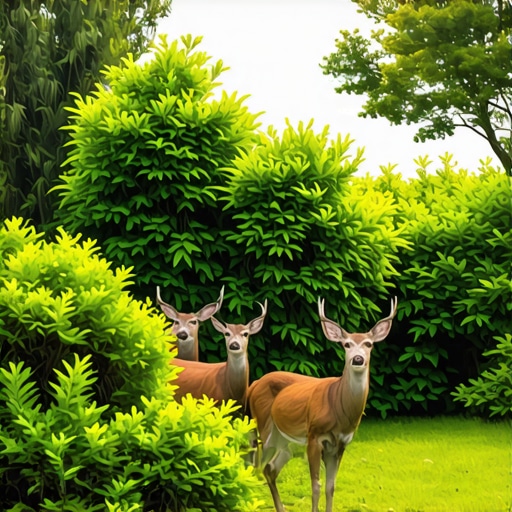
I always drill into my new crew members: if you don’t fix the soil grading first, every plant you put in the ground is just expensive compost. Last October, I walked onto a site where a homeowner had spent four thousand dollars on nursery stock, only to plant them in a low-lying clay pocket that essentially acted as a septic tank for their root systems. Within three weeks, the leaves were yellowing from anaerobic stress. You don’t plant into a bathtub. Before you even think about privacy shrubs, you must analyze your site’s drainage and soil pH. Most landscapers who call themselves pros will just dig a hole, throw in some peat moss, and leave. That is a recipe for failure. Real landscaping is about engineering an environment where biology can thrive without constant intervention.
The Physics of Proper Privacy Screen Installation
To ensure long-term stability of a privacy screen, you must address soil compaction and sub-surface drainage before planting. A reverse grade toward the root zone causes anaerobic conditions, leading to root rot and total plant failure within 24 months. You need a 2 percent slope away from the planting bed. If you have heavy clay, you aren’t just planting; you are managing hydraulic conductivity. I see too many guys ignore the bulk density of the soil. If that soil is too tight, the roots won’t penetrate. They will circle the hole until the plant chokes itself out. This is why yard cleanup involves more than just raking leaves: it involves removing the layers of debris that prevent gas exchange in the top 6 inches of the soil profile.
“A retaining wall doesn’t fail because of the stone; it fails because of the water trapped behind it.” – Hardscape Engineering Axiom
Which privacy shrubs grow the fastest in shade?
For shaded environments, the **Spicebush** (Lindera benzoin) and **Arrowwood Viburnum** (Viburnum dentatum) offer the most rapid growth rates of approximately 1 to 2 feet per year once established. These species leverage **high chlorophyll density** to thrive in low-light conditions while maintaining a thick branch structure that provides significant visual screening during the growing season.
1. Northern Bayberry (Morella pensylvanica)
Northern Bayberry is the workhorse of the maritime and inland landscape. This isn’t your average ornamental. It is an actinorhizal plant, meaning it has a symbiotic relationship with Frankia bacteria to fix nitrogen in its roots. It can grow in soil that is practically sterile. The leaves are thick and coated in a fragrant wax that deer find repulsive. When we do a sod install near a Bayberry hedge, we make sure the irrigation doesn’t hit the foliage directly. Excessive moisture on the leaves can lead to leaf spot, but the plant itself is ironclad. It stays semi-evergreen in warmer zones, providing a grey-green buffer through the winter. It grows to about 6 to 10 feet. It is dense. It is salt-tolerant. It is exactly what you need if you live near the coast or a heavily salted road.
[IMAGE_PLACEHOLDER]
2. American Holly (Ilex opaca)
If you want a permanent, year-round wall, you buy American Holly. Do not buy the thin, weak varieties at the big-box stores. You want straight species or proven cultivars like Jersey Knight. The leaves are leathery and equipped with sharp spines. Deer won’t touch them unless they are literally starving to death. The metabolic cost of chewing an American Holly leaf is higher than the caloric gain. That is biological math. When we install these, we pay close attention to the root flare. If you bury that flare, the tree will die. It might take five years, but it will happen. We use a 1-inch layer of aged arborist wood chips, never dyed mulch. Dyed mulch is a chemical nightmare for soil microbiology. American Holly needs a slightly acidic pH, ideally between 5.0 and 6.0. If your soil is alkaline, you will see chlorosis. Fix the soil before the plant goes in.
3. Arrowwood Viburnum (Viburnum dentatum)
This shrub got its name because Native Americans used its straight, rigid stems for arrows. It is tough as nails. It handles a wide range of soil types, from sandy loam to heavy clay. The deer ignore it because of the high tannin content in the stems and leaves. It produces white flat-topped flowers in the spring followed by deep blue drupes that birds love. For a privacy screen, you space them about 4 to 5 feet apart. This allows the root systems to interlock without competing too heavily for nitrogen. During the yard cleanup phase of a project, we often find invasive honeysuckle choking out viburnums. We clear the invasives, add 2 inches of compost, and the viburnum takes off. It can reach 15 feet in height. It is a beast.
How deep should I plant a 15 gallon shrub?
A **15-gallon shrub** should be planted so the **root flare** sits exactly 1 to 2 inches above the surrounding soil grade to account for settling. Dig the hole **two to three times the width** of the root ball to allow for lateral root expansion into uncompacted soil, which is vital for establishment.
4. Eastern Red Cedar (Juniperus virginiana)
This is a pioneer species. It is the first thing that grows in abandoned fields because it can handle anything. The foliage contains volatile oils and terpenes that smell great to humans but taste like medicine to deer. It is an evergreen that provides a massive windbreak. If you have a large property and need a 20-foot wall, this is your plant. However, do not plant it near apple trees. It is a host for cedar-apple rust. This is the kind of technical detail a mow-and-blow guy won’t tell you. We integrate these into landscapes where we are doing a full irrigation setup because while they are drought-tolerant, they need consistent deep watering in year one to force those roots down deep. We set our drip emitters to provide 5 gallons of water twice a week during the heat of July. Deep and infrequent. That is the rule.
“For most woody plants, the root system extends two to three times the width of the crown.” – Penn State Department of Plant Science
5. Spicebush (Lindera benzoin)
Spicebush is the underdog of the privacy world. It thrives in the understory, making it perfect for wooded perimeters. The entire plant is aromatic. If you scratch a twig, it smells like citrus and pepper. Deer hate it. It is also the sole host plant for the Spicebush Swallowtail butterfly. This is landscaping with a purpose. It doesn’t get as tall as the Red Cedar, topping out around 12 feet, but it becomes very wide and colonial. It fills in the gaps. In the fall, the leaves turn a brilliant gold that lights up the entire yard. When we do a yard cleanup, we make sure our crews don’t mistake these for common brush. They are valuable assets. We often install these in areas where the soil stays a bit damp, as they have a higher tolerance for moisture than the other shrubs on this list.
The Professional Installation Checklist
Don’t just stick a plant in the ground and hope. Follow this protocol to ensure your investment doesn’t become compost by next season.
- Call 811 before you dig. Utility lines are often shallower than you think.
- Test soil pH and adjust with elemental sulfur or lime six months prior to planting.
- Excavate the hole to twice the width of the root ball but no deeper than the root flare.
- Scrounge the sides of the hole to prevent glazing in clay soils.
- Remove all burlap, twine, and wire cages from the top half of the root ball.
- Backfill with native soil. Do not use 100 percent bagged garden soil.
- Tamp the soil with your boot to remove large air pockets, but don’t pack it into concrete.
- Install a 5-foot diameter mulch ring, 2 inches deep, keeping mulch away from the trunk.
- Set up a dedicated drip irrigation zone with pressure-compensating emitters.
- Water immediately with 10 gallons of water per plant to settle the soil.
Comparative Analysis of Native Privacy Shrubs
| Shrub Species | Growth Rate | USDA Zone | Mature Height | Light Requirement |
|---|---|---|---|---|
| Northern Bayberry | Medium | 3-7 | 6-10 ft | Full Sun to Part Shade |
| American Holly | Slow | 5-9 | 15-30 ft | Full Sun to Part Shade |
| Arrowwood Viburnum | Fast | 3-8 | 8-15 ft | Full Sun to Part Shade |
| Eastern Red Cedar | Fast | 2-9 | 20-40 ft | Full Sun |
| Spicebush | Medium | 4-9 | 6-12 ft | Part Shade to Full Shade |
Irrigation and Long-Term Maintenance
While the internet tells you to water every day, newly installed shrubs actually need deep, infrequent watering to force roots to chase the moisture down into the soil profile. Over-watering is the fastest way to kill a native plant. You want to saturate the root zone and then let it dry out slightly. This cycle encourages the development of a robust, resilient root system. If you are doing a sod install at the same time, your irrigation needs will conflict. Sod needs frequent light misting for the first two weeks, while your shrubs need heavy drenching. You must put them on separate zones. If your landscaper tells you they can run the whole yard on one zone, fire them on the spot. They don’t understand the hydraulic requirements of different plant types. Every plant listed here is a survivor, but only if you give it the foundation it deserves. No shortcuts. No fluff. Just good engineering.