
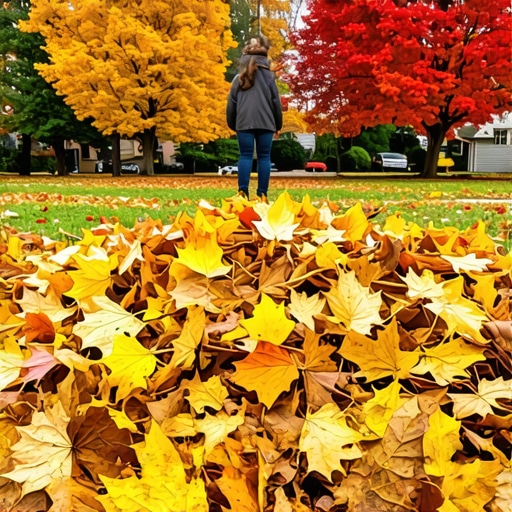
Why You Should Stop Raking Every Single Leaf This Fall
I always drill into my new crew members: if you don’t fix the soil grading first, every plant you put in the ground is just expensive compost. The same logic applies to the organic matter currently falling from your trees. Most homeowners see a carpet of gold and red and reach for a plastic rake and a pile of leaf bags. They are essentially throwing away high-grade, slow-release fertilizer that their landscaping needs to survive the winter. You are strip-mining your own property of nitrogen and carbon just to satisfy a 1950s aesthetic of a sterile, bare lawn. It is a mistake that leads to soil compaction and nutrient deficiency.
The Biological Reality of Autumn Leaf Litter
Stop treating leaves as waste. Leaf litter acts as a natural mulch that recycles nitrogen, phosphorus, and potassium back into the root zone, suppressing weed seeds and insulating soil microorganisms against the freeze-thaw cycle of winter. When you remove every speck of organic debris, you expose the soil surface to the elements. This leads to the very hydrostatic pressure issues that can shift your hardscape over time. Soil without cover dries out, cracks, and then erodes when the spring rains hit.
“Organic matter is the lifeblood of the soil; reducing it to zero through excessive cleaning leads to a collapse in the soil food web.” – USDA Natural Resources Conservation Service
Can I leave leaves on my lawn all winter?
You can leave leaves on your lawn provided they do not form a solid, matted layer that blocks all oxygen and light. Total occlusion leads to snow mold and crown rot. However, a thin layer of shredded leaves is highly beneficial for turfgrass. The goal is to maximize the surface area for decomposers like earthworms and mycorrhizal fungi. If the leaves are whole, they may slide and clump. If they are mulched, they fall between the grass blades and reach the soil-thatch interface where the magic happens.
The Forensic Autopsy: How Bare Soil Fails
I have performed many autopsies on failing yards. Usually, the visual symptoms are obvious: the ground feels like concrete, the sod install from two years ago is thinning out, and there is a noticeable lack of earthworm castings. This is starvation. Without leaf decomposition, you are forcing your lawn to rely entirely on synthetic NPK ratios. Synthetic fertilizers are salt-based. Over time, these salts build up and kill the microbiology that keeps the soil porous. You end up with a yard that cannot breathe. It will rot. Do not let it.
| Leaf Type | C:N Ratio | Decomposition Rate | Primary Benefit |
|---|---|---|---|
| Oak Leaves | 50:1 | Slow | Long-term acidity and structure |
| Maple Leaves | 35:1 | Medium | Quick nitrogen release |
| Pine Needles | 80:1 | Very Slow | Excellent for acid-loving shrubs |
| Fruit Trees | 25:1 | Fast | High nutrient density |
Do leaves kill grass if not raked?
Yes, if the layer exceeds two inches and stays wet, it will suffocate your turfgrass by preventing gas exchange. The secret is the mulching mower. By shredding the leaves into pieces the size of a dime, you ensure they settle into the soil profile rather than sitting on top of it. This prevents the formation of a biological barrier that would otherwise lead to anaerobic conditions and the death of your lawn’s root system.
Engineering the Perfect Winter Soil Environment
When we design an irrigation system or a drainage plan, we account for the percolation rate of the soil. Heavy clay soils, common in many regions, benefit immensely from the humic acid produced during leaf breakdown. This acid helps break up clay particles, improving pore space. Better pore space means your irrigation runs more efficiently because the water actually reaches the aquifer instead of running off into the street. It is a structural win for your property.
“A retaining wall doesn’t fail because of the stone; it fails because of the water trapped behind it, and soil health is the first line of defense in managing that moisture.” – Hardscape Engineering Axiom
How much mulch is too much for a sod install?
For a fresh sod install, you must be careful. You do not want a heavy layer of leaves sitting on new roots that haven’t established capillary action with the subsoil. A light dusting of shredded leaves is fine, but avoid anything that traps excessive heat or moisture against the tender crowns of new grass. Fresh sod needs oxygen more than it needs carbon in the first ninety days. Stick to a clean yard cleanup for the first season of new sod.
Your Step-by-Step Strategic Leave-the-Leaves Checklist
- Inspect the Canopy: Identify if your trees are Oak, Maple, or Walnut. Walnut leaves contain juglone, which can inhibit the growth of other plants.
- Set the Mower Height: Raise your mower deck to the highest setting for the final two cuts of the year.
- The Mulching Pass: Mow over the fallen leaves at least twice. You want fragments, not sheets.
- Monitor Drainage: Ensure shredded leaves aren’t washing into your French drains or catch basins.
- Edge the Hardscape: Keep the polymeric sand in your patio joints clear of wet leaves to prevent staining and moss growth.
If you follow this protocol, you are building soil, not just maintaining a yard. It is a long game. The hacks will tell you that a clean yard is a healthy yard. They are wrong. A healthy yard is a living ecosystem that requires the recycling of nutrients. While the internet tells you to water every day, turf grass actually needs deep, infrequent watering exactly 1 inch per week to force roots to chase the water down. Similarly, your soil needs organic matter to hold that water in place. Don’t skip this. Your soil is a living organism. Feed it.