
Why Your North-Facing Yard Kills Everything
A north-facing yard or a canopy-heavy site fails because of low photosynthetic active radiation (PAR) and poor air circulation, leading to root rot and fungal pathogens like powdery mildew, requiring plants with high chlorophyll density and moisture-tolerant root systems. In these environments, light isn’t just dim; it’s practically non-existent for biological growth. Most homeowners try to force sun-loving nursery stock into these voids, and the result is always the same: leggy, pale stems that eventually succumb to Pythium root rot.
I always drill into my new crew members: if you don’t fix the soil grading and drainage first, every plant you put in the ground is just expensive compost. I’ve seen guys drop $5,000 on high-end hostas and Japanese Maples only to watch them drown because they didn’t realize the front yard was a catchment basin for the neighbor’s poorly aimed irrigation system. You have to understand the microscopic reality of the dirt. In shade, water doesn’t evaporate. It sits. If your soil has a high clay content, you’re essentially planting in a ceramic bowl. You need to check the soil pH and the compaction levels before you even think about a shovel. If you can’t push a screwdriver six inches into the ground with one hand, your sod install or planting project is dead on arrival.
“A plant’s ability to survive in deep shade is less about the lack of light and more about its efficiency in managing the scarce carbohydrates it produces.” – Penn State Agricultural Extension
The Best Plants for a Front Yard That Never Gets Sun
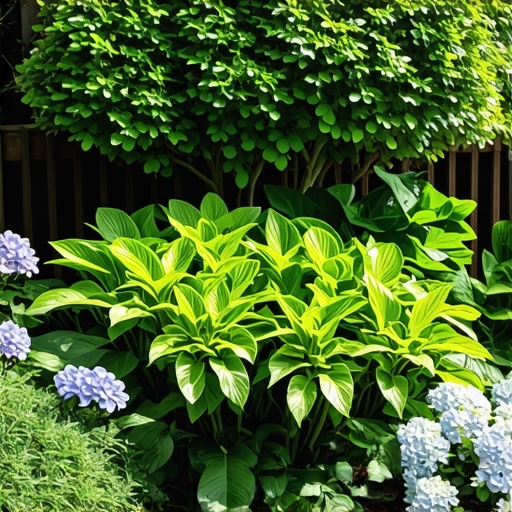
The highest-performing plants for zero-sun environments include Hellebores, Japanese Forest Grass, Cast Iron Plants, and Coral Bells, which maintain structural integrity and color in deep shade while requiring minimal supplemental irrigation once established in organic-rich soil. These aren’t your typical big-box annuals. These are heavy lifters that handle the 1-2 hours of dappled light that filter through a dense oak canopy.
How do I landscape a front yard with no sun?
To landscape a front yard with no sun, focus on textural contrast and foliage color rather than blooms, using a layered planting strategy that incorporates shade-tolerant groundcovers, mid-sized perennials, and structural shrubs to create depth without relying on solar-dependent flowering cycles. You need to think about the bulk density of your soil. If the soil is too tight, oxygen can’t reach the roots. I recommend a heavy yard cleanup that involves removing old, hydrophobic mulch and replacing it with two inches of triple-shredded hardwood. Don’t build mulch volcanoes around the base of your plants. It kills the root flare. It will rot. Don’t skip this.
| Plant Species | Light Requirement | USDA Hardiness Zone | Soil Preference |
|---|---|---|---|
| Helleborus (Lenten Rose) | Deep Shade | 4-9 | Well-drained, Alkaline |
| Hakonechloa (Forest Grass) | Full Shade | 5-9 | Moist, Humus-rich |
| Heuchera (Coral Bells) | Part to Full Shade | 4-9 | Neutral pH |
| Aspidistra (Cast Iron Plant) | Deep Shade | 7-11 | Low-fertility Loam |
What are the hardiest plants for deep shade?
Hardy deep-shade plants like Cast Iron Plant (Aspidistra elatior) and Japanese Painted Fern thrive by utilizing specialized leaf structures that maximize light absorption at low frequencies, making them nearly indestructible in zones where irrigation is infrequent and sunlight is blocked by structural shadows. If you are doing a sod install in these areas, forget about Kentucky Bluegrass. It won’t survive. You need a Fine Fescue blend or, better yet, a shade-tolerant groundcover like Pachysandra terminalis. Most people scalp their grass in the shade. Stop it. Keep it at 4 inches. The extra blade length acts like a larger solar panel for the plant.
“Compaction is the silent killer of shade gardens; it limits gas exchange and forces roots to stay shallow, where they are vulnerable to temperature swings.” – Hardscape and Agronomy Manual
The Ground-Up Installation Process
Successful shade landscaping starts with soil remediation and grading to ensure hydrostatic pressure doesn’t push water toward your foundation, followed by amending the soil with 20% organic compost to improve the cation exchange capacity. I see it every day: contractors throw plants in the ground and walk away. You need to test the drainage. Dig a hole 12 inches deep, fill it with water, and see how long it takes to empty. If it’s still full after four hours, you have a drainage crisis. You need a French drain or a serious grading adjustment before you plant a single thing.
- Step 1: Conduct a yard cleanup to remove all invasive weeds and old debris.
- Step 2: Test soil pH—aim for 6.5 for most shade perennials.
- Step 3: Amend with organic matter to break up heavy clay.
- Step 4: Install drip-line irrigation to target root zones directly.
- Step 5: Plant according to the root flare—never bury the stem.
- Step 6: Apply 2 inches of mulch, keeping it away from the plant’s crown.
Once the install is done, the first year is the “settling in” period. Do not over-fertilize. High-nitrogen fertilizers in the shade lead to weak, succulent growth that slugs and snails will feast on. You want slow, steady growth. Check your irrigation timers. Shade plants need less water than sun plants because evaporation is minimal. If the soil feels muddy, stop watering. You’re suffocating the roots. It’s a balance of biology and engineering. Get it right, and your front yard will look professional for a decade. Get it wrong, and you’ll be calling me back to rip it out in two years.