
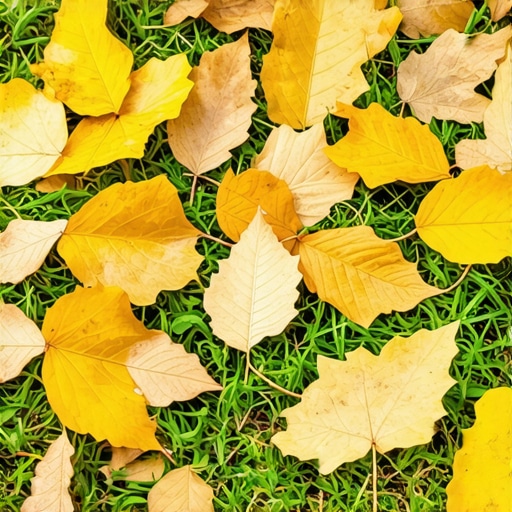
Why Leaving Leaves on Your Lawn is a Biological Power Move
Most homeowners spend their October weekends engaged in a futile war against gravity and biology. They rake, bag, and blow every organic resource off their property, only to spend hundreds of dollars on synthetic fertilizers the following spring. It is a cycle of waste that ignores the fundamental engineering of a healthy turf system. A leaf is not trash; it is a specialized, solar-powered nutrient delivery system designed to replenish the soil. If you want a lawn that survives the winter without the need for a total sod install come May, you need to understand the science of decomposition.
The Forensic Autopsy of a Sterile Lawn
I recently got called out to a property where the homeowner had torched their front lawn by applying three times the recommended dose of big-box store ‘winterizer’ fertilizer. They had cleared every single leaf, leaving the soil bare and vulnerable. When the first frost hit, the lack of organic insulation led to deep soil desiccation. By March, the turf wasn’t just dormant; it was dead. The homeowner thought they were being tidy, but they had effectively stripped the soil of its natural immune system. This is the ‘Chemical Nightmare’ I see every year: people replacing free, organic nutrients with harsh salts that kill off the very microbes responsible for root health.
“Leaves are a valuable resource that can be recycled on-site to improve soil health and reduce the need for supplemental fertilizers.” – Penn State Extension, College of Agricultural Sciences
The Science of Leaf Decomposition and Soil Microbiology
Leaving leaves provides a natural mulch that feeds earthworms and beneficial fungi, recycling nutrients like nitrogen, phosphorus, and potassium back into the soil profile without the risk of chemical burn or groundwater leaching. When you remove leaves, you are removing the carbon source that fuels the soil food web. Without carbon, your soil biology stalls. I see it under the microscope all the time: ‘clean’ lawns have sterile, compacted soil, while ‘mulched’ lawns are teeming with mycorrhizae and active nematodes. Use a mulching mower. Shred the leaves into dime-sized pieces. These pieces settle between the blades of grass, where they break down and provide a slow-release nitrogen source exactly when the roots need it most during the late-fall growth surge.
How much leaf cover is too much for grass?
The limit for leaf mulching is reached when the debris layer exceeds 1 inch in depth or blocks more than 20% of the grass blade surface. You must mow frequently enough to ensure the shredded material falls into the thatch layer. If you leave whole, matted leaves—especially from Red Oaks or Sycamores—you create a moisture trap. This leads to snow mold and crown rot. Balance is key. Aim for a visible ‘dusting’ of leaf mulch, not a blanket. If you can see the tips of the grass, you are in the safe zone.
How Leaf Mulching Impacts Your Irrigation Requirements
A layer of chopped leaves increases soil organic matter (SOM), which improves water-holding capacity and reduces the need for heavy irrigation cycles during the shoulder seasons by preventing surface evaporation and maintaining consistent soil temperatures. Every 1% increase in organic matter allows the soil to hold approximately 20,000 more gallons of water per acre. That is a massive hedge against the dry, windy winter days that typically kill off new turf. It also protects your irrigation lines from extreme temperature fluctuations near the surface. I tell my clients: organic matter is your reservoir. Stop throwing it in a plastic bag for the city to haul away.
| Leaf Type | Decomposition Rate | Primary Nutrient Contribution | Acidity Risk (pH) |
|---|---|---|---|
| Maple | Fast | High Potassium | Neutral |
| Oak | Slow | High Tannins | Slightly Acidic |
| Hickory | Medium | Calcium/Magnesium | Neutral |
| Pine Needles | Very Slow | Acidic Carbon | High Acidity |
The Financial Argument: Skipping the $500 Yard Cleanup
Avoiding a professional yard cleanup service for leaf removal saves immediate labor costs and long-term expenses on sod install projects necessitated by desiccation and nutrient depletion caused by removing organic material from the ecosystem. A typical crew will charge you $300 to $800 to blow leaves into a pile and haul them away. You are paying someone to steal your fertilizer. Instead, spend 30 minutes with a mulching blade. You’ll save on the cleanup, and you’ll save another $150 on spring fertilizer applications. It’s basic math. Quality landscaping isn’t about making a yard look like a living room; it’s about managing a biological system efficiently.
“The most environmentally friendly way to handle leaves is to mulch them back into the lawn or use them as compost.” – Texas A&M AgriLife Extension
Do mulched leaves cause thatch buildup?
No, mulched leaves do not contribute to thatch buildup in any significant way. Thatch is comprised of lignin-heavy grass roots and stems that resist decay. Leaf tissue is largely cellulose and breaks down rapidly when in contact with soil microbes. In fact, the surge in microbial activity triggered by the leaves can actually help break down existing thatch layers. It’s a self-cleaning mechanism for your lawn.
The Master Landscaper’s Mulching Protocol
- Equip the right blade: Use a high-lift mulching blade with multiple cutting surfaces to pulverize the leaf veins.
- Mow when dry: Wet leaves clump and will smother the turf. Wait for the afternoon dew to burn off.
- Monitor pH levels: If you are mulching heavy volumes of Oak or Pine, check your soil pH in the spring. You may need a light application of pelletized lime to offset the acidity.
- Clear the hardscapes: Do not leave leaves on your patio or driveway. They will stain the stone and create a slip hazard. Blow them back onto the turf before mowing.
- Depth Check: Ensure the final mulched layer is no deeper than 0.5 inches after it settles.
Stop looking at your neighbors’ pristine, raked lawns with envy. They are starving their soil. Your lawn might look a bit ‘messier’ for a week after mowing, but by next spring, your root system will be deeper, your soil will be richer, and your wallet will be heavier. Landscaping is a long game. Play it like a pro. Don’t bag your assets. Mow them in.