
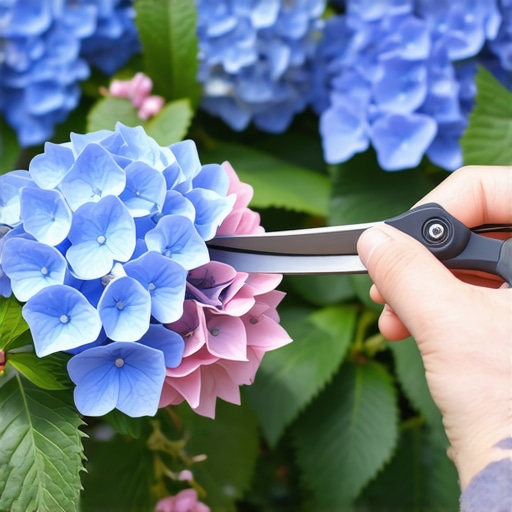
The Master’s Approach to Hydrangea Architecture
Pruning hydrangeas by bloom color involves identifying whether the plant sets buds on old wood or new wood, with blue and pink varieties typically requiring late summer cuts while white and lime varieties need late winter maintenance. Understanding this biological distinction prevents the accidental removal of next year’s floral display and ensures the structural health of your landscaping. Most homeowners treat pruning like a haircut, but it is actually a surgical intervention in the plant’s endocrine system. Get it wrong, and you lose a year of blooms. Get it right, and you maximize the plant’s hydraulic efficiency and bloom density.
The Apprentice Lesson: Soil First, Steel Second
I always drill into my new crew members: if you don’t fix the soil grading first, every plant you put in the ground is just expensive compost. I remember a project in a high-end development where the homeowner had spent thousands on nursery-grade blue hydrangeas. They were failing because the previous contractor ignored the hydrostatic pressure from a poorly graded uphill slope. The roots were drowning in anaerobic soil. Before I even let a pair of shears touch a branch, we had to perform a total yard cleanup and fix the irrigation logic. We redirected the runoff using a French drain system and re-established the sod install to stabilize the topsoil. Only after the plant had a stable, well-drained home could we talk about pruning. Pruning is the finishing touch on a healthy biological system; it cannot save a plant that is suffocating in bad dirt. If your soil pH is off, your blue blooms will turn pink anyway, regardless of how perfectly you cut the stems. We use 100 percent bypass pruners for everything because anvil pruners crush the vascular tissue. You wouldn’t use a dull scalpel for surgery, so don’t use dull tools on your shrubs. Every cut is a wound that the plant must seal with callose. If you crush the stem, you invite fungal pathogens like Botrytis to move in. Clean your tools with 70 percent isopropyl alcohol between every bush. It is not overkill; it is professional standards.
“A retaining wall doesn’t fail because of the stone; it fails because of the water trapped behind it.” – Hardscape Engineering Axiom
Identifying the Wood: The Secret to Timing
To prune correctly, you must understand the difference between old wood and new wood. This is determined by the species, which is often signaled by the bloom color. Blue, pink, and purple hydrangeas (Hydrangea macrophylla) and the lacecap varieties typically bloom on wood produced during the previous growing season. If you prune these in the spring, you are cutting off the flower buds that the plant spent all autumn developing. Conversely, the white and lime-green varieties like ‘Limelight’ or ‘Annabelle’ (Hydrangea paniculata and Hydrangea arborescens) bloom on new wood. They produce their buds in the spring on the growth they just made. You can be much more aggressive with these. I have seen guys take ‘Annabelle’ hydrangeas down to 6 inches from the ground in February and have them reach 4 feet with massive flower heads by July. You try that with a blue ‘Nantucket’ hydrangea and you will have nothing but green leaves for two years. This is why a random guy with a hedge trimmer is the enemy of a high-quality landscape. They see a bush and want to make it a square. Plants aren’t geometry; they are biology.
The Pruning Logic Matrix
| Bloom Color | Hydrangea Species | Pruning Window | Growth Habit |
|---|---|---|---|
| Blue, Pink, Purple | H. macrophylla (Bigleaf) | Immediately after flowering | Old Wood |
| White, Lime Green | H. paniculata (PeeGee) | Late winter / Early spring | New Wood |
| White (Globe shape) | H. arborescens (Smooth) | Late winter / Early spring | New Wood |
| White to Pink (Oak leaf) | H. quercifolia | Immediately after flowering | Old Wood |
How much modified gravel do I need for a patio base?
While often asked during landscaping overhauls, the answer depends on the load-bearing requirements, but typically you need a 6-inch compacted base of 21A or 411 crushed stone. This relates to hydrangeas because your hardscape drainage dictates the moisture levels in your planting beds. If your patio doesn’t have the right pitch, the excess water will saturate the root flare of your shrubs, causing root rot regardless of your pruning technique. Proper irrigation management is critical. We install drip lines with 0.9 gallon per hour emitters directly at the base of the plant. Avoid overhead spray. Getting the leaves wet every morning is a fast track to powdery mildew. When you prune, you open the canopy to better airflow, which helps the leaves dry faster. This is part of the integrated pest management strategy I teach my crew. We don’t just spray chemicals; we use physics and biology to keep the plants healthy.
“Pruning is the intentional removal of plant parts to redirect energy and maintain structural integrity.” – Penn State Extension Manual
Pruning Protocol: Step-by-Step Execution
- Inspect the plant for the three Ds: Dead, Damaged, or Diseased wood. Remove these first regardless of the season.
- Identify the nodes. Always cut 1/4 inch above a healthy bud at a 45-degree angle.
- For old wood bloomers (Blue/Pink), only remove about 1/3 of the oldest stems to the ground each year to rejuvenate the plant.
- For new wood bloomers (White/Lime), you can cut the entire plant back by half to encourage larger flowers.
- Dispose of all clippings during your yard cleanup to prevent disease spores from overwintering in the mulch.
How do I prune white hydrangeas in the spring?
White hydrangeas like the ‘Paniculata’ species should be pruned in late winter or very early spring before new growth begins. Since they bloom on new wood, cutting them back early stimulates the production of vigorous new stems that will carry the heavy flower heads. I tell my clients to look for the swelling of the buds. As soon as you see that life returning, get the shears out. If you wait until they have full leaves, you are wasting the plant’s stored nitrogen. You want that energy going into the new shoots, not into leaves you are about to cut off. This is where precision irrigation comes in. After a heavy spring prune, the plant needs consistent moisture to support that rapid regrowth. If your irrigation system is clogged or poorly zoned, the new growth will be stunted and the blooms will be small and brittle. We often coordinate our pruning schedules with our irrigation audits to ensure everything is firing at 100 percent capacity. It is a holistic system. You cannot separate the pruning from the water, or the water from the soil. They are one entity.
The Engineering of the Cut
When you make a cut, the plant responds by releasing hormones, specifically auxins and cytokinins. If you cut the terminal bud (the one at the tip), you remove apical dominance. This forces the lateral buds lower down the stem to wake up and grow. This is how we make a hydrangea bushier. If you have a leggy, thin shrub, it is because it hasn’t been pruned to encourage lateral branching. But you have to be careful. If you cut too deep into old wood on a Bigleaf hydrangea, you might hit wood that is too old to have viable dormant buds. You end up with a dead stump. I’ve seen it happen. A homeowner gets ambitious, takes a chainsaw to a 10-year-old hydrangea, and then wonders why it never grew back. It didn’t have the energy reserves. It’s like trying to run a marathon on an empty stomach. You have to feed the plant with a balanced slow-release fertilizer after pruning to help it recover. Avoid high nitrogen late in the summer, or you’ll get a flush of soft growth that will get killed by the first frost. Stick to the science, watch the color of your blooms, and keep your tools sharp. That is how you run a professional landscape. Anything less is just guesswork. Every cut you make should have a purpose. Ask yourself: am I cutting for shape, for health, or for flowers? If you can’t answer that, put the shears down and go back to the manual. Proper landscaping is a marathon, not a sprint. The decisions you make with your pruners today will show their results in six months. Be patient and be precise. The soil doesn’t lie, and neither do the plants.