
The Science of the Season: Why Late-Season Fertilization is a Biological Requirement
A homeowner called me in a panic last November after they completely torched their front lawn by applying three bags of high-nitrogen starter fertilizer on a dormant yard. They thought they were giving it a head start for the spring. Instead, they caused an osmotic burn that desiccated the root system just as the ground was tightening up. This is the reality of the lawn care industry. Most people treat their yards like a decoration, but as a veteran with 20 years in the dirt, I treat it like a living, breathing chemical engine. If you do not understand the nitrogen cycle or the way potassium regulates cellular turgidity during a freeze, you are just throwing money into the wind. This guide breaks down the professional approach to fall fertilization, irrigation maintenance, and the structural integrity of your soil before the frost line locks everything in place.
The Biological Clock: Why Timing Your Final Fertilizer Application Dictates Spring Success
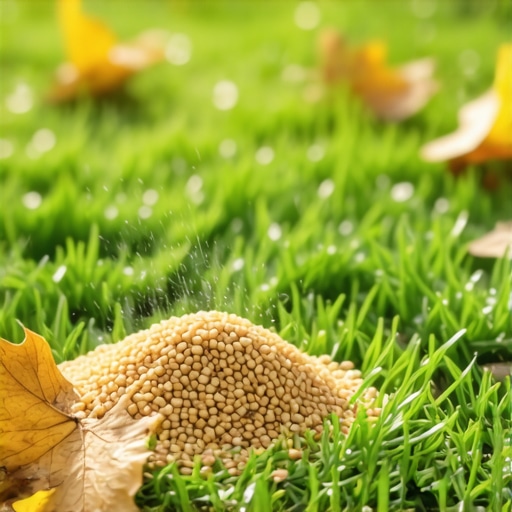
Applying fall fertilizer before the ground freezes allows turf grass to store essential carbohydrates in the root system rather than forcing top-growth. This physiological shift ensures the plant has sufficient energy reserves to break dormancy in the spring without depleting its internal nutrient stores during the first thaw. When the soil temperature drops below 55 degrees Fahrenheit, the grass stops producing blades and starts building its underground bank account. If you miss this window, the nitrogen sits on the surface, leaching into the groundwater and doing zero good for your turf.
“The primary goal of late-fall fertilization is to enhance the carbohydrate reserves of the plant, which are critical for winter survival and early spring growth.” – Penn State Center for Turfgrass Science
Nitrogen Ratios and Soil Chemistry at 45 Degrees
The NPK ratio of your fall application should prioritize potassium (K) over nitrogen (N) to strengthen cell walls against the expansion of ice crystals. While spring fertilizer is often a 24-0-10, a true winterizer should lean toward a 10-0-20 or even a 5-0-30 depending on your soil test results. High nitrogen in the late fall forces new, tender growth that is over 90 percent water. When the first hard freeze hits, that water expands, ruptures the cell walls, and kills the plant. Potassium acts as an antifreeze, increasing the solute concentration within the plant cells to lower the freezing point of the internal fluids. I have seen 5,000 square feet of high-end sod ruined in a single night because the contractor used a high-N blend too late in the season. Don’t be that guy.
| Fertilizer Type | N-P-K Ratio | Biological Function | Application Window |
|---|---|---|---|
| Early Fall Feed | 24-5-10 | Post-summer recovery | September |
| Mid-Fall Slow Release | 18-0-12 | Root development | October |
| Late Fall Winterizer | 10-0-20 | Cell wall strength | Pre-freeze (Late Oct/Nov) |
Irrigation Blowouts and Yard Cleanup: Protecting the Infrastructure
Proper irrigation maintenance involves more than just turning off the clock; it requires a full pneumatic purge of the main lines and lateral pipes to prevent burst valves. If even a cup of water remains in a backflow preventer, the expansion of that water into ice can crack a brass assembly that costs $600 to replace. We use industrial compressors set to exactly 70 to 90 PSI. Too much pressure and you melt the friction-welded joints of the PVC pipes. Too little and the water won’t clear the low spots. Simultaneously, your yard cleanup must be surgical. Thick layers of fallen leaves create a wet, anaerobic environment that breeds snow mold and attracts voles. A clean lawn allows for better gas exchange between the soil and the atmosphere before the snow cover seals it off. Don’t leave a mat of wet organic matter on your turf. It will rot.
“A retaining wall or irrigation system doesn’t fail because of the material; it fails because of the water trapped within the system during a phase change.” – Hardscape Engineering Axiom
Sod Install and Soil Compaction: The Last Chance for Grading
A sod install performed in the late fall can be highly successful if the soil is prepped to handle hydrostatic pressure and drainage. The ground must be graded at a minimum of a two percent slope away from any structures to prevent pooling. When we lay sod this late, we are looking for root-to-soil contact that is tight enough to prevent the roots from drying out in the winter wind. This is where landscaping becomes civil engineering. If your soil is compacted, the new sod won’t be able to establish even a baseline root structure before the ground freezes solid. Use a core aerator to pull three-inch plugs before any late-season fertilization or sodding. This opens up the