
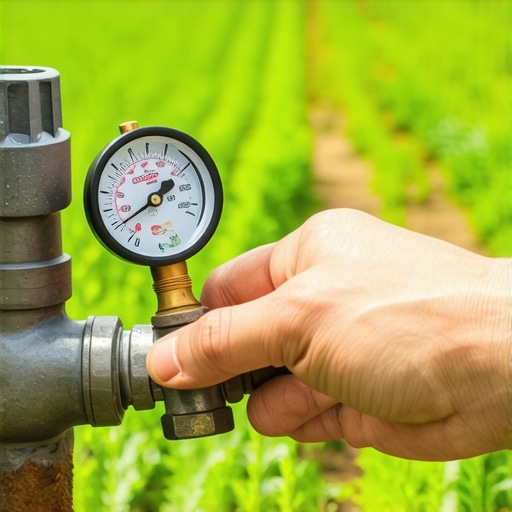
Why Low Irrigation Pressure Kills Your 2026 Yard Cleanup Strategy
Irrigation pressure failures in 2026 are primarily caused by failing pressure regulators, mineral scaling in 3/4-inch lateral lines, or excessive friction loss from poor hydraulic design. To ensure uniform water distribution, your system must maintain 40 to 50 PSI at the furthest head to overcome nozzle resistance and atmospheric pressure.
I recently got called out to tear up a $30,000 patio that was sinking because the previous contractor failed to realize the irrigation system had a massive pressure leak right under the base. The water wasn’t just missing the lawn; it was liquefying the modified gravel sub-base. The homeowner thought they just had a dry spot. What they actually had was a structural engineering catastrophe waiting to happen. Most ‘landscapers’ would have just turned up the timer. That is a hack move. You don’t fix a hydraulic problem with a clock; you fix it with a gauge and a shovel. If you ignore the PSI, you are just throwing money into a hole in the dirt. Most people see a brown spot and think they need more water. They don’t. They usually need more pressure to atomize the water droplets correctly. When pressure drops below 30 PSI, rotors don’t rotate; they just weep. That weeping saturates the soil near the head while the rest of the zone bone-dries. It is a death sentence for a new sod install.
“Pressure loss in irrigation piping is a function of the square of the flow rate; doubling the flow through a pipe results in four times the pressure drop.” – Irrigation Association Technical Manual
The Physics of Water: Why Your PSI Matters More Than Your Schedule
Water is heavy. It creates friction against the walls of your PVC or Poly pipe. If your system was designed by someone who doesn’t understand the difference between static pressure and dynamic working pressure, your lawn is doomed before the first blade of grass hits the soil. Static pressure is the force when no water is moving. Working pressure is what is left after the water fights its way through the meter, the backflow preventer, the valves, and 100 feet of pipe. You lose roughly 2 PSI for every 100 feet of 1-inch Schedule 40 pipe at 10 gallons per minute. Use a gauge. It will not lie to you.
How do I test my irrigation pressure at home?
Testing irrigation pressure requires a standard 0-100 PSI liquid-filled pressure gauge attached to a pitot tube or a threaded nozzle adapter at the furthest head in the zone. You must measure the pressure while the zone is active to capture the dynamic head pressure rather than the static household pressure. A reading below 35 PSI at the head indicates a supply bottleneck or a subterranean leak.
The Tool: Using a Simple Gauge to Diagnose the Ghost in the Pipes
Stop guessing. A $15 pressure gauge with a hose bib attachment is the most important tool in your yard cleanup kit. You start at the source. Check the pressure at the hose bib nearest the main line. If you are seeing 80 PSI there but the rotors are barely popping up, you have a restriction. It could be a partially closed gate valve, a clogged master valve filter, or a root-crushed pipe. I have seen 4-inch oak roots flatten SDR-21 pipe like a soda can. A gauge tells you exactly where the energy is being lost. Don’t buy the cheap plastic gauges from the big-box store. Get a stainless steel, liquid-filled gauge. The liquid dampens the needle vibration so you can actually read the surge peaks. This is engineering, not gardening.
The Technical Breakdown: Friction Loss and Velocity
| Pipe Size (PVC Sch 40) | Flow Rate (GPM) | Pressure Loss per 100ft (PSI) | Velocity (FPS) |
|---|---|---|---|
| 3/4 Inch | 10 | 6.3 | 6.1 |
| 1 Inch | 10 | 1.8 | 3.7 |
| 1 Inch | 15 | 3.8 | 5.5 |
| 1.25 Inch | 20 | 2.4 | 4.5 |
Notice the jump in pressure loss when you try to shove 10 GPM through a 3/4-inch pipe. That is why your sod install is failing. Your ‘mow-and-blow’ guy probably used 3/4-inch pipe because it was cheaper. He saved $40 and cost you $4,000 in dead turf. Velocity should never exceed 5 feet per second. When it does, you get water hammer. Water hammer doesn’t just make noise; it shatters valve diaphragms and snaps lateral lines. It is violent. If you want a 2026-ready system, you build for low velocity and high volume.
Step-by-Step Pressure Restoration Checklist
- Check the main shut-off valve; ensure it is 100% open.
- Inspect the backflow preventer for internal debris or failing check valves.
- Clean the internal filters on every single rotor and spray head in the failing zone.
- Check the pressure regulator at the street; these often fail after 10 years.
- Conduct a ‘bucket test’ to verify GPM at the source before redesigning zones.
“Uniformity of application is impossible without stabilized operating pressure at the nozzle orifice.” – Texas A&M AgriLife Extension
How much modified gravel do I need for a patio base?
A standard patio requires a minimum of 6 inches of compacted 2A modified gravel, which equates to roughly 1 ton of stone per 40 square feet at that depth. You must factor in a 20% compaction rate when ordering materials to ensure the base can withstand hydrostatic pressure and freeze-thaw cycles without settling.
The 2026 Landscape Audit: Soil and Drainage Synergy
Pressure is only half the battle. If your yard cleanup doesn’t involve checking the soil compaction, you are wasting water. Heavy clay soils, common in many suburban developments, have a low infiltration rate. If your pressure is too high, you get misting. Misting blows away in the wind. If it’s too low, you get puddling. Both lead to fungal rot. I tell my crew: if the soil feels like concrete, the water will run off before it ever hits the roots. You need to aerate to a depth of 3 inches minimum. No exceptions. Real landscaping is about managing the interface between the atmosphere and the rhizosphere. Most ‘professionals’ don’t even know what a rhizosphere is. They just want to get paid and get out. Don’t be that guy. Use a soil probe. If you can’t push it in 6 inches with one hand, your grass is suffocating. Fix the soil, fix the pressure, and the sod will actually take. It is a system. Treat it like one. Don’t forget to call 811 before you dig. I don’t care if you think you know where the lines are. You don’t. A severed gas line turns a yard cleanup into a 6 o’clock news story. Be professional. Measure twice. Dig once. Keep your PSI high and your salt index low. Your yard will thank you in three years when your neighbor’s lawn is a dust bowl and yours is still holding deep, resilient roots. It takes work. Do it right.