
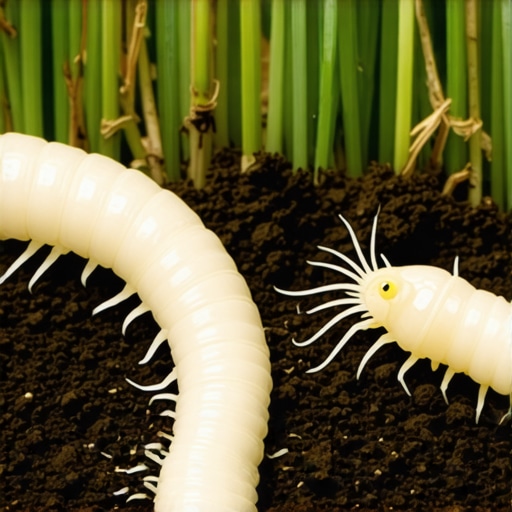
The first sign of a total turf collapse isn’t the color; it is the feel of the ground under your boots. When you walk across a lawn infested with third-instar larvae, the earth feels spongy, disconnected, and unnervingly soft. It is the sensation of a biological structure that has had its foundation literally eaten away. By the time you see the characteristic brown patches, the damage is often systemic. If you grab a handful of that grass and it rolls up like a cheap piece of discarded carpet, you aren’t just looking at a seasonal nuisance. You are looking at a localized ecological failure that requires a surgical response. We are seeing a massive spike in larval populations in 2026 due to specific soil moisture trends and botched chemical applications from the previous season. It is a mess. I see it every day. I recently dealt with a homeowner who completely torched their front lawn by applying a massive dose of high-nitrogen fertilizer in the middle of a heatwave, thinking they were ‘strengthening’ the grass against the brown spots. Instead, they created a massive surge of succulent, nitrogen-rich root growth that acted as a dinner bell for every scarab beetle in the county. The salt index of the fertilizer dehydrated the already stressed crowns, and by the time I arrived, the soil was a graveyard of scorched rhizomes and fat, healthy grubs. This is what happens when you treat your yard like a hobby instead of a biological system.
The Grub Autopsy: Identifying the 2026 Infestation
Grubs in 2026 are primarily the larval stage of Japanese Beetles and Masked Chafers that consume the root systems of both cool-season and warm-season grasses. Identification involves the tug test where turf pulls up like a rug, revealing C-shaped larvae in the top 2 inches of soil, usually accompanied by localized drought stress even when irrigation is sufficient.
How do I know if grubs are killing my grass?
The most reliable field test for grub density is the square-foot excavation. Take a flat-head spade and cut a one-foot by one-foot square of turf, three inches deep. Peel it back. If you count more than six to ten grubs in that single square foot, your lawn’s metabolic capacity to regrow roots is being outpaced by the larval consumption rate. This is the ‘economic threshold’ where chemical intervention becomes a necessity rather than an option. You should also look for increased skunk or crow activity. These animals aren’t just hanging out; they are digging for protein. If the local wildlife is treating your yard like a buffet, you have a subterranean infestation.
“The timing of the larval life cycle is the most critical factor in successful management, as the early instars are significantly more susceptible to chemical controls than the mature third-instar larvae found in late autumn.” – Turfgrass Entomology Manual
The Mechanics of Failure: Why Irrigation and Sod Install Aren’t Enough
Many homeowners believe that installing new sod or cranking up the irrigation system will mask the damage. This is a fundamental misunderstanding of soil physics. If you have an active grub population, laying new sod is just providing expensive fresh feed for the larvae. The grubs will move from the old, depleted soil into the high-nutrient environment of the new sod’s root zone within forty-eight hours.
How much modified gravel do I need for a patio base?
While often asked during landscaping projects, a standard 4 inch compacted base for a pedestrian patio requires approximately 0.5 to 0.6 tons of 2A modified gravel per 100 square feet to ensure structural integrity and prevent the settling that often mimics the spongy feel of a grub-infested lawn. Irrigation is another trap. I see guys running their zones for fifteen minutes every single day. Stop doing that. You are keeping the top inch of soil perpetually moist, which is exactly where the beetles want to lay their eggs. You are effectively creating a nursery. Deep, infrequent watering (one inch per week in a single application) forces the roots to grow downward, making the plant more resilient and the surface soil less hospitable for egg survival.
| Treatment Type | Primary Ingredient | Best Application Window | Mode of Action |
|---|---|---|---|
| Preventative | Chlorantraniliprole | April – June | Long-term systemic residual |
| Curative | Trichlorfon | August – September | Contact kill (24-hour window) |
| Biological | Milky Spore | Spring/Fall | Bacterial infection (Long-term) |
The 2026 Turf Recovery Protocol
If your lawn is already gone, you need a full yard cleanup and a strategic re-entry plan. You cannot just throw seed on top of dead thatch and expect a miracle.
- Excavation of Dead Material: Use a power rake or dethatcher to remove the necrotic top layer. If the thatch is thicker than 0.5 inches, your treatments won’t even reach the soil.
- Soil pH Correction: Grubs thrive in slightly acidic soil (pH 5.5 to 6.5). If your soil is in this range, apply pelletized lime to move it toward 7.0, which promotes root vigor and makes the environment less ideal for certain beetle species.
- Core Aeration: You need to break the surface tension of the soil. Pulling 3-inch plugs allows oxygen, water, and your curative treatments to reach the root zone.
- The Irrigation Reset: Recalibrate your controller. If you are seeing runoff, your soil is compacted. Switch to a ‘cycle and soak’ method to ensure the water reaches the 6-inch mark.
“Soil compaction significantly reduces the efficacy of liquid insecticides by limiting the downward movement of the active ingredients through the soil profile, often resulting in superficial control.” – Agricultural Extension Service Bulletin
When is the best time to apply grub control?
For the 2026 season, the most effective window for preventative application is between late April and early June, specifically using products like Acelepryn that have low impact on non-target pollinators while providing a six-month residual barrier against emerging larvae.
The Hard Reality of Yard Cleanup
A real yard cleanup isn’t just about bagging leaves. It is about removing the structural impediments to grass health. That means vertical mowing to slice through the thatch, intensive core aeration to alleviate the hydrostatic pressure in the upper soil horizons, and potentially a top-dressing of compost to reintroduce beneficial microbes. These microbes are the natural enemies of grubs. A sterile, chemically-dependent lawn is a playground for pests. A biologically active lawn has its own defense mechanisms. If you are going for a total sod install after a grub disaster, ensure the site is treated with a fast-acting curative like Trichlorfon at least 72 hours before the new rolls arrive. You have to kill the residents before you bring in the new tenants. It is that simple. Don’t skip the soil prep. Don’t buy the cheap bags at the big-box store. Get a soil test. Know your NPK. If you don’t understand the chemistry of what you are putting down, you are just guessing. And in 2026, the grubs are waiting for you to guess wrong. It will rot. Your grass will die. Do it right the first time.