
The smell of ammonia and the sight of white, curdled flakes floating in a 300-gallon sprayer tank is the scent of a thousand dollars evaporating. When you mix incompatible liquid fertilizers, you aren’t just making a mess; you are initiating a chemical reaction that creates insoluble precipitates which will destroy your equipment and starve your turf.
What is the Fertilizer Jar Test Secret?
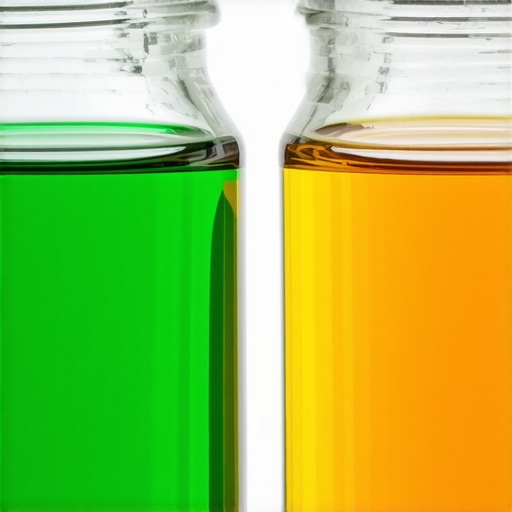
The Jar Test is a mandatory diagnostic procedure where small, proportional amounts of liquid fertilizers, micronutrients, and surfactants are mixed in a clear glass container to check for physical incompatibility before they are added to a large spray tank. This safeguard prevents clogged irrigation nozzles and ensures nutrient bioavailability for sod installs and established turf.
The Chemical Nightmare: A $5,000 Lesson in Chemistry
I remember a homeowner who thought they could save a few bucks on landscaping by DIY-ing their own nutrient program. They bought a high-calcium liquid supplement and mixed it directly with a concentrated sulfate-based fertilizer in their backpack sprayer. Within three minutes, the mixture turned into something resembling chunky cottage cheese. They tried to spray it anyway, which completely seized the pump and ruined the seals. By the time I arrived for the yard cleanup, they hadn’t just lost the fertilizer; they had chemically scorched a 20-foot patch of Kentucky Bluegrass because the concentrated ‘glop’ that did manage to exit the nozzle was high-octane salt. We had to excavate six inches of soil and perform a full sod install just to fix the burn. This is why we test. Always.
“Physical incompatibility in tank mixes often manifests as flocculation, precipitation, or the formation of oily layers that cannot be re-emulsified by agitation.” – Agronomy Manual: Liquid Nutrient Management
The Science of Incompatibility: Why Tanks Fail
Chemical incompatibility happens at the molecular level. When you combine certain cations, like calcium (Ca++), with anions like phosphates (PO4—) or sulfates (SO4–), they bond to form solids. These solids are essentially stones. They won’t dissolve in water, and they won’t pass through a 50-mesh screen. In 2026, we are seeing more advanced chelated micronutrients, but even these have limits. If the pH of your carrier water—the water you fill your tank with—is too high or too low, it can break the chelation bond, releasing the metal ions to react and precipitate. [IMAGE_PLACEHOLDER]
How to Perform a Professional Jar Test
To do this right, you need a clean quart jar and the exact products you plan to use. Do not guess the ratios. If your application rate is 10 ounces of product per 1,000 square feet in 2 gallons of water, you must scale that down precisely for your quart jar. Use a syringe for accuracy.
- Fill the jar half-full with the carrier water you will actually use.
- Add products in the correct WAMLE order (Wettable powders, Agitation, Flowables, Liquids, Emulsifiables).
- Shake the jar vigorously for 30 seconds.
- Let it sit for at least 15 to 30 minutes.
- Observe. If the jar feels hot, it’s an exothermic reaction. If it looks like milk that’s been left in the sun, it’s a failure.
The 2026 Compatibility Matrix
| Product Type | Compatible With | Incompatible With | Reaction Result |
|---|---|---|---|
| Calcium Nitrate | Chelated Iron | Sulfates / Phosphates | Gypsum/Sludge formation |
| Humic Acid | Most NPK Liquids | High Acidic Solutions (pH < 4) | Flocculation (clumping) |
| Potassium Phosphite | Nitrogen Sources | Copper Fungicides | Phytotoxicity (leaf burn) |
| Non-Ionic Surfactants | Most Pesticides | Highly Alkaline Water | Reduced Efficacy |
Why Irrigation Systems Are at Risk
If you are running fertigation through an irrigation system, the stakes are higher. A sod install requires consistent moisture and precise nutrient delivery. If your mix precipitates inside your laterals, you are looking at a full system flush or, worse, digging up pipes. We see this often in landscaping projects where the irrigation tech and the lawn tech don’t talk. One puts a sulfur-based acidifier in the tank while the other uses a calcium-rich wetting agent. The result is a clogged system that kills the lawn during a heatwave.
“A retaining wall doesn’t fail because of the stone; it fails because of the water trapped behind it, just as a spray program fails not from the chemical, but from the carrier’s chemistry.” – Hardscape and Turf Engineering Axiom
How much water is needed for a proper tank mix?
For most liquid fertilizer applications, a carrier volume of 1 to 2 gallons per 1,000 square feet is standard. This ensures adequate coverage and reduces the concentration of salts that could cause foliage burn. Lower volumes increase the risk of chemical fallout in the tank.
Can I mix weed control with my 2026 liquid fertilizers?
Generally, yes, but only after a jar test. Some 2,4-D formulations are highly sensitive to the salt index of liquid fertilizers. If you see ‘oiling out’ or a separation where the herbicide floats to the top, do not spray. You will get zero weed control and potentially damage the turf.
Final Inspection: Maintaining the Standard
Don’t be a hack. Yard cleanup isn’t just about blowing leaves; it’s about maintaining the chemical integrity of the soil. Before you spray, check your water pH. Most 2026 liquid nutrients perform best in water with a pH between 5.5 and 6.5. If your water is hard, use a buffering agent. If you skip the jar test, you are gambling with your equipment and your reputation. Test every batch. Every time. It takes five minutes to save five thousand dollars.
{“@context”:”https://schema.org”,”@type”:”Article”,”headline”:”Mixing 2026 Liquid Fertilizers: The Jar Test Secret”,”author”:{“@type”:”Person”,”name”:”Veteran Horticulturist”},”description”:”A deep dive into preventing chemical incompatibility in liquid fertilizers using the Jar Test method for professional landscaping.”},{“@context”:”https://schema.org”,”@type”:”HowTo”,”name”:”How to Perform a Fertilizer Jar Test”,”step”:[{“@type”:”HowToStep”,”text”:”Fill a quart jar half-full with the carrier water.”},{“@type”:”HowToStep”,”text”:”Add nutrients in WAMLE order using scaled ratios.”},{“@type”:”HowToStep”,”text”:”Shake for 30 seconds and let sit for 20 minutes to check for precipitates.”}]},{“@context”:”https://schema.org”,”@type”:”FAQPage”,”mainEntity”:[{“@type”:”Question”,”name”:”How much water is needed for a proper tank mix?”,”acceptedAnswer”:{“@type”:”Answer”,”text”:”Standard carrier volume is 1 to 2 gallons per 1,000 square feet for most liquid fertilizers to ensure coverage and safety.”}},{“@type”:”Question”,”name”:”Can I mix weed control with liquid fertilizers?”,”acceptedAnswer”:{“@type”:”Answer”,”text”:”Yes, but only after a jar test confirms no separation or oiling out occurs.”}}]}