
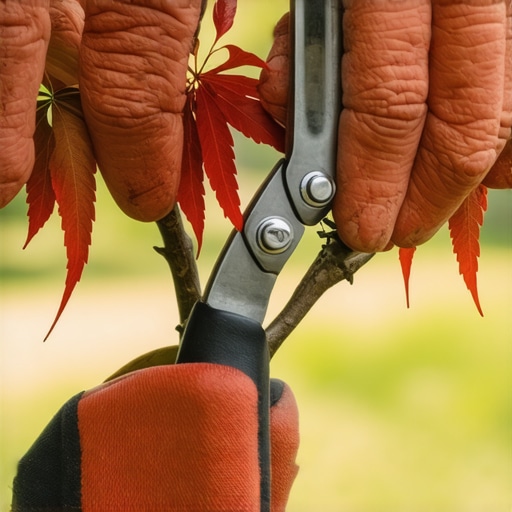
The Architectural Blueprint of the Acer Palmatum
To prune a Japanese Maple for a balanced shape, you must prioritize structural integrity by removing the Three Ds (dead, damaged, diseased wood) and thinning the interior canopy to reveal the tree’s natural architecture. This process requires surgical thinning cuts at the branch collar rather than ‘heading cuts’ that trigger chaotic, weak growth patterns.
I always drill into my new crew members: if you do not fix the soil grading and understand the tree’s root flare first, every plant you put in the ground is just expensive compost. I have seen countless $2,000 specimen trees die because some ‘mow-and-blow’ contractor buried the graft union under a mulch volcano. Pruning is not about making a tree smaller; it is about managing the vascular flow and light penetration. If you treat a Japanese Maple like a boxwood hedge, you are a vandal, not a landscaper. You are cutting into living tissue that dictates the tree’s hydraulic pressure and nutrient distribution for the next decade.
“Pruning is the most common and yet the most poorly executed tree maintenance practice. Proper pruning requires an understanding of tree biology and the tree’s response to wounding.” – ANSI A300 (Part 1) Pruning Standards
Why Structural Pruning Beats Aesthetic Trimming
Most homeowners want a ‘pretty’ tree, but a professional builds a ‘strong’ tree. In the world of high-end landscaping, we look for the ‘bones’ of the plant. Japanese Maples, specifically the Acer palmatum species, are prone to narrow crotch angles and included bark. If you do not manage these structural defects early, the tree will eventually split under the weight of its own canopy or a heavy snow load. We use bypass pruners—never anvil style—to ensure a clean cauterization of the tissue. An anvil pruner crushes the cambium. A crushed cambium is an open door for Verticillium wilt.
How to Identify Proper Pruning Cuts
The branch bark ridge and the branch collar are your boundary lines. Never cut flush against the trunk. You must leave the ‘collar’ intact because that is where the tree’s chemically protective zone resides. This zone allows the tree to compartmentalize the wound. If you cut into that collar, you are inviting wood-decay fungi into the heartwood. It is a slow death sentence. We see it all the time during yard cleanup projects: trees with huge, rotting gashes because a homeowner tried to ‘clean up’ a limb with a rusty handsaw. Stop doing that.
The Seasonal Timing for Structural Work
When is the best time to prune? For major structural changes, late winter or very early spring is the window. The tree is dormant, the structure is visible without leaves, and the sap hasn’t started its high-pressure spring surge. However, Japanese Maples are ‘bleeders.’ If you cut them in mid-winter, they might weep sap. It does not hurt the tree significantly, but it looks like a crime scene. We prefer the ‘window of dormancy’ just before the buds swell. This ensures the tree can begin callusing over the wound immediately as it wakes up.
| Pruning Goal | Recommended Tool | Biological Impact |
|---|---|---|
| Deadwood Removal | Bypass Pruners | Stops fungal spread into healthy wood. |
| Thinning Interior | Long-handle Loppers | Increases airflow and light to lower grafts. |
| Structural Weight Reduction | Arborist Pole Saw | Prevents branch failure during heavy rain. |
| Detail Shaping | Snips / Shears | Directs growth toward apical buds. |
How much can I prune off a Japanese Maple at once?
Never remove more than 20 percent of the live canopy in a single growing season to avoid chlorosis and sunscald on the sensitive bark. Japanese Maples have thin bark that burns easily if suddenly exposed to direct afternoon sun. If you over-prune the top, you are effectively removing the tree’s cooling system. The bark will crack, the cambium will die, and the tree will begin a downward spiral that no amount of irrigation or fertilizer can fix.
Common Mistakes in Yard Cleanup and Maintenance
I see it every year: people hire a crew for a generic yard cleanup, and those guys take hedge trimmers to a lace-leaf maple. That is horticultural malpractice. Those trees have been bred for centuries for their weeping form. Using power shears on them creates ‘witch’s brooms’—thick clumps of unsightly, vertical water sprouts that ruin the aesthetic and drain the tree’s energy. Proper maintenance requires a hand-pruning approach, limb by limb.
- Sterilize your tools: Use 70% isopropyl alcohol between every tree to prevent the spread of pathogens.
- Follow the branch: Always trace a branch back to its point of origin before cutting.
- Check the ground: Ensure no sod install has buried the root flare of your maple.
- Irrigation check: Maples need consistent moisture, but never ‘wet feet’ from poor drainage.
How to Prune for a Layered, ‘Cloud’ Effect
This is the hallmark of professional Japanese gardening. You want to create horizontal planes of foliage. This is achieved by removing the vertical growth that shoots up between the horizontal branches. Look for ‘crossing’ branches—limbs that rub against each other. When branches rub, they wear away the bark, creating a site for infection. Remove one. Choose the one that maintains the most balanced weight distribution. Physics matters as much as biology here.
“A retaining wall doesn’t fail because of the stone; it fails because of the water trapped behind it. A tree doesn’t fail because of the wind; it fails because of the structural defects ignored by the owner.” – Hardscape Engineering Axiom