
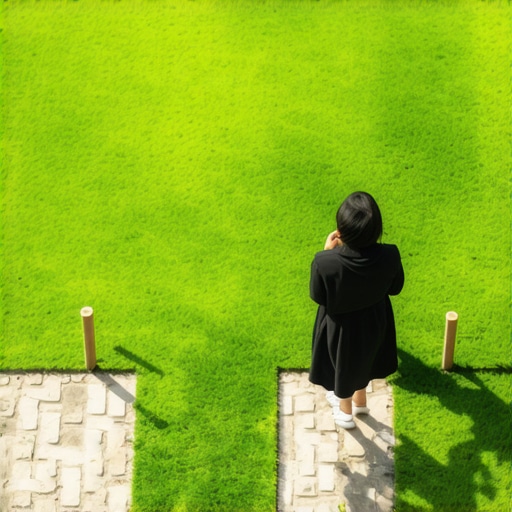
The Engineering of a Successful Turf Installation
Walking on new sod before the adventitious roots have knitted into the subgrade causes soil compaction and physical shearing of root hairs. This disrupts the capillary action required for moisture uptake, leading to localized dry spots and eventual turf failure within the first fourteen days. I always drill into my new crew members: if you don’t fix the soil grading first, every plant you put in the ground is just expensive compost. Last season, I watched a junior foreman ignore a low spot in a 5,000 square foot install. He figured the sod would bridge the gap. Three weeks later, we were back there with a skid steer because that low spot collected enough hydrostatic pressure to drown the rhizomes and turn the backyard into a literal septic tank of rotting vegetation. If your soil isn’t prepped to a firm, granular consistency with a 2% slope away from the foundation, you are wasting your client’s money and my time. Landscaping isn’t an art project; it is a structural installation where the living components are the most fragile materials on the job site.
“Proper irrigation management is the single most critical factor for the successful establishment of sodded turfgrasses, as the severed root system must be kept hydrated until new root hairs penetrate the soil interface.” – Texas A&M Agrilife Extension
The 21-Day Critical Path for Root Integration
The timeline for safely walking on new sod depends entirely on root-to-soil contact and the development of secondary root structures that can withstand the PSI of a human foot. For the first 7 to 10 days, the sod is effectively on life support, relying on the thin layer of soil it was harvested with to retain moisture. During this phase, any vertical pressure creates air pockets between the sod slab and the prepared earth. Those air pockets are death sentences for roots. Once air hits those delicate white root tips, they desiccate and die. We call this ‘root flashing.’ You might not see the damage for a week, but by then, the patch is already turning straw-colored and the cellular structure is collapsing.
How soon can I walk on new sod without damaging it?
You should wait a minimum of 14 to 21 days before allowing regular foot traffic or pets on new sod to ensure the root system has penetrated the soil at least 2 inches deep. While the turf may look established from the surface, the underlying soil-sod interface remains unstable and prone to shifting under load during the first two weeks. After three weeks, you must perform a tug test to verify structural integrity.
| Days Post-Install | Activity Level | Irrigation Protocol | Soil Condition |
|---|---|---|---|
| 1 to 7 | Zero Traffic | 3x Daily (Light Mist) | Saturated/Soft |
| 8 to 14 | Emergency Only | 2x Daily (Deep Soak) | Damp/Firming |
| 15 to 21 | Light Traffic | 1x Daily (Early Morning) | Firm/Stable |
| 22+ | Full Traffic | 3x Weekly (1 inch total) | Standard Grade |
The Physics of Soil Compaction and PSI
A 200-pound man walking on a saturated sod install exerts approximately 8 to 10 pounds per square inch (PSI) on the surface. Because the soil under new sod is intentionally kept moist to encourage growth, it is highly plastic. This means the pressure doesn’t just stay on the surface; it travels downward, crushing the macropores in the soil. Macropores are the highways for oxygen and water. Without them, the soil becomes anaerobic. When soil becomes anaerobic, the roots suffocate. You aren’t just ‘stepping on grass’; you are structurally altering the A-horizon soil profile and creating a permanent dead zone where the turf will always struggle. This is why yard cleanup and site prep are so vital. We use a 1,000-pound water-filled roller after the initial install to ensure contact, but that is a uniform pressure. A heel strike is a concentrated force that shears the roots.
“Soil compaction significantly reduces the volume of macropores, which are essential for oxygen diffusion to the root zone and the prevention of carbon dioxide toxicity in the rhizosphere.” – USDA Soil Engineering Manual
Can dogs walk on new sod after 2 weeks?
While a 2-week-old lawn might handle a single pass from a human, canine traffic is far more damaging due to the concentrated force of their paws and their tendency to make sharp turns that tear the knitting roots. Dog urine is also high in nitrogen and salts, which can easily scorch tender new roots that haven’t yet developed the protective microbial buffer of a mature lawn. Keep pets off the area for the full 21-day establishment period.
Preparation and Installation Checklist
- Soil pH Testing: Ensure the subgrade is between 6.0 and 7.0 pH before the pallets arrive.
- Subgrade Compaction: The soil should be firm enough that your boots leave less than a 1/4 inch indentation.
- Irrigation Calibration: Check your sprinkler heads for uniform coverage; one dry spot will kill a $500 pallet in 48 hours.
- The Tug Test: After day 14, grab a handful of blades and pull gently; if the slab lifts, stay off.
- First Mow: Only mow when the grass reaches 4 inches, and never take off more than 1 inch.
Irrigation and Nutrient Management
Proper irrigation is not about keeping the surface wet; it is about managing the moisture gradient. In the first week, we want the water to penetrate through the sod and 2 inches into the soil. By week three, we want that water reaching 6 inches deep. This forces the roots to ‘chase’ the water downward, creating a deep, drought-resistant root mass. If you keep the surface constantly damp with light sprinkles, the roots will stay shallow, and the first 90-degree day will bake your lawn into hay. This is the difference between a professional sod install and a DIY nightmare. We also apply a high-phosphorus starter fertilizer (something like a 10-20-10 ratio) to prioritize root elongation over leaf growth. Nitrogen makes it green, but phosphorus makes it live. Don’t be fooled by the dark green color of fresh sod; that’s just the nitrogen from the sod farm. It needs phosphorus to survive the transplant shock.