
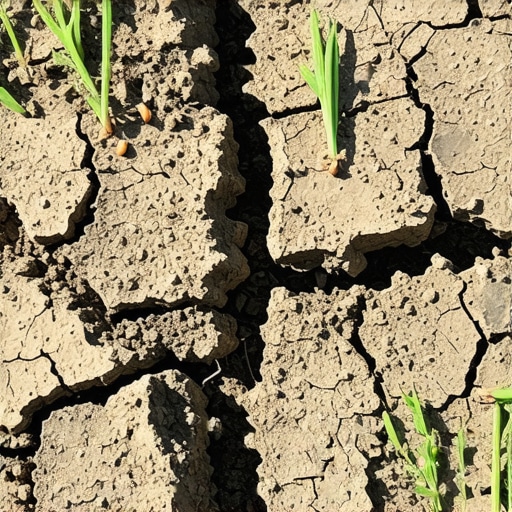
Why Your Grass Seed Failed: A Forensic Look at Poor Germination
The most common reason grass seed fails to sprout is inadequate seed-to-soil contact combined with improper soil temperature. Successful germination requires a consistent soil temperature between 55 and 65 degrees Fahrenheit for cool-season grasses and a moisture-stable environment that prevents the radical and plumule from drying out during the critical first 14 days.
I have spent 20 years in the dirt, and I have seen it all. A homeowner called me in a panic last September after they completely torched their front lawn by applying a heavy-duty pre-emergent herbicide right before throwing down $400 worth of premium fescue seed. They didn’t read the label. That chemical barrier, designed to stop crabgrass, did exactly what it was engineered to do: it prevented any new cellular mitosis in the top quarter-inch of the soil profile. They essentially created a chemical desert. Every single seed they threw down was dead on arrival. It was a $2,000 mistake once you factor in the yard cleanup and the labor to strip that poisoned topsoil. This is why you don’t hire ‘mow-and-blow’ hacks who don’t understand the chemistry of what they are spraying.
“Successful turfgrass establishment is dependent on the intersection of soil temperature, moisture availability, and proper seed placement within the soil matrix.” – Penn State Center for Turfgrass Science
The Biology of the Failure: Why Dirt Isn’t Just Dirt
Most people treat their yard like a carpet. It is not a carpet; it is a living, breathing biological system. If your seed is sitting on top of a layer of thatch, it is going to die. Thatch is a layer of organic debris that acts like a sponge, soaking up water and preventing it from reaching the soil. When that seed gets wet and then dries out because it has no contact with the mineral soil, the germination process stops permanently. It is a one-shot deal. Once the seed wakes up, it needs constant hydration. If the moisture drops below a specific threshold for even a few hours, the tiny root dies. No second chances.
We also have to look at the pH levels. If your soil is sitting at a 5.0 pH—which is common in areas with heavy oak leaf drop or high clay content—the nutrients needed for the seedling to grow are chemically locked away. You can throw all the 10-10-10 fertilizer you want at it, but the plant can’t eat. It’s like being at a buffet with your mouth taped shut.
How much water does new grass seed actually need?
New grass seed requires light, frequent irrigation to keep the top half-inch of soil consistently moist, but never saturated. During the first two weeks, this often means watering for 5 to 10 minutes, three times a day, specifically at 10 AM, 2 PM, and 6 PM to combat evaporation from solar loading. Once the grass reaches two inches in height, you must pivot to deep, infrequent watering to force the roots to migrate downward into the soil profile. This builds drought resistance. If you keep misting it, the roots will stay shallow and the first 90-degree day will kill the entire stand.
| Grass Type | Soil Temp for Germination | Days to Sprout | Watering Frequency (Weeks 1-2) |
|---|---|---|---|
| Kentucky Bluegrass | 55-65°F | 14-21 Days | 3x Daily |
| Tall Fescue | 60-75°F | 7-12 Days | 2-3x Daily |
| Perennial Ryegrass | 50-65°F | 5-7 Days | 2x Daily |
| Bermuda (Sod/Seed) | 65-75°F | 10-25 Days | 3x Daily |
Can I just throw grass seed on top of my lawn?
Throwing seed on top of an existing lawn without preparation is a waste of money. Without core aeration or vertical mowing to expose the soil, the seed will simply sit on the thatch and get eaten by birds or wash away in the first rain. You need at least 80% seed-to-soil contact for a successful stand. This requires a thorough yard cleanup to remove debris and a mechanical disruption of the surface to create ‘pockets’ for the seed to nestle into. Professional landscaping firms use slit-seeders for this exact reason; the machine cuts a groove, drops the seed, and closes the earth over it.
“Compaction is the silent killer of turf; without pore space for oxygen and water, root respiration ceases and the seedling suffocates.” – ICPI Technical Manual
The Forensic Checklist for Seeding Success
- Test the Soil: Use a Rapitest kit or send a sample to a local lab. Target a pH of 6.5.
- Calibrate the Spreader: Ensure you are putting down the exact poundage per 1,000 square feet recommended by the seed house. More is not better; it leads to damping-off fungus.
- Mechanical Aeration: Pull 3-inch plugs to relieve hydrostatic pressure and allow oxygen to reach the root zone.
- Starter Fertilizer: Use a high-phosphorus (the middle number on the bag) blend to encourage root development rather than top-growth.
- Top-Dressing: Use a 1/8th inch layer of peat moss or screened compost to retain moisture.
Don’t be the person who blames the seed company. Seed is rarely the problem. The problem is usually the person holding the spreader. If you don’t respect the physics of the soil and the biology of the plant, you are just throwing money into the wind. Stop looking for shortcuts. There are no shortcuts in agronomy. You either do the work to prep the site, or you do the work to fix it next year. Your choice. It’s that simple.