
The Science of the Cut: Why Roses Require Precision Pruning
Pruning roses involves removing dead, diseased, or crossing canes to stimulate new growth from the base, specifically targeting the dormancy period to prevent sap loss and fungal infection while encouraging flower production on current-season wood. This is not a cosmetic haircut. It is a biological reset. I always drill into my new crew members: if you don’t fix the soil grading first, every plant you put in the ground is just expensive compost. The same logic applies to pruning. If you hack away without understanding apical dominance and the hormonal regulation of the Rosa genus, you are essentially committing arboricultural malpractice. Most homeowners think they are helping, but they often leave jagged wounds that invite Diplocarpon rosae (black spot) or botrytis to feast on the plant’s vascular system. Real landscaping requires a forensic understanding of how a plant heals.
“A retaining wall doesn’t fail because of the stone; it fails because of the water trapped behind it.” – Hardscape Engineering Axiom
While that quote applies to stone, the engineering of a rose bush is similar. You are managing the flow of nutrients and the pressure of growth. Before you touch a pair of bypass pruners, you must evaluate the site’s irrigation and drainage. A rose sitting in anaerobic, compacted soil won’t respond to even the most perfect pruning. This is why a comprehensive yard cleanup and landscaping overhaul often start with soil testing and grading adjustments. If your yard needs a sod install, don’t do it until your perennials and shrubs are properly staged and pruned, or you’ll be tramping over your new turf and ruining the root-to-soil contact.
Essential Tools: Engineering the Perfect Cut
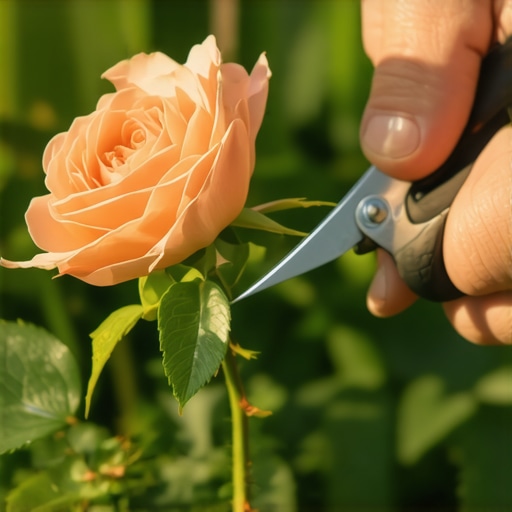
Selecting the right equipment for rose maintenance is about minimizing tissue trauma and ensuring clean vascular separation using sharpened, sterilized bypass pruners and loppers. Do not use anvil pruners. Anvil pruners crush the stem, collapsing the xylem and phloem, which leads to dieback. I’ve seen $500 rose specimens killed by a $10 pair of dull shears from a big-box store. It is a tragedy of common sense. You need a 45-degree angle cut, exactly 1/4 inch above an outward-facing bud. This directs growth away from the center of the plant, ensuring air circulation and reducing humidity-driven pathogens.
How much should I prune off my roses in the spring?
In the spring, you should remove the three Ds (dead, damaged, and diseased wood) and then reduce the remaining healthy canes by one-third to one-half of their total height to stimulate vigorous new blooms. This prevents the plant from becoming leggy and directs energy into the root flare and primary structural canes. Use the following table to calibrate your approach based on your specific rose variety:
| Rose Type | Pruning Intensity | Primary Goal | Timing |
|---|---|---|---|
| Hybrid Tea | Heavy (12-18″ left) | Large, single blooms | Late Winter/Early Spring |
| Floribunda | Moderate (18-24″ left) | Cluster of blooms | Late Winter |
| Climbing Roses | Light (Structural only) | Vertical coverage | After first flush |
| Shrub Roses | Light to Moderate | Dense hedge effect | Early Spring |
Every tool in your kit must be wiped with 70% isopropyl alcohol between plants. This isn’t being precious; it is biosecurity. If you prune a rose with tobacco mosaic virus and then move to a healthy one without cleaning your blades, you have just vectored a death sentence to your garden. High-end landscaping is as much about pathology as it is about aesthetics.
The Ground-Up Build: A Step-by-Step Pruning Protocol
Successful rose pruning follows a top-down structural deconstruction that prioritizes plant health and airflow over immediate visual density. It starts with the planning phase. Why 80% of the work is done before you buy a single plant or paver? Because you need to understand the USDA Hardiness Zone and the specific dormancy cycle of your cultivar. If you prune too early in a freeze/thaw cycle, you’ll stimulate tender new growth that will be instantly killed by a late frost, leading to crown rot.
- Clear the Base: Remove all mulch and debris from the root flare. This is part of your yard cleanup. You need to see the graft union.
- Identify the Dead: Anything that is brown, brittle, or shriveled must go. Cut back until you see white, healthy pith.
- Address Crossing Canes: If two canes rub together, they create a wound. Choose the strongest one and remove the other.
- The 45-Degree Rule: Always cut at an angle away from the bud. This prevents water from pooling on the cut surface, which prevents rot.
- Seal the Wounds: For larger canes, some experts recommend a drop of wood glue to prevent cane borers from entering the pith.
“Soil health is the foundation of all plant vigor; without microbial activity, fertilization is merely a chemical bath.” – Agronomy Extension Manual
When is the best time to prune roses for maximum blooms?
The optimal window for pruning roses is late winter or early spring, specifically when the forsythia begins to bloom, as this indicates the soil temperature is rising and the plant is exiting deep dormancy. If you wait until the plant has fully leafed out, you are wasting the nitrogen and carbohydrates the plant has already pumped into the upper stems. This energy loss can stunt the plant for the entire season, especially if your irrigation system isn’t calibrated to provide the consistent 1 inch of water per week roses demand.
Post-Pruning Maintenance: Irrigation and Soil Health
After the structural work is done, you must focus on nutrient replacement and soil moisture management to support the metabolic demands of new growth. This is where many DIYers fail. They prune the plant and then walk away. Roses are heavy feeders. They need a balanced NPK ratio, but they also need micronutrients like magnesium and iron. If you recently had a sod install nearby, be careful with the high-nitrogen fertilizers used for grass; if they leached into the rose bed, you’ll get plenty of leaves but zero flowers.
Check your irrigation. Are the emitters hitting the foliage? If so, move them. Water on the leaves is an invitation for mildew. Roses should be watered at the base, preferably with a drip system that delivers water directly to the root zone. This forces the roots to chase the moisture deeper into the soil profile, creating a more drought-resistant plant. While the internet tells you to water every day, turf grass actually needs deep, infrequent watering—exactly 1 inch per week—to force roots to chase the water down. Roses operate on a similar principle. You want deep roots, not surface-level weaklings.
The Long-Term Outlook for Your Landscape
Your garden is a living system. Pruning is the steering wheel. If you don’t steer, the car goes off the road. Regular yard cleanup and professional landscaping maintenance ensure that your investment doesn’t turn into a tangled mess of invasive weeds and dead wood. It takes discipline. You have to be willing to cut back the things you love to make room for something better. Don’t skip the hard work. The results will speak for themselves when the first flush of blooms hits in June. If you’ve followed the engineering, those blooms will be heavy, healthy, and numerous. Treat your yard like the biological machine it is, and it will perform. Ignore the science, and you’re just wasting money. [{“@context”:”https://schema.org”,”@type”:”HowTo”,”name”:”How to Prune Roses”,”step”:[{“@type”:”HowToStep”,”text”:”Sterilize tools with 70% alcohol.”},{“@type”:”HowToStep”,”text”:”Remove dead, damaged, and diseased wood.”},{“@type”:”HowToStep”,”text”:”Cut crossing canes to improve airflow.”},{“@type”:”HowToStep”,”text”:”Prune remaining canes at a 45-degree angle 1/4 inch above an outward bud.”}],”totalTime”:”PT60M”},{“@context”:”https://schema.org”,”@type”:”FAQPage”,”mainEntity”:[{“@type”:”Question”,”name”:”When is the best time to prune roses?”,”acceptedAnswer”:{“@type”:”Answer”,”text”:”The best time is late winter or early spring when forsythia begins to bloom.”}},{“@type”:”Question”,”name”:”Can I use anvil pruners on roses?”,”acceptedAnswer”:{“@type”:”Answer”,”text”:”No, anvil pruners crush the stems. Use bypass pruners for clean cuts.”}}]}]