
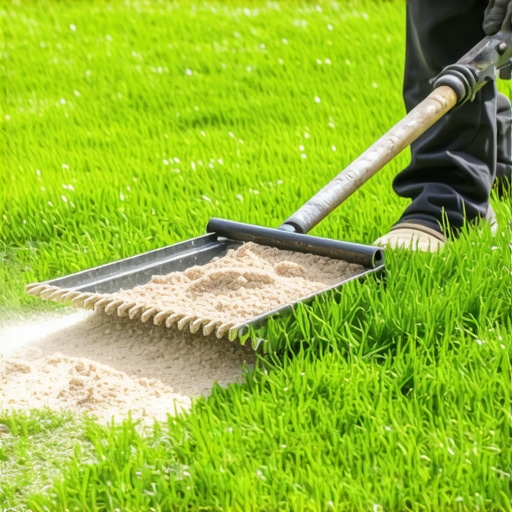
The Forensic Autopsy of a Bumpy Yard
Walking across an uneven lawn shouldn’t feel like navigating a minefield. When you feel that sudden dip or the jarring impact of a hidden mound, you aren’t just feeling ‘dirt’; you are feeling the failure of the underlying soil structure. I always drill into my new crew members: if you don’t fix the soil grading first, every plant you put in the ground is just expensive compost. I’ve seen homeowners spend five figures on sod install projects only to have the yard look like a mogul field three years later because they ignored the subgrade. A bumpy lawn is a symptom of physical and biological processes that occur beneath the thatch layer. It is not a cosmetic flaw; it is an engineering challenge.
The Mechanical Causes of Lawn Irregularity
Uneven lawns primarily result from soil settling, localized compaction, and the decomposition of organic debris buried during the construction phase. These irregularities are often exacerbated by irrigation leaks or poor yard cleanup practices where heavy equipment was operated on saturated soil. Most people assume the bumps are just ‘natural.’ They aren’t. They are usually the result of hydrostatic pressure shifts or the collapse of macropores within the soil profile. When a developer clears a lot, they often bury stumps or construction debris. As that organic material rots over a decade, the soil above it collapses, creating a localized depression. Alternatively, in regions with heavy clay, the freeze-thaw cycle pushes rocks and denser soil clumps upward, a process known as frost heaving. You cannot fix this with a mower. You fix it with physics.
How much sand do I need for leveling a lawn?
Calculating the material volume for leveling requires measuring the total square footage and the average depth of the depressions. For a standard 1,000 square foot area, applying a 1/2-inch layer of leveling mix requires approximately 1.5 cubic yards of material. Always factor in a 15% waste margin for settling and screeding errors.
The Science of Top-Dressing and Soil Horizons
To level a lawn without removing grass, you must use a top-dressing strategy involving a specific 70/30 ratio of masonry sand to organic compost. This mix ensures that you provide structural stability that won’t compress while maintaining enough cation exchange capacity (CEC) to support turf health. Top-dressing works by slowly filling in the low spots while allowing the existing grass blades to grow through the new medium. If you use standard topsoil, it contains too much organic matter that will eventually shrink, leaving you with the same bumps you started with. Masonry sand is key because its particles are sub-angular, meaning they lock together and provide a firm surface that resists shifting under the weight of a mower. It won’t rot. It won’t compress. It stays where you put it.
“Soil compaction is the most overlooked factor in turfgrass failure; when bulk density exceeds 1.6 g/cm3, root penetration effectively stops.” – Agricultural Extension Agronomy Manual
The Pre-Leveling Requirements: Aeration and Dethatching
You cannot level a lawn that is choked by thatch or suffocated by compacted clay. Before adding a single grain of sand, you must perform a deep core aeration to open up the soil’s vascular system. Dethatching is equally critical. If you apply leveling mix on top of a thick thatch layer, you are effectively creating a barrier that prevents water and nutrients from reaching the roots. I’ve seen DIYers pour sand over two inches of thatch, only to wonder why their grass died. The sand mixes with the thatch to create a hydrophobic ‘mat’ that repels water. Use a power rake. Get the debris out. Then, and only then, do you start the leveling process.
Can I level a lawn with just topsoil?
No, using only topsoil is a mistake because the organic components in topsoil will eventually decompose and settle, causing the depressions to reappear within 12 to 24 months. Furthermore, topsoil often contains weed seeds that will contaminate your turf. A sand-based mix is the industry standard for hardscaping and professional turf management because it is inert and stable.
Material Comparison for Yard Leveling
| Material Type | Stability Rating | Nutrient Value | Best Use Case |
|---|---|---|---|
| Masonry Sand | High | None | Deep depressions, structural fill |
| Screened Topsoil | Low | Medium | Filling large holes before sodding |
| 70/30 Sand-Compost Mix | High | High | General leveling and turf health |
| River Sand | Medium | None | Not recommended (too round) |
The Professional Leveling Checklist
- Mow the lawn to its lowest recommended setting (scalp it slightly) to expose the soil surface.
- Remove debris through a rigorous yard cleanup, ensuring no sticks or stones interfere with the level.
- Core aerate the entire area, pulling plugs at least 3 inches deep to relieve compaction.
- Apply the mix in 1/2-inch increments. Never bury the grass completely; at least 50% of the blade must remain visible.
- Use a leveling rake or a Lute to spread the material evenly across the high and low spots.
- Brush the grass with a stiff broom to force the sand-mix down into the thatch and aeration holes.
- Irrigate immediately with 1/4 inch of water to settle the particles and activate microbial life.
“A retaining wall doesn’t fail because of the stone; it fails because of the water trapped behind it, much like how a lawn fails when poor grading creates anaerobic pockets.” – Hardscape Engineering Axiom
Managing Soil Chemistry and Micronutrients
Once the physical leveling is complete, the chemical recovery begins. Adding sand changes the porosity of your soil, which affects how it holds Nitrogen, Phosphorus, and Potassium (NPK). You must monitor the pH levels. Sand is often pH-neutral, but the compost component can be acidic. Aim for a pH between 6.0 and 7.0 to ensure nutrient bioavailability. If you are in a region with heavy clay, adding gypsum alongside your leveling mix can help flocculate the clay particles, improving drainage. Don’t skip the irrigation calibration. Newly leveled areas have different evapotranspiration rates than the rest of the yard. Watch for hot spots where the sand might be heating up faster than the surrounding native soil. It requires a watchful eye for the first 21 days.
Long-Term Maintenance and Stabilization
Leveling is not a one-time event; it is a process of incremental gains. For severely uneven yards, you may need to repeat this process over two or three seasons. If you try to do it all at once, you will smother the crown of the grass and kill the lawn, necessitating an expensive sod install. Maintenance is about preventing new depressions. Stop driving heavy vehicles on the lawn. Divert downspouts that cause soil erosion. A lawn is a biological carpet over an engineered base. Treat it with the same respect you would a foundation. It takes time. It takes sweat. It takes the right grit of sand. But when you can run a reel mower at 0.5 inches without scalping a single blade, you’ll know you did it right.