
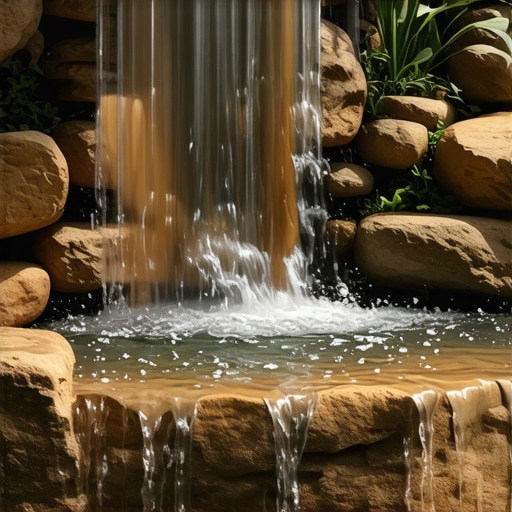
Why Your Waterfall is Leaking: Common Culprits
You walk out to your backyard and the sound is wrong. It is not the steady, rhythmic splash of a healthy feature; it is a hollow, gasping suck. You check the basin. The water level has dropped four inches since yesterday. This is not evaporation. This is a structural failure. I recently got called out to tear up a $30,000 patio and water feature that was sinking because the previous contractor failed to account for hydrostatic pressure and soil compaction. They used thin, 20-mil PVC liner and stacked heavy granite boulders directly on top of it without a non-woven geotextile underlayment. The stones eventually sliced through the plastic like a razor. The drainage was nonexistent, and the water leaking out had turned the sub-grade into a slurry of mud, causing the entire hardscape to shift three inches off-axis. It was a total loss. Landscaping is not just about aesthetics; it is about engineering water flow and managing soil mechanics.
Diagnosing Water Loss: Evaporation or Structural Breach?
To diagnose a leak, monitor the static water level with the submersible pump turned off for 24 hours to isolate the pond basin from the waterfall spillway, which helps identify if the failure is in the liner or the plumbing lines. If the water level stays constant while the pump is off, the problem exists in your waterfall stream, the plumbing, or the edges where the water is active. If the water continues to drop while the pump is off, you have a hole in the basin liner itself. Evaporation is a factor, but it rarely accounts for more than half an inch of loss per day, even in high heat. If you are losing two inches or more, you have a breach. It is that simple. Don’t let a ‘mow-and-blow’ hack tell you it is just the sun. They are wrong. You need to check the plumbing connections and the integrity of the EPDM membrane.
“A retaining wall doesn’t fail because of the stone; it fails because of the water trapped behind it.” – Hardscape Engineering Axiom
The Physics of Settling and Hydrostatic Pressure
Soil settlement occurs when the sub-grade material is not compacted to 95% Proctor density, causing the heavy boulders to sink and pull the EPDM liner downward, eventually allowing water to breach the perimeter edge of the feature. When you stack 500-pound boulders on raw topsoil, they will move. As they move, they drag the liner with them. This creates a low spot in the waterfall’s perimeter. Water finds the path of least resistance and pours out over the side, often hidden behind the very rocks meant to contain it. You must ensure the base is modified gravel, compacted in three-inch lifts. If the contractor skipped the vibratory plate compactor, they failed you. The weight of the water itself adds immense pressure. A 1,000-gallon pond weighs over 8,000 pounds. Without a stable base, that weight will deform the earth beneath it.
| Material Type | Durability Rating | Flexibility | Estimated Lifespan |
|---|---|---|---|
| 45-mil EPDM | High | Excellent | 25-40 Years |
| 20-mil PVC | Low | Moderate | 5-10 Years |
| RPE (Reinforced Polyethylene) | Very High | Low | 40+ Years |
| Concrete (Unsealed) | Moderate | None | 10-15 Years |
How much water loss is normal for a waterfall?
Normal water loss for a standard waterfall is typically 0.25 to 0.5 inches per day due to evaporation and minor splash-out. Factors like high wind, low humidity, and large vertical drops increase this rate. If your water level drops more than an inch in 24 hours, you likely have a leak in the liner or a plumbing failure. Check your spillway for ‘wicking’ caused by moss or overgrown plants. These biological elements act like a straw, pulling water over the liner edge and into the surrounding soil. This is why seasonal yard cleanup is mandatory. Debris buildup in the stream can divert water into areas it was never meant to go.
The Waterfall Splash-Out and Capillary Action
Capillary action occurs when porous materials like moss, mulch, or silt accumulate on the edge of the waterfall spillway, effectively wicking water over the liner boundary and into the landscape bedding. This is often mistaken for a puncture. It is a maintenance issue. When we perform a yard cleanup, we clear the rocks of algae and debris that create these bypasses. Also, look for ‘splash-out’. If your waterfall has a high drop into a shallow pool, the force of the water hitting the surface creates a fine mist. Over several hours, that mist saturates the surrounding ground. If the ground is not graded away from the pond, that water won’t return; it will just create a muddy mess. Fix your grading. Ensure the soil slopes away at a minimum of two percent grade.
“Effective pond design requires understanding the biological load and the mechanical constraints of the containment system.” – Agricultural Extension Standards
Where do most pond leaks occur?
Most pond leaks occur at the waterfall spillway or the connection point between the pump and the plumbing. The vibration of the pump can loosen PVC primers or compression fittings over time. Another common failure point is the ‘bio-falls’ or the filter box. If the box settles even an inch, the front lip where the water exits will tilt. This tilt allows water to sneak around the sides of the weir. You must check that the box is perfectly level using a four-foot spirit level. Do not trust your eyes; trust the bubble. If it is off, the water will find the low corner and escape.
Plumbing Failures and Irrigation Interference
Plumbing leaks usually involve failed solvent welds or kink-free tubing that has cracked due to UV exposure or ground freeze-thaw cycles, necessitating a pressure test of the entire filtration circuit. I refuse to use ‘kink-free’ ribbed hose. It is garbage. It is thin-walled and fails within three seasons. We only use heavy-duty flexible PVC or schedule 40 rigid pipe. If your waterfall is near an irrigation zone, a leaking sprinkler head can also mimic a pond leak by saturating the soil and causing the pond edge to collapse. We often find that a sod install adjacent to a pond has covered up the liner edge, allowing the grass roots to grow into the pond and wick water out. Root girdling can actually pierce thin liners over time. Always maintain a clear ‘buffer zone’ of stone between your sod and the water’s edge.
The Restoration Process: A Step-by-Step Remediation
Fixing a leaking waterfall is forensic work. You cannot just slap a patch on it and hope for the best. You have to find the source. Here is the professional checklist for remediation:
- Turn off the pump and mark the water level to isolate the leak location.
- Inspect the entire perimeter for wet spots in the soil or mulch.
- Remove the rock layer from the spillway to inspect the liner for punctures or low spots.
- Check the plumbing connections at the pump and the filter for signs of spray or dripping.
- Clean the liner thoroughly with a scrub brush before applying any EPDM primer and adhesive patches.
- Re-level the waterfall weir or filter box using compacted gravel, not just soil.
- Ensure the liner extends at least six inches above the maximum water level at all points.
Once the repair is done, don’t just throw the rocks back in. This is the time for a proper yard cleanup. Pressure wash the stones to remove organic buildup. Check your irrigation heads to ensure they aren’t spraying into the pond, which can introduce chlorine and chemicals that kill your beneficial bacteria. If you had to dig up the area, a fresh sod install will stabilize the soil and prevent erosion from washing sediment back into your clean water. Use a high-quality turf suited for your local climate. In the transition zone, we usually go with a tall fescue blend for its deep root system. It will hold the grade better than a shallow-rooted grass. Maintenance is not optional. It is the only thing standing between a beautiful feature and a muddy hole in the ground. Inspect your water levels weekly. Clean your filters monthly. Do the work or pay someone who knows how. Don’t be the homeowner who ignores a small leak until their foundation starts to settle. It will rot if you let it. Fix it now.