
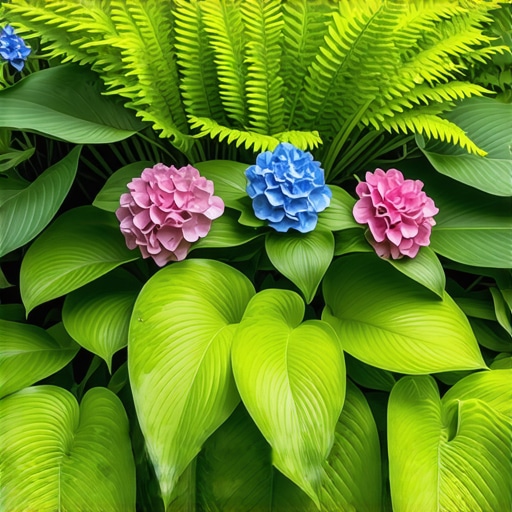
Engineering the Ideal North-Facing Shade Garden
To successfully plant a north-facing yard, you must select species with high chlorophyll density capable of photosynthesizing in low-UV environments. Prioritize soil drainage and grading to prevent fungal pathogens common in cool, damp shadows where evaporation rates remain significantly lower than south-facing exposures.
I always drill into my new crew members: if you don’t fix the soil grading first, every plant you put in the ground is just expensive compost. I remember a job in a tight suburban lot where the north side of the house was a literal swamp. The homeowner had spent four grand on nursery stock the previous spring, and by October, it was all dead. Why? Because the original builder graded the yard toward the foundation, and the lack of sun meant the soil never dried out. We didn’t just plant new shrubs; we excavated 18 inches of compacted clay, installed a 4-inch perforated PVC French drain, and backfilled with a 60/40 mix of sandy loam and compost. Only then did we talk about plants. If you ignore the physics of water, the biology of the plant doesn’t matter.
“A retaining wall doesn’t fail because of the stone; it fails because of the water trapped behind it.” – Hardscape Engineering Axiom
The Physics of Shadow: Understanding Your Micro-Climate
A north-facing yard is not just ‘dark.’ It is a specific micro-climate characterized by lower soil temperatures and higher relative humidity at the root flare. In the northern hemisphere, the house itself casts a permanent shadow that shifts only slightly during the summer solstice. This means your plants must survive on ambient, reflected light rather than direct photons. This lack of solar radiation reduces the rate of evapotranspiration. If you apply the same irrigation schedule to your north side as your south side, you will drown your root systems. I check for hydrostatic pressure even in garden beds; if the soil stays saturated for more than 24 hours after a rain, your drainage is failed.
| Plant Name | Scientific Name | Light Requirement | Soil pH Preference |
|---|---|---|---|
| Hostas | Hosta spp. | Full Shade | 6.5 to 7.5 |
| Japanese Forest Grass | Hakonechloa macra | Partial to Deep Shade | 6.0 to 7.0 |
| Cast Iron Plant | Aspidistra elatior | Deep Shade | 5.5 to 6.5 |
| Lenten Rose | Helleborus orientalis | Part Shade | 7.0 to 8.0 |
| Oakleaf Hydrangea | Hydrangea quercifolia | Dappled Shade | 5.0 to 6.5 |
The Technical Selection: Species That Work
When selecting inventory, avoid the big-box store ‘shade mix’ bags. Those are usually low-quality filler. Instead, look for plants with large, dark green leaves. The darker the leaf, the more chlorophyll it typically contains, allowing it to harvest limited light more efficiently. Hostas are the workhorse here, but you need to be careful about slug pressure in damp areas. Ferns, specifically the Ostrich or Japanese Painted varieties, thrive in the 50 to 60 degree soil temperatures found on the north side. For structure, use Oakleaf Hydrangeas. Unlike the panicle varieties that need sun to bloom, the Oakleaf is a woodland native that tolerates the shadow but requires a well-drained, acidic base. If your soil pH is over 7.5, you will see chlorosis (yellowing leaves) almost immediately.
“Soil compaction is the single greatest barrier to root respiration in urban landscapes.” – Penn State Agricultural Extension
How much modified gravel do I need for a patio base?
For a standard residential patio in a shady yard, you need a minimum of 6 inches of modified gravel (2A or 21A) compacted in 2-inch lifts. To calculate volume, multiply the square footage by the depth in feet (0.5), then divide by 27 to get cubic yards; always add 10 percent for compaction loss. In north-facing areas, this base is even more critical because the ground stays frozen longer in the winter, increasing the risk of frost heave if your drainage layer is insufficient.
What is the best ground cover for a north-facing yard?
The best ground cover for a north-facing yard is Pachysandra terminalis or European Ginger due to their ability to spread via rhizomes in low-light conditions. These species stabilize the soil and prevent erosion in ‘dead zones’ where traditional turf grass fails to establish a deep enough root system to survive the summer heat. Avoid Ivy; it is an invasive nightmare that will climb your siding and rot your fascia boards within three seasons.
The Yard Cleanup and Site Prep Protocol
A professional yard cleanup in a shady zone is more than just raking leaves. It is about removing the organic mat that traps pathogens. In the shade, leaf litter doesn’t decompose as fast as it does in the sun. This creates a thick thatch layer that prevents oxygen from reaching the soil microbes. When we do a cleanup, we use power rakes to pull up that organic debris and then apply a high-calcium lime if the soil has become too acidic from pine needle decomposition. Don’t skip the 811 / Dig Safe call before you start any deep aeration or trenching for irrigation lines. It is a free service, and hitting a lateral line will kill your profit margin instantly.
- Check Soil Moisture: Use a tensiometer or the ‘finger test’ to ensure the root zone isn’t waterlogged.
- Prune for Airflow: Thin out the canopy of overhead trees to allow indirect light and air movement.
- Inspect for Moss: Moss is a symptom of compaction and acidity, not just shade. Aerate and lime.
- Calibrate Irrigation: Set north-facing zones to run 30 percent less time than south-facing zones.
- Mulch Correctly: Use 2 inches of triple-ground hardwood mulch. Never pile it against the trunk (no mulch volcanoes).
Sod Install and Turf Challenges
If you are insisting on a sod install in a north-facing yard, you are fighting an uphill battle. Most Kentucky Bluegrass blends need 6 to 8 hours of direct sun. In the shade, the blades become thin, the cell walls weaken, and the grass becomes susceptible to powdery mildew. If you must have a lawn, use a Hard Fescue or Chewings Fescue blend. These fine-bladed grasses have a lower light compensation point. When we lay sod in these areas, we use a starter fertilizer with a higher phosphorus count (the middle number on the bag) to encourage rapid root strike before the tree canopy fills in and steals the remaining light. It will struggle. That is the reality. If the area gets less than 4 hours of dappled light, I tell my clients to forget the grass and go with a shade-tolerant ground cover or a decorative stone mulch.
Maintenance in these areas requires a disciplined eye. You cannot ‘set and forget’ a shady landscape. Because the environment is cooler, the plants grow slower. Do not over-fertilize with high-nitrogen products; you will cause a flush of weak, leggy growth that the root system can’t support. Focus on soil health, manage your water, and pick the species that actually belong in the dark. It is not about fighting nature; it is about engineering the site to work with it.