
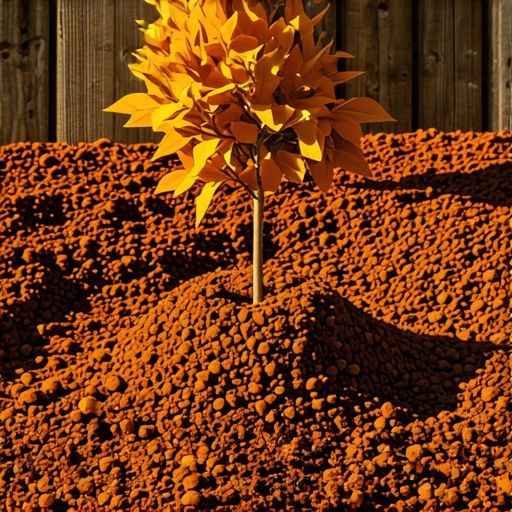
The Hard Truth About Late-Season Tree Nutrition
To fertilize new trees in the fall correctly, you must focus on slow-release phosphorus and potassium applied to the critical root zone once the tree enters dormancy. Avoid high-nitrogen fertilizers that trigger late-season vascular growth, which will inevitably succumb to winter kill and metabolic stress.
I always drill into my new crew members: if you don’t fix the soil grading and chemistry first, every plant you put in the ground is just expensive compost. I’ve spent twenty years watching homeowners and amateur landscaping outfits treat trees like they treat grass. It is a fundamental mistake. A tree is a long-term engineering project, not a seasonal decoration. When we finish a large-scale sod install, the lawn gets one type of care, but the woody ornamentals require a completely different biological strategy. If you apply a high-nitrogen ‘turf-builder’ style fertilizer near a newly planted oak in October, you are essentially forcing that tree to stay awake when its biology is screaming for sleep. You’ll end up with split bark and dead terminal buds by February.
Why Root Architecture Beats Canopy Growth in Autumn
Fall fertilization is not about making the tree look bigger; it is about the microscopic expansion of the root hairs. As the air cools, the soil remains warm. This thermal lag is the golden hour for arboriculture. The tree redirects its photosynthates from the leaves down to the root system. We want to support this with specific minerals. Most landscaping failures occur because people ignore the ‘P’ and ‘K’ in the NPK ratio. High Nitrogen (N) is for the spring. In the fall, we want Phosphorus (P) for ATP production and root elongation, and Potassium (K) for cellular wall strength and cold hardiness. It is simple biology.
“Phosphorus is essential for energy transfer and storage in plants, and its availability during the root-active period of late autumn is critical for establishing structural integrity in transplanted woody species.” – International Society of Arboriculture (ISA) Handbook
How Much Modified Gravel and Soil Prep Do You Need?
Before you even touch a bag of fertilizer, you have to address the yard cleanup and soil compaction issues. If your soil is compacted to the point where it resists a 3/8-inch rebar probe, no amount of fertilizer will help. The nutrients will simply wash off into the storm drain. In our professional installs, we ensure the root flare—the point where the trunk widens at the base—is exactly two inches above the finished grade. Most hacks bury this, leading to stem-girdling roots and slow suffocation. Once the grading is set, we look at the irrigation. A newly planted tree needs deep, infrequent saturation, not the daily mists used for new sod. We are talking five to ten gallons per inch of trunk diameter, delivered via a slow-drip system or a soaker hose.
The Autumn Nutrient Protocol: A Technical Comparison
| Nutrient Type | Function in Fall | Risk Level | Application Method |
|---|---|---|---|
| Nitrogen (High) | Canopy/Leaf Growth | Extreme (Winter Kill) | Surface Broadcast |
| Phosphorus | Root Development | Low | Sub-surface Incorporation |
| Potassium | Cellular Integrity | None | Broad distribution |
| Mycorrhizal Fungi | Nutrient Uptake | None | Root Ball Inoculation |
The Step-by-Step Sub-Surface Application Process
- Conduct a soil pH test to ensure the tree can actually metabolize the nutrients.
- Clear a 3-foot radius of all grass and weeds; sod install should never touch the trunk.
- Apply a low-nitrogen, slow-release fertilizer (e.g., 5-10-10) at a rate of 1-2 lbs per 1,000 square feet.
- Utilize a soil auger to create 8-inch deep holes around the drip line for direct root access.
- Top-dress with 2 inches of aged wood chips, keeping the mulch away from the bark.
How much fertilizer do I need for a new tree?
The amount of fertilizer depends entirely on the trunk diameter and the existing soil nutrient levels. Generally, for a young tree (less than 3 inches in diameter), you should apply no more than 0.1 pounds of actual nitrogen per inch of trunk diameter. Over-fertilizing is more dangerous than under-fertilizing. It causes osmotic stress, where the salt in the fertilizer actually sucks water out of the roots. This is called ‘fertilizer burn,’ and in a young tree, it is often fatal. Use a slow-release organic granular product to mitigate this risk. It takes longer to break down, which aligns perfectly with the tree’s dormant cycle.
What is the best fertilizer for newly planted trees?
The best fertilizer is one that mimics the forest floor. We prefer a mix of composted organic matter, seaweed extract for trace minerals, and a specific focus on Mycorrhizae. These fungi form a symbiotic relationship with the roots, effectively increasing the root surface area by up to 1,000 times. When we do a massive yard cleanup and remove all the fallen leaves, we are stripping away the tree’s natural food. We have to replace that with high-quality organic inputs, not synthetic salts. Avoid the cheap spikes you find at big-box stores. They concentrate the chemicals in one spot, which can lead to localized root necrosis.
“Proper autumn fertilization focusing on potassium helps regulate the plant’s osmotic pressure, reducing the freezing point of the cell sap and preventing winter desiccation.” – Penn State Agricultural Extension
Do not skip the irrigation check during the fall. People think that because it is cool, the tree doesn’t need water. Wrong. If the soil freezes while it’s dry, the roots will desiccate and die. You need to keep that root zone moist—not swampy—until the ground actually freezes solid. This is the difference between a tree that thrives in the spring and one that you’re digging up and replacing in May. It requires discipline. It requires an understanding of the hydrostatic reality of your soil. If you have heavy clay, you must be careful not to create a ‘bathtub effect’ where the water sits in the planting hole and rots the roots. Dig a wide, shallow hole, not a deep, narrow one. Use a transit level if you have to. Professional landscaping is about precision. It will rot if you get it wrong. Don’t skip this part.