
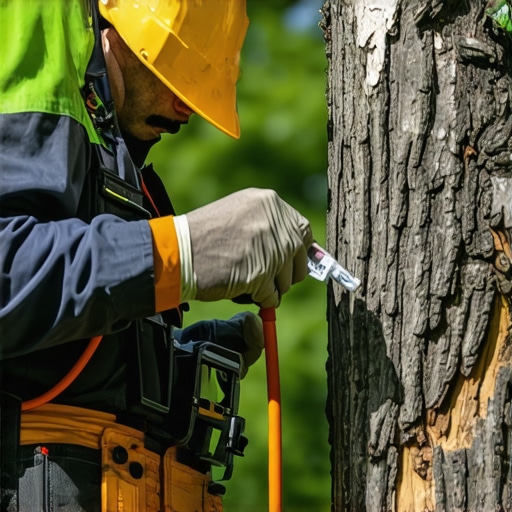
Why Your Ash Trees Are Dying: The Hidden Microscopic War
Emerald Ash Borer trunk injection is the only scientifically proven method to save your mature ash trees from certain death caused by the aggressive larval feeding of the Agrilus planipennis beetle. If you live in an area with active infestations, untreated ash trees face a 99% mortality rate because these wood-boring pests chew through the tree’s vascular system, cutting off the flow of water and vital nutrients. Do not wait for visible crown dieback to take action.
I always drill into my new crew members: if you don’t fix the soil grading first, every plant you put in the ground is just expensive compost. The same hard-nosed philosophy applies to arboriculture. You cannot save a tree with cheap foliar sprays or weak soil drenching when the vascular cambium is already being devoured. Last year, I walked onto a property where a homeowner spent thousands on big-box store pesticide drenching, only to watch their three prize-winning ash trees rot from the inside out. They ignored the biology of the tree. They treated the soil superficially while the beetles laughed their way through the sapwood. We had to bring in the cranes for a dangerous, expensive removal that could have been avoided with a precise, pressurized vascular treatment.
“Systemic trunk injections bypass the soil entirely, delivering a concentrated dose of emamectin benzoate directly into the active xylem tissue where pests feed.” – USDA Forest Service EAB Management Guidelines
To understand why trunk injection is the gold standard compared to standard soil drenching or basic yard cleanup, you must look at the tree’s internal transport system. The xylem tissue acts as a microscopic network of drinking straws, pulling moisture from the roots up to the canopy through transpiration. When we inject specialized insecticides directly into these active structural layers, the tree’s natural vascular flow distributes the chemical throughout the entire canopy within days. This creates an impenetrable, toxic barrier for any beetle attempting to feed on the leaves or bore into the bark.
How Does the Trunk Injection Work Against Emerald Ash Borer?
Systemic trunk injections work by placing pressurized active ingredients directly into the outer sapwood of the tree, allowing the natural transpiration stream to pull the chemistry upward into the canopy. This targeted approach ensures that 100% of the active ingredient remains inside the tree, eliminating chemical drift, protecting beneficial soil microbes, and avoiding contamination of nearby water tables or irrigation systems. It is localized, surgical, and highly lethal to boring pests.
When dealing with a massive pest threat, a simple yard cleanup or cosmetic landscaping fix will not save your canopy. You must understand the specific chemical and biological mechanisms at play. Below is a professional comparison of the leading management strategies for protecting ash trees in 2026.
| Treatment Method | Active Ingredient | Application Window | Protection Longevity | Environmental Risk |
|---|---|---|---|---|
| Trunk Injection | Emamectin Benzoate 4% | Spring to Early Summer | 2 to 3 Years | Negligible (Contained) |
| Soil Drench | Imidacloprid / Dinotefuran | Spring or Fall | 1 Year | High (Soil/Water runoff) |
| Bark Spray | Dinotefuran + Penetrant | Late Spring | 1 Year | Moderate (Drift risk) |
As the table demonstrates, systemic injections provide the longest window of protection while minimizing ecological damage. Emamectin benzoate is a heavy-duty macrocyclic lactone that paralyzes the nervous system of the borer larvae. When the newly hatched larvae attempt to chew through the outer bark and enter the phloem, they ingest the chemical and die immediately. This breaks the reproductive cycle dead in its tracks. Don’t skip this step if your area is under active quarantine.
How much does it cost to inject an ash tree?
The cost to inject an ash tree ranges from $10 to $25 per inch of trunk diameter at breast height (DBH), depending on the canopy health, local infestation pressure, and the specific systemic formulation used. Large, structurally significant landscape trees measuring 20 inches DBH typically cost between $200 and $500 per treatment, which is significantly cheaper than the thousands of dollars required for professional crane removal and subsequent sod install or landscaping reconstruction.
Can I inject my own ash trees for Emerald Ash Borer?
DIY trunk injection is highly discouraged because it requires specialized commercial injection kits, high-pressure formulation plugs, and restricted-use pesticides like professional-grade emamectin benzoate. Improper drilling techniques can cause permanent cambium damage, introduce wood-decay fungi, or create physical structural weak points that cause the trunk to split during high winds. Leave this high-pressure work to certified arborists.
“An injection port drilled too deep bypasses the active xylem entirely, wasting the chemical in dead heartwood, while drilling too shallow splits the outer bark.” – International Society of Arboriculture (ISA) Standards
If you are planning other property improvements, such as a new sod install or updating your irrigation lines, timing is absolutely critical. Do not trench near the root zone of a stressed ash tree. Cutting anchor roots to lay PVC pipe will compromise the tree’s ability to pull up the injected chemical, rendering your pest treatment useless. Coordinate your hardscaping and watering schedules carefully to keep the root zone hydrated and stable.
The Step-by-Step Trunk Injection Protocol
Our professional trunk injection protocol involves measuring the exact DBH of the tree, drilling precise target ports into the active root flare, inserting specialized arborplugs, and delivering a metered dose of emamectin benzoate. This scientific procedure must be executed during active transpiration when the tree is actively pulling moisture from the soil up to the leaves. Follow this strict checklist for successful application:
- Measure the DBH: Wrap a diameter tape around the trunk at 4.5 feet above the soil line to determine total inches.
- Check Soil Moisture: Ensure the soil is thoroughly hydrated via rainfall or irrigation before drilling; dry trees will not take up the chemical.
- Identify the Root Flares: Target the wide, structural buttress roots at the base of the trunk where sap flow is most active.
- Drill Clean Ports: Use a high-speed, sharp 5/16-inch brad point bit to drill precisely 1.5 to 2 inches deep into the flare.
- Set the Arborplugs: Insert plastic one-way plugs flush with the bark surface to prevent chemical reflux.
- Inject under Pressure: Connect the pressurized injection system and deliver the calculated dose based on DBH inches.
Once the treatment is complete, the injection ports will naturally callus over within a single growing season. Do not seal the wounds with tar or pruning paint. Trees have their own internal compartmentalization system that seals off the drill sites naturally. Keep the tree well-watered throughout the hot summer months to maximize systemic distribution.
Evaluating and Maintaining Tree Health Post-Treatment
Maintaining your treated ash trees requires ongoing monitoring of the canopy density, soil nutrition, and localized irrigation to ensure the tree has the energy reserves to seal drill wounds and fight off secondary infections. A trunk injection protects against the borer, but poor cultural practices can still stress the tree to the point of structural failure. Focus on deep root watering and organic mulching over the root zone.Avoid heavy nitrogen fertilizers immediately after injection. Too much nitrogen forces rapid, weak vegetative growth that attracts other pests. Instead, focus on soil biology. Apply a thin layer of compost and a 3-inch layer of hardwood mulch over the root zone, keeping the mulch at least 6 inches away from the trunk flare. This mimics a natural forest floor, retaining moisture and protecting the root system from lawnmower damage. Keep your irrigation heads directed away from the trunk to prevent fungal cankers from forming over the callusing injection sites.