
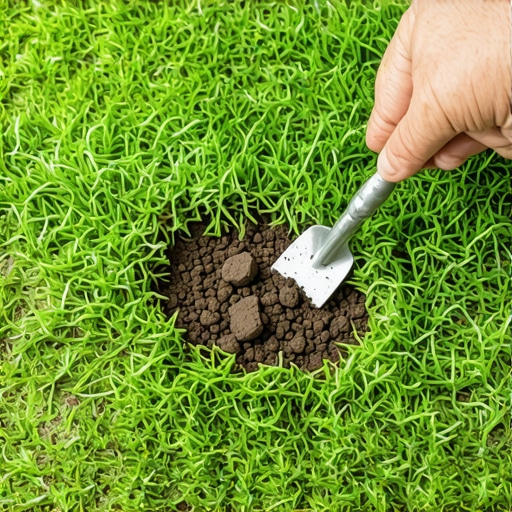
Why Your Yard Has Sinkholes: The Reality of Canine Excavation and Turf Ruin
To patch dog digging holes in new sod, you must excavate the damaged site, backfill with highly compacted sandy loam soil, and install matching sod cultivars that are seamlessly integrated through root-stimulating irrigation and physical anchoring. Simply throwing a handful of dirt and grass seed into a dog hole is a waste of time. The soil will settle, creating a trip hazard, and the dog will likely return to the exact same spot to dig again. You must treat this as a structural engineering repair for your turf.
The Apprentice Lesson: Why Clay Soil and Shovel Work Beat Quick Fixes
I always drill into my new crew members: if you don’t fix the soil grading and compaction first, every plant or piece of turf you put in the ground is just expensive compost. Just last week, I had an apprentice try to fix a series of deep canine excavation pockets by tossing loose topsoil over the holes and laying sod scraps on top. Three days later, after a heavy irrigation cycle, those patches looked like a miniature crater field. The loose dirt turned to muck, settled by two inches, and the roots dried out because they had no firm contact with the subgrade. We had to tear it all out, compact the base properly with a hand tamper, and start over from scratch. Do not skip the compaction phase. Your dog’s paws are powerful compactors; your repair must be even stronger.
“Sod establishment fails primarily due to poor soil-to-root contact and inadequate subsurface compaction, which prevents capillary water movement.” – Cooperative Extension Turfgrass Manual
The Physics of Turf Destruction: Soil Compaction vs. Root Shear
Dog digging destroys turf by shearing the primary root system and creating massive air pockets that dehydrate the surrounding grass. When a dog claws at sod, it does not just remove soil; it tears the lateral stolons and rhizomes of your turfgrass, leaving the surrounding grass to die of dehydration. This creates a localized micro-climate of dead soil where weeds quickly take hold.
To fix this, you must understand your soil profile. Sandy loam is ideal because it drains well while retaining enough moisture for root development. If you have heavy clay, adding pure sand will create a concrete-like mixture. If you have pure sand, water will wash away your nutrients. You need a balanced mix of 70% sandy loam and 30% organic compost to patch these holes successfully.
| Soil Type | Compaction Risk | Drainage Rate | Repair Strategy |
|---|---|---|---|
| Heavy Clay | High | Very Poor | Amend with organic compost before patching |
| Sandy Loam | Low | Excellent | Direct backfill with slight compaction |
| Pure Sand | Very Low | Excessive | Mix with loam and peat moss to retain moisture |
The Step-by-Step Restoration Protocol
Repairing dog holes requires systematic excavation, soil amendment, precise sod cutting, and a dedicated watering schedule to force deep root penetration. Follow this checklist exactly to ensure your patched sod survives the season and blends in with the rest of your lawn.
- Step 1: Clean out the debris. Remove all loose grass, dog toys, and loose dirt from the hole.
- Step 2: Square off the edges. Use a sharp spade or sod cutter to cut a clean square around the damaged area.
- Step 3: Backfill and tamp. Fill the hole with your sandy loam mix in 2-inch increments, tamping firmly after each layer.
- Step 4: Cut the patch. Cut a piece of fresh sod from a matching cultivar to fit the squared-off hole perfectly.
- Step 5: Press and water. Step on the patch to ensure solid soil-to-root contact, then saturate the area immediately.
How do I stop my dog from digging in the new sod?
To prevent dogs from digging up fresh sod patches, you must address both the physical barrier and the dog’s behavioral drive. Laying down a temporary layer of chicken wire or plastic poultry netting directly under the sod patch will physically stop them from digging deep. When their claws hit the wire, they stop. Additionally, spraying the perimeter with natural deterrents like diluted white vinegar can discourage nose-first exploration. Do not use chemical deterrents that can burn the tender new roots.
What is the best sod type for high-traffic dog yards?
For yards with active dogs, you need a warm-season grass with aggressive rhizomatous growth like Bermuda grass or a highly resilient cool-season grass like Kentucky Bluegrass or Turf-Type Tall Fescue. Bermuda grass is the undisputed king of recovery; its underground runners will actively grow over and fill in minor digging scars. Avoid shallow-rooted grasses like annual ryegrass which will disintegrate under the shear force of a running dog’s paws.
“A lawn is only as resilient as its root system; deep roots require deep, infrequent watering cycles rather than daily shallow mists.” – Agronomy Field Guide
The First-Year Maintenance and Irrigation Matrix
Proper irrigation is the single most critical factor in ensuring your new sod patch knits with the existing soil. For the first 10 days, you must keep the patch damp but not soggy. Water three times daily for 5 to 10 minutes. This keeps the root zone moist. After day 10, transition to deep, infrequent watering to force the roots to stretch downward into the subgrade. Cut back to once a day, then every other day. Within three weeks, the patch should resist a gentle tug, indicating the roots have successfully anchored.